
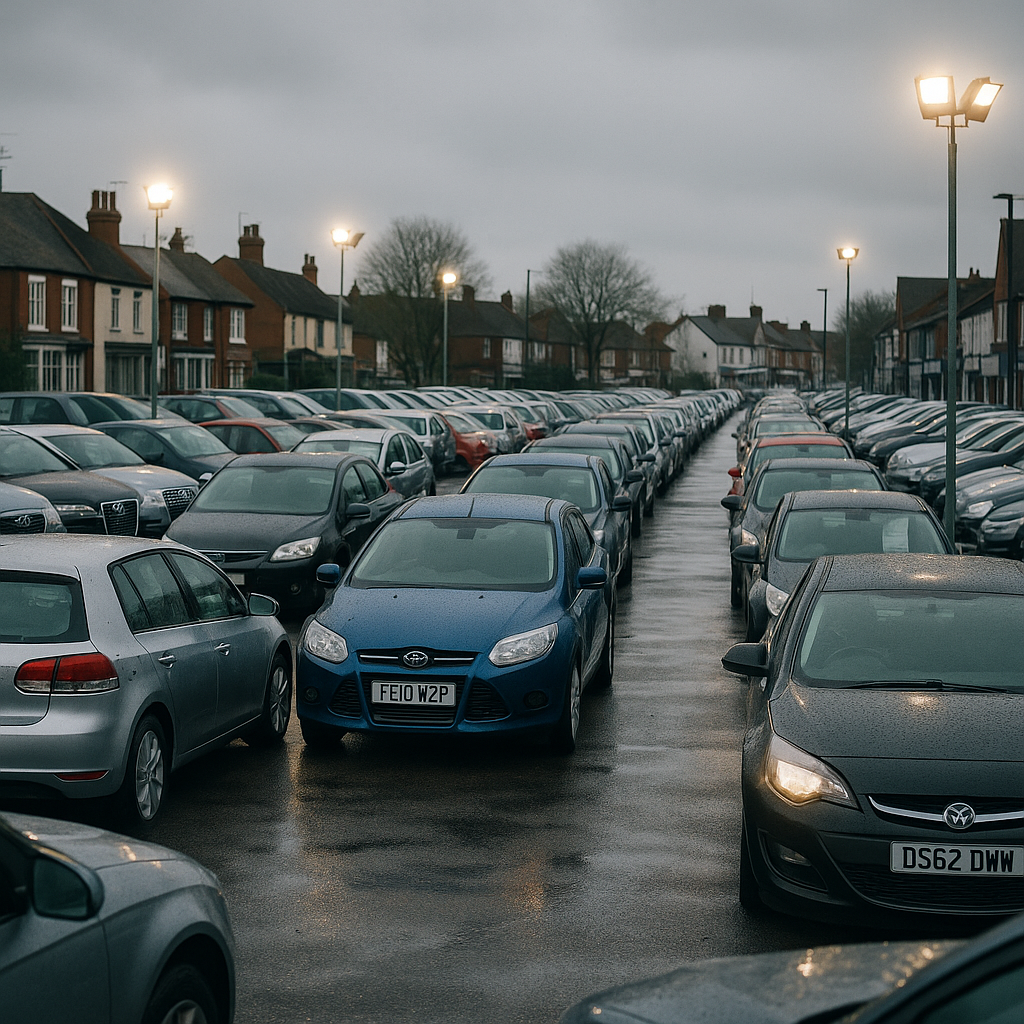
If you’ve spent any time browsing AutoTrader or checking the auction listings on BCA recently, you already know the score. Used car prices in the UK are still, stubbornly, annoyingly high. It doesn’t feel like it should be this way. The pandemic is years behind us, new car production has mostly recovered, and yet the second-hand market continues to defy gravity in ways that make enthusiast buyers genuinely frustrated. So what’s actually going on, and more importantly, where can you actually find value right now?
The Supply Chain Hangover That Just Won’t Shift
Cast your mind back to 2021 and 2022. A global semiconductor shortage throttled new car production so badly that some factories sat idle for months. The knock-on effect was simple: fewer new cars meant fewer part-exchanges, which meant fewer quality used cars entering the market. That supply squeeze created a valuation bubble, and the bubble has been deflating slowly ever since, but not fast enough for most buyers.
According to data from the Society of Motor Manufacturers and Traders (SMMT), UK new car registrations only fully recovered to pre-pandemic levels in 2025. That means an entire three-year cohort of nearly-new stock simply doesn’t exist in the volumes you’d normally expect. A well-maintained 2022 plate Golf GTI or a Civic Type R with low mileage? Dealers know exactly what they have, and they’re pricing accordingly.
It’s worth noting that lease companies and rental fleets, which typically feed massive volumes of two-to-three-year-old cars into the used market, also contracted their orders during that period. Those cars haven’t appeared, and the pipeline is only now starting to normalise. Auctions like Manheim UK have reported a gradual uptick in fleet returns through late 2025 and into 2026, but it’s a drip, not a flood.
EV Depreciation Uncertainty Is Distorting Everything
Here’s the twist that nobody expected to be this consequential. The rapid evolution of electric vehicle technology has made buyers deeply nervous about committing to a used EV, and that nervousness is doing strange things to petrol car values. If buyers are reluctant to take a punt on a three-year-old electric vehicle because of battery degradation concerns or charging infrastructure anxiety, they’re staying in the petrol and hybrid market. More demand, same supply. Prices hold.
Used EV prices themselves have taken a hammering. Figures from Cap HPI through early 2026 suggest some models have lost 40 to 50 per cent of their new price within three years, a depreciation curve that makes finance houses and private buyers alike deeply uncomfortable. The irony is that this EV collapse is actually propping up used car prices in the UK for conventional drivetrains, because cautious buyers are clustering in the same petrol segments.

Which Segments Are Finally Seeing Softening Prices?
Right, here’s where it gets genuinely useful. Not every corner of the used market is still squeezed. A few specific segments are showing real cracks, and if you’re in the market, these are worth your attention.
Large Family Saloons and Executive Cars
The diesel executive saloon market, think BMW 5 Series diesel, Mercedes E-Class diesel, Jaguar XF diesel, is softening meaningfully. Fuel on motorways is expensive, ULEZ and Clean Air Zones are expanding, and the social cachet of a big diesel saloon has simply evaporated. Prices at BCA and Manheim auctions on these cars have dropped 12 to 18 per cent year-on-year through early 2026. For someone who actually likes driving and covers serious motorway miles, a low-mileage XF Sportbrake diesel at these prices is genuinely compelling value.
Mid-Range French Hatchbacks and Family Cars
French marques have always depreciated faster than German rivals, and the current market is no exception. Renault, Citroën, and Peugeot models at the three-to-five-year mark are seeing real movement. If you’re doing your research on a specific model, it’s worth running a proper history check. For instance, pulling up Peugeot Car Data before buying a used 308 or 3008 gives you a much clearer picture of what you’re actually dealing with specification-wise. These cars represent strong value right now if the history checks out.
Diesel MPVs and Seven-Seaters
The family MPV is essentially a dead segment in terms of new car sales, which means used examples are piling up with no floor of demand to hold values. Ford Galaxy, SEAT Alhambra, Volkswagen Sharan diesel variants are all sitting longer on forecourts. Practical, spacious, and genuinely cheap to run on a motorway run. Not glamorous, but if you need the space, the value is undeniable.
Where Prices Are Still Holding Firm (Don’t Get Burned)
Conversely, there are segments where sellers still have all the leverage. Hot hatches and performance cars under £25,000 remain absurdly strong. A clean Hyundai i30N, a Ford Fiesta ST, or a MINI JCW in good condition will barely move on price from six months ago. Enthusiast cars with a genuine following simply don’t depreciate the way mainstream metal does, and in a market where interesting new cars keep getting discontinued, the used examples become more precious.
Japanese used imports are also holding value brilliantly. The used car prices UK buyers are willing to pay for a clean Mitsubishi Lancer Evolution or a Subaru Impreza WRX STI continues to climb. Supply is genuinely finite and demand from enthusiasts is not going anywhere. For more on the JDM scene, our piece on JDM cars you can finally import to the UK in 2026 covers the import angle in proper detail.
How to Actually Get a Good Deal Right Now
Timing your purchase matters more than it did five years ago. Late autumn and winter remain the best periods to buy, simply because fewer people are actively shopping and dealers are more motivated to shift stock before year-end. Private sales through platforms like Facebook Marketplace are often running five to ten per cent below dealer asking prices for comparable cars, particularly in the large saloon and MPV segments mentioned above.
Auction buying is back on the table for savvy buyers who know what they’re doing. BCA’s online bidding platform has opened up trade auctions to retail buyers in a meaningful way, and the prices realised on mainstream family cars can be significantly below retail. The caveat is obvious: you’re buying without the consumer protections of a dealership sale, so mechanical inspection matters more than ever.
The DVSA’s official recall checker should be your first stop on any used car purchase, particularly on models from 2020 to 2023 where supply chain issues sometimes led to compromises in component quality. Recalls are free to fix but only if you know they exist before you hand over your money.
The big picture is that used car prices in the UK will continue to normalise over the next 18 months as fleet returns accelerate and buyer confidence in EVs gradually firms up. But the softening is uneven, sector by sector, and knowing where the cracks are already showing is worth real money. The executive diesel saloon glut is your friend right now. The hot hatch scarcity is not.
Frequently Asked Questions
Why are used car prices still so high in the UK in 2026?
The primary driver is a supply shortfall caused by the 2021-2022 semiconductor shortage, which dramatically reduced new car production and therefore the number of part-exchanges entering the used market. On top of that, uncertainty around EV depreciation is pushing buyers into petrol segments, keeping demand elevated relative to supply.
Which used cars are dropping in price in the UK right now?
Large executive diesel saloons (BMW 5 Series, Jaguar XF, Mercedes E-Class), diesel MPVs, and mid-range French hatchbacks are all showing meaningful price softening in 2026. These segments have the weakest demand relative to supply and are your best hunting ground for value.
Is it worth waiting for used car prices to fall further in the UK?
For mainstream family cars and executive saloons, prices are expected to continue easing through 2026 and into 2027 as fleet returns increase. However, for performance and enthusiast cars, waiting is unlikely to reward you as supply is genuinely constrained and collector demand remains strong.