
There’s something about a factory special edition that makes perfectly rational car enthusiasts lose their minds completely. Not the dealer-fit trim packs or the pointless colour-coded alloys you see listed as “special” on Auto Trader. I mean the genuine article: the ones where the engineers actually did something, where the production run was genuinely capped, where the badge on the back means something in the real world. Limited edition hot hatches UK buyers could officially buy from dealerships have produced some of the most desirable fast cars of the last two decades, and a good handful are now quietly climbing in value while everyone’s been distracted by SUVs and electric crossovers.
What makes a factory limited edition actually special?
The key word there is factory. A proper limited edition hot hatch arrives with engineering changes signed off by the manufacturer, not just a sticker pack and some carbon fibre-look trim from a supplier catalogue. Weight reductions, suspension revisions, uprated brakes, stripped interiors, revised ECU maps, specific tyres specified from the factory floor. These are cars where the product engineers were given permission to do the thing they actually wanted to do all along. The result is usually something considerably more focused than the standard car, and often more interesting to drive too.
The other thing that separates them is the paper trail. A genuine limited edition comes with a numbered plaque, a build certificate, or at least a clearly documented production figure. That documentation matters enormously now that values are rising, and any car you’re considering should have that provenance intact.
Renaultsport Mégane 265 Cup-S
If there’s one car that defines what a focused factory special can be, the Mégane 265 Cup-S is it. Built in genuinely tiny numbers for the UK market, it arrived with the Cup chassis (stiffer, lower, more planted) and then stripped further: rear seats out, no air conditioning, no infotainment nonsense, Recaro buckets in their place, and a set of Michelin Pilot Sport Cup tyres that would eat through a set of rear discs in a frankly alarming way if you pointed it at a track. Renaultsport were on a very specific kind of form in those years, and the Cup-S represented the absolute sharpest end of that.
Current UK classifieds have clean examples sitting between £14,000 and £19,000, which I’d argue is still cheap for what you’re getting. The challenge is condition: these were largely bought by people who drove them very hard, and finding one that hasn’t been repeatedly thrown at Silverstone requires patience. Check the subframe mountings, the gearbox synchros, and be very suspicious of anything with fresh paint on the sill area.
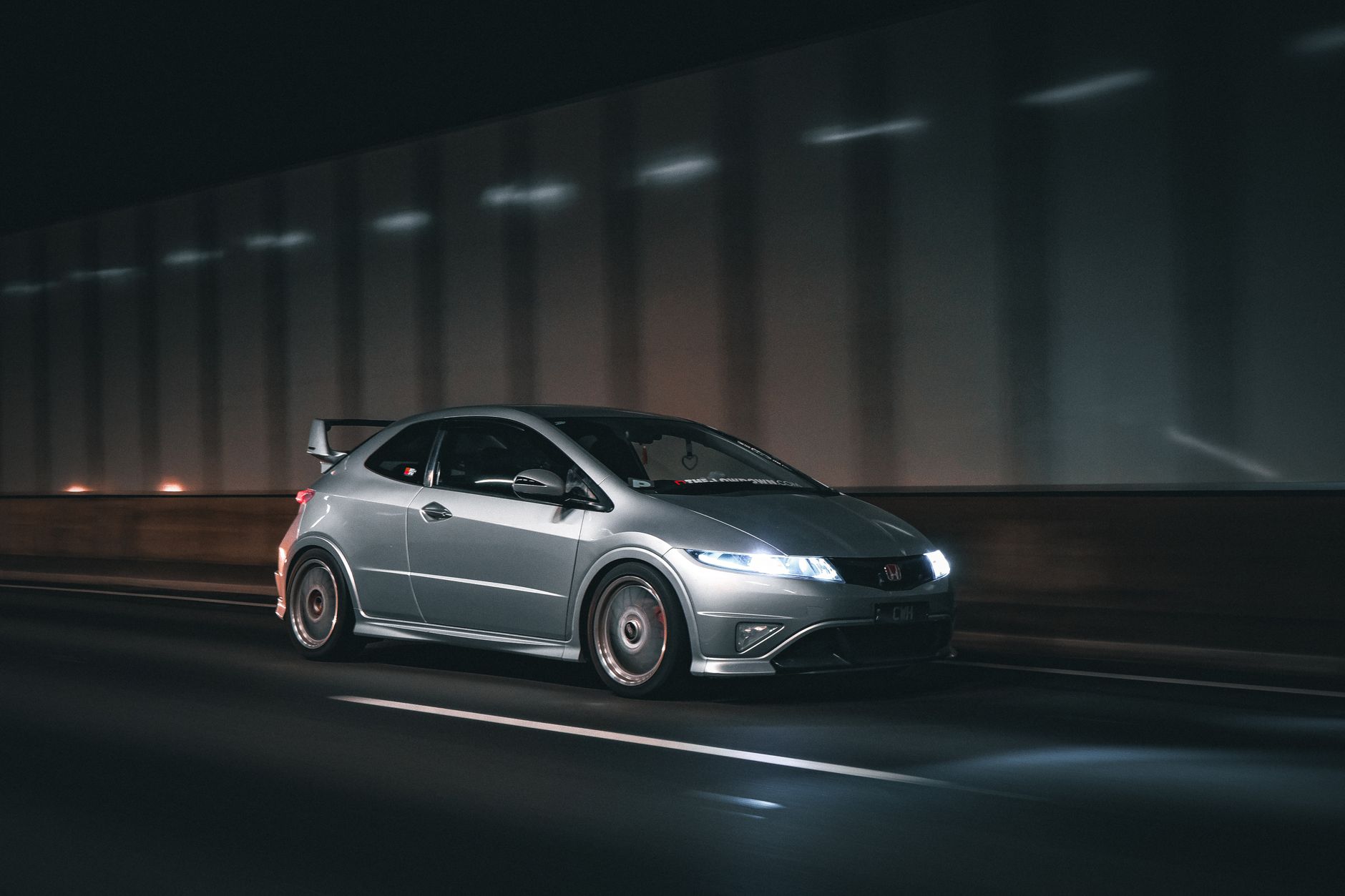
Honda Civic Type R Limited Edition
Honda built exactly 100 examples of the FK8-generation Civic Type R Limited Edition for the UK, and every single one of them was spoken for before anyone outside Honda had properly seen the car. Weight savings came from removing the rear seats and audio system, fitting a lighter lithium-ion battery, and adding a titanium exhaust that sounds absolutely brilliant and saves around 6 kg over the standard item. Lightweight BBS forged wheels saved another chunk, and the suspension was specifically retuned for track use.
These have already moved. I’ve seen UK examples breach £60,000 at specialist dealers, which is genuinely extraordinary for a Honda hatchback that was listed at around £37,995 new. There are very few left with low mileage and full service history, and the ones that do surface tend to move quickly. If you’re hunting one, the Honda UK community forums are your best bet for finding cars that haven’t been through the trade.
Ford Focus RS500
Ford’s decision to build 500 examples of the Mk2 Focus RS500 felt like a slightly cynical limited edition play at the time. Then you drove one and reconsidered entirely. Power was lifted to 350 PS, the Quaife ATB differential was uprated, and the suspension was lowered and stiffened. Visually it got a matte black bonnet, unique 19-inch alloys, and RS500 badging that made it look appropriately menacing.
Values have been climbing steadily. Expect to pay between £22,000 and £30,000 for a clean, low-mileage example in 2026, with unmolested cars at the top of that range. The Mk2 RS in standard form already has a strong following in the enthusiast community, and the RS500 takes that further. One thing worth noting: these were often bought as investments from day one, meaning some have genuinely low mileage and full history, which is not something you can say about most fast Fords from this era.
Peugeot 208 GTi by Peugeot Sport
The standard 208 GTi was a competent hot hatch. The “by Peugeot Sport” version was something more interesting: a 208-unit run (the number matches the model, which is either brilliant or irritating depending on your tolerance for marketing) with a Torsen limited-slip differential, upgraded Brembo brakes, specific suspension settings, and a 208 PS engine in a car that was already reasonably light. It was also available in a very specific Perla Nera black that looked fantastic.
This one is genuinely undervalued right now. Clean UK examples sit around £12,000 to £16,000, which feels wrong given the rarity and the way the market is moving. Part of the problem is perception: Peugeot’s reputation for reliability concerns puts buyers off, and the 208’s interior quality wasn’t exactly reassuring. But mechanically these are solid cars, and the driving experience is genuinely special in a way the standard GTi wasn’t.
SEAT León Cupra R
SEAT’s Cupra R came in various forms across different generations, but the Mk2 version is the one worth hunting specifically. Around 800 examples came to the UK, with 240 PS, Brembo brakes, KW coilovers, and a Quaife differential borrowed from the motorsport programme. SEAT’s connection to the VAG motorsport operation meant this was no rebadge job; it was a proper development car that just happened to wear a Lion badge.
Values have been moving upward across the last couple of years as buyers who remember these cars from new start to seek them out again. Budget around £15,000 to £22,000 for a well-maintained example, though high-mileage cars can still be found for less if you’re prepared to spend on a proper inspection. Finding a specialist garage willing to work on these thoroughly is genuinely important given the combination of age and performance specification.
Which ones are actually appreciating?
The Honda Type R LE has already made its move and is now firmly in collector territory. The Focus RS500 is mid-climb. The Mégane Cup-S feels like it has more room to run, particularly as the Renaultsport era becomes more historically significant. The Peugeot 208 by Peugeot Sport is the sleeper pick right now: genuinely rare, genuinely capable, and still priced in the range where a normal enthusiast can get involved.
The broader picture, as we’ve seen with other limited-run performance cars starting to climb, is that scarcity eventually wins. Factory documentation matters, condition matters enormously, and finding cars that haven’t been tracked into the ground requires real patience. But the limited edition hot hatch sector, particularly cars from 2008 to 2018, is in an interesting place right now. The window to buy ahead of the curve is narrowing.
According to DVLA vehicle registration records, the number of older performance hatches on UK roads has been declining year on year as attrition takes its toll, which only pushes values of surviving clean examples further upward. If you’ve been sitting on the fence about one of these, the fence is getting less comfortable by the month.
Frequently Asked Questions
Which limited edition hot hatches UK buyers can still find at reasonable prices?
The Peugeot 208 GTi by Peugeot Sport and the Renaultsport Mégane 265 Cup-S both still sit in accessible price ranges compared to their rarity. The 208 by Peugeot Sport in particular feels undervalued relative to its production numbers and driving quality.
How do I verify a limited edition hot hatch is genuine?
Check for the numbered build plaque, manufacturer documentation, and match the VIN against the official build record where available. For Honda Type R Limited Editions, Honda UK can confirm the production number; for Renaultsport models, specialist forums hold comprehensive build data.
Are limited edition hot hatches more expensive to insure in the UK?
Generally yes, because their agreed value tends to be higher and specialist insurers are needed to properly cover appreciated examples. Specialist brokers like Adrian Flux or Footman James are worth contacting rather than comparison sites, which often struggle to price these accurately.
What should I check when buying a used limited edition hot hatch?
Prioritise full service history, original documentation, and a pre-purchase inspection by a marque specialist. Track use without corresponding maintenance is the biggest red flag; check brake discs, tyres, and suspension components carefully, and verify the car hasn’t been in a structural accident.