
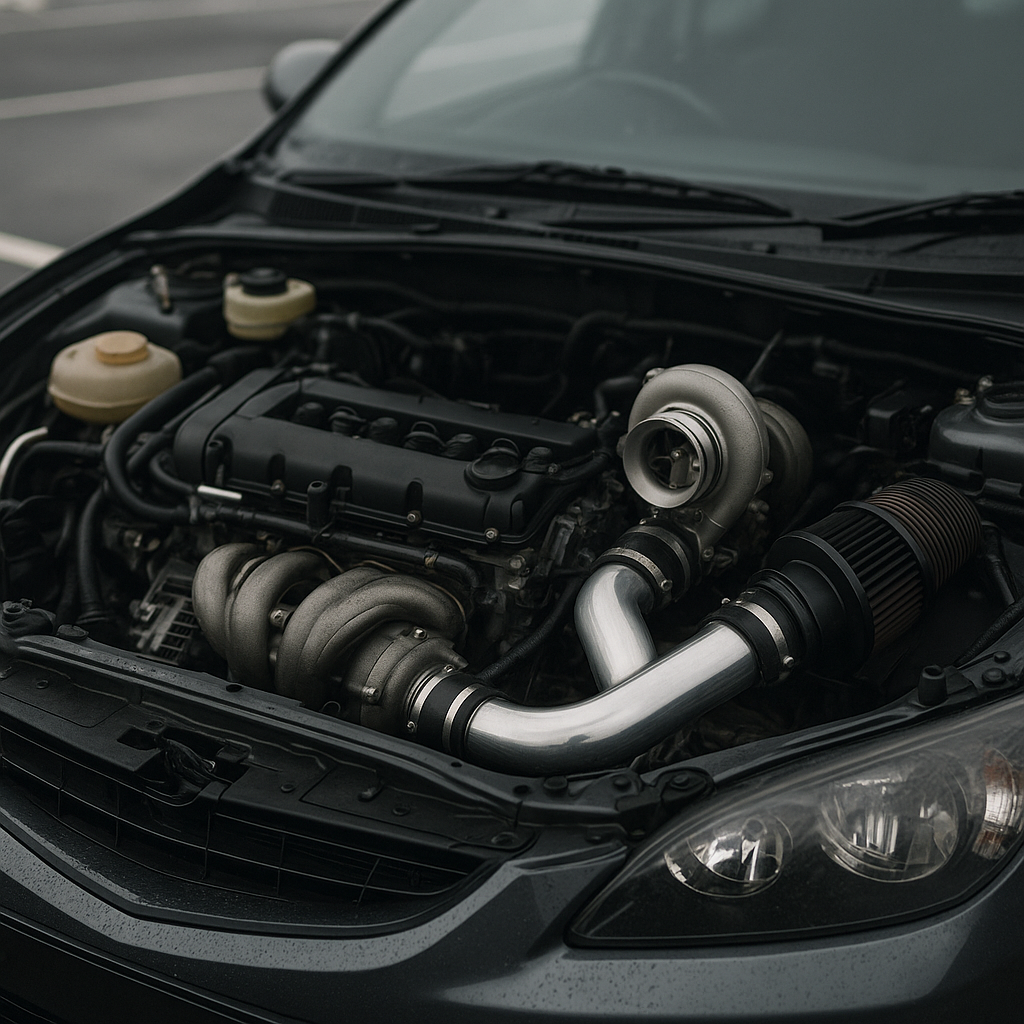
You’ve just had your car remapped. Maybe you’ve bolted on a cold air induction kit, or gone the whole way and fitted a turbo to a naturally aspirated engine. It feels brilliant. The throttle response is sharper, the power is up, and every time you pull onto a dual carriageway it puts a massive grin on your face. But here’s the bit most people quietly ignore until it’s too late: your car insurance may already be invalid.
Engine modifications and car insurance in the UK exist in a genuinely awkward relationship. Insurers are built around risk, and any change to a car’s standard specification shifts that risk profile. The problem is that the rules aren’t obvious, the consequences can be severe, and a surprising number of enthusiasts are driving around either uninsured or significantly underinsured without even realising it. Let’s get into it properly.
Why Engine Mods Make Insurers Very Nervous
Standard car insurance policies are priced against a specific vehicle as it left the factory. The moment you deviate from that specification, you’ve technically changed the risk. More power usually means higher top speed and faster acceleration, which statistically correlates with a greater likelihood of incidents. It also affects theft risk, because modified cars can attract unwanted attention, and repair costs, because non-standard parts often cost more to source and fit.
A remap (or ECU tune) is probably the most common engine modification in the UK right now. A Stage 1 tune on a turbocharged hot hatch can add 30 to 60 brake horsepower without a single physical part being changed. From the outside, the car looks completely standard. But if you make a claim and the insurer sends the car to an approved repairer, the workshop may flag an overboost condition or an altered fuel map, and at that point your insurer has grounds to void the policy entirely.
What Counts as an Engine Modification for Insurance Purposes?
This is where it gets murky, because there’s no single universal definition. In practice, most insurers treat the following as declarable engine modifications:
- ECU remaps and software tunes (including pop-and-bang maps)
- Induction kits and cold air intake systems
- Aftermarket exhaust systems, including decat pipes
- Intercooler upgrades
- Turbocharger or supercharger additions or upgrades
- Performance camshafts, big valve conversions or head work
- Fuel system upgrades (uprated injectors, high-flow fuel pumps)
Some insurers also want to know about suspension lowering, uprated brakes, and wheel/tyre changes, even though those aren’t strictly engine mods. The point is: if it changes the car from factory spec in any meaningful way, assume you need to declare it.

What Actually Happens If You Don’t Declare?
In a minor bump with no injury, you might get away with it. But in any serious claim, especially one involving a third party injury or a total loss, the insurer will investigate. If undeclared modifications come to light, they can invoke the principle of non-disclosure and void your policy from inception. That means your claim is rejected, you lose your no-claims discount, and technically you may have been driving without valid insurance, which carries a fixed penalty of £300 and six penalty points under current UK law. In serious cases, the police can seize the vehicle.
The Financial Conduct Authority (FCA) regulates insurance conduct in the UK, and while there have been tighter rules around unfair claim rejections in recent years, non-disclosure of material facts remains legitimate grounds for voiding a policy. You can read the FCA’s guidance on insurance consumer rights here. The short version: don’t assume being a careful driver protects you if you haven’t been upfront.
How Much Do Engine Mods Actually Increase Your Premium?
It varies enormously by insurer and by the nature of the modification. A Stage 1 remap on a 2.0-litre hot hatch might add £150 to £400 per year to a standard policy, assuming the insurer accepts it at all. More aggressive forced induction work or a naturally aspirated engine converted to turbo will push premiums significantly higher, sometimes doubling them, and many mainstream insurers will simply decline to quote.
Induction kits are generally cheaper to declare than people expect, often adding £50 to £150 per year, partly because the performance gain is modest and partly because they’re so common. A full turbo conversion on a car that wasn’t turbocharged from the factory, though? That’s specialist territory, full stop.
Finding Insurers Who Actually Get It
The good news is that there’s a healthy market of specialist modified car insurers in the UK who won’t penalise you simply for being enthusiastic. Companies like Adrian Flux, Footman James, and Peter James Insurance specifically cater to the modified car community. They understand that a responsible driver with a remapped Golf R is a different risk profile to a reckless driver in a standard one, and they price accordingly.
Agreed value policies are also worth exploring, particularly if your build has rare or expensive components. Standard policies pay out market value on a total loss, which on a heavily modified car will almost certainly not reflect what you’ve spent. An agreed value policy locks in a figure upfront, so you’re not arguing with a claims handler about whether your bespoke induction system was worth the money.
Club membership can genuinely help here too. Owners clubs affiliated with bodies like the RAC or specific marque clubs sometimes negotiate group insurance rates that are far more lenient about modifications than retail policies. It’s the kind of thing that takes twenty minutes to sort and can save you hundreds of pounds a year.
Practical Steps Before You Modify
The smartest move is to call your insurer before the modification goes in, not after. Get confirmation in writing (email is fine) that the proposed modification is acceptable and note any premium adjustment. Keep all receipts, fitting invoices, and part numbers. If the workshop performs a dyno run, save that sheet too. In the event of a dispute, documentation is everything.
It’s also worth keeping a written record of your car’s spec at every stage, particularly if you’re building it over several years. Modifications that seem minor individually can add up to a very different vehicle on paper, and insurers look at the cumulative picture. Much like the precision engineering required in heavy industrial applications, where sourcing quality components matters enormously (the way specialists approach something like Komatsu engine parts with meticulous documentation), keeping tabs on every change to your car’s spec pays dividends when claims time comes.
One more thing: if you’re buying a used modified car, make sure you get a full modification history from the seller. Running someone else’s undeclared Stage 2 build without knowing it’s there is exactly the kind of situation that turns a minor prang into a legal nightmare. Check the ECU map version if you can, and if the car feels noticeably stronger than the published power figure suggests, get it checked before you insure it.
The Bottom Line on Engine Mods and Insurance
Modifying your engine doesn’t have to mean either sky-high premiums or living dangerously without cover. The UK modified car insurance market is mature enough to handle serious builds at reasonable prices, provided you go to the right insurers and declare everything honestly. The worst outcome, by a considerable margin, is trying to hide a remap and then needing to make a claim. That’s where the real cost hits, and it’s completely avoidable.
If you’re getting into performance tuning or building a track-capable road car, take ten minutes to sort your insurance properly. It’s the least glamorous part of the hobby, but it’s the one that actually keeps you on the road legally. And if you want more on the legal side of mods, our guide to modified cars and UK law in 2026 covers exactly what’s still road-legal and what isn’t.