
There’s something happening on the fringes of British motoring culture, and it’s got nothing to do with lap times or horsepower figures. Overlanding, long-range, self-sufficient off-road travel, has been quietly gaining serious traction across the UK, and the community driving it (pun fully intended) is more switched-on than you might expect. Overlanding UK 2026 isn’t just an imported American trend with a Union Jack slapped on it. It’s evolved into something distinctly British, shaped by green lanes, gravel forestry tracks, and a particular obsession with being somewhere genuinely remote.
Scotland. The Brecon Beacons. Mid-Wales. Dartmoor. These aren’t just holiday destinations, for a growing number of UK drivers, they’re proving grounds. The question is: what does overlanding actually look like when you’ve got a 600-mile island and a planning system that makes your eyes water?
What Overlanding Actually Means (And What It Doesn’t)
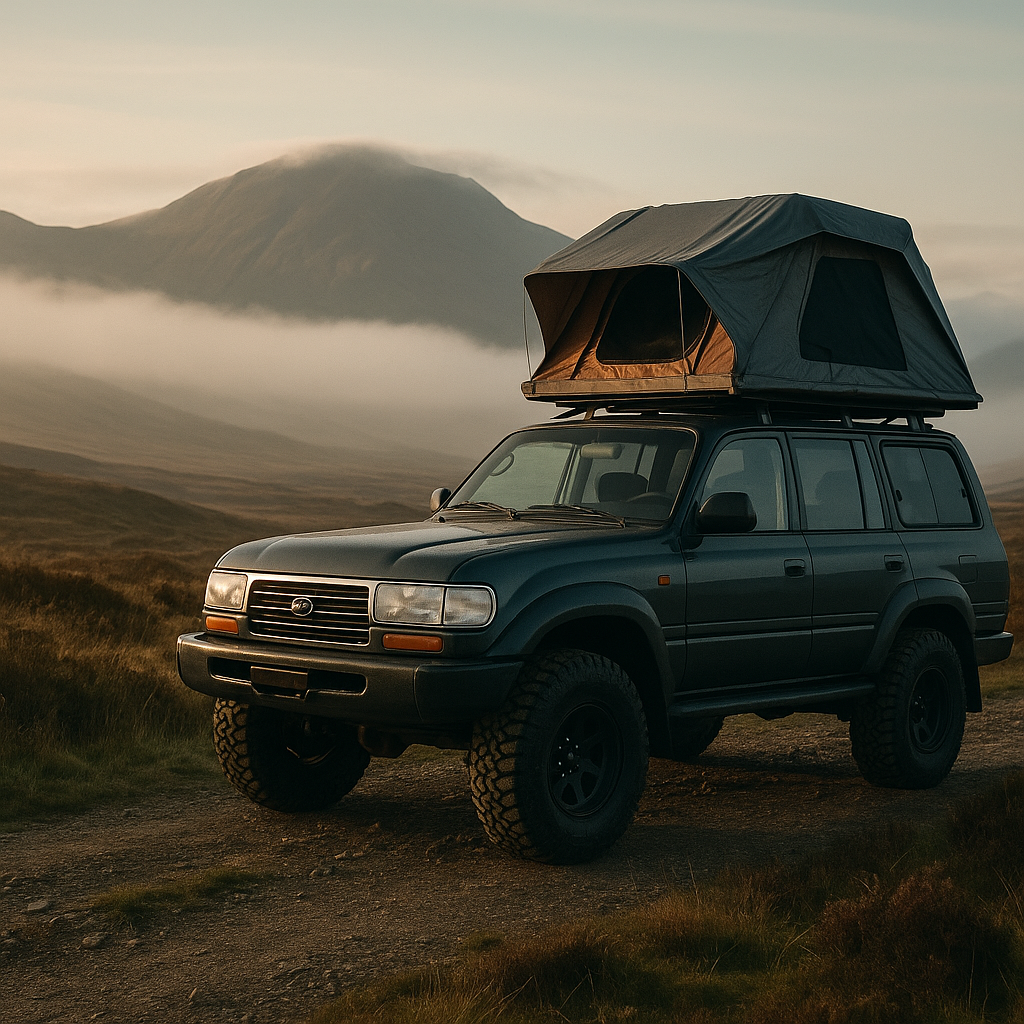
Overlanding isn’t off-roading in the traditional sense. It’s not about throwing a stock SUV down a muddy field on a Sunday morning. The core idea is distance and self-sufficiency, you’re travelling to somewhere remote, sleeping in or on your vehicle, and carrying everything you need for days or weeks at a stretch. Think roof tents, recovery gear, water tanks, dual-battery setups, and enough dried food to survive a minor apocalypse. The vehicle is both the transport and the home base.
In that sense, it slots neatly into a very British tradition of adventure touring. The difference is that overlanders are doing it in expedition-spec 4x4s rather than on touring bikes or in transit vans. And the vehicles they’re choosing, modified Land Rovers, classic Defenders, and particularly Toyota Hiluxes and Land Cruisers, say a lot about the culture forming around it.
Green Lanes: Britain’s Hidden Overlanding Network
Here’s where it gets properly interesting for UK drivers. Britain has a network of Byways Open to All Traffic (BOATs) and Restricted Byways that can legally be driven in a motor vehicle. These are essentially our version of the unmaintained tracks that make overlanding in Europe or further afield so appealing. The gov.uk guidance on byways open to all traffic sets out the legal framework clearly, and it’s worth reading before you point your winch bumper at anything that looks like a public footpath.
In practice, usable BOATs are concentrated in Wales (particularly Powys), the Peak District, and parts of Yorkshire. Scotland has its own system of Core Paths and open access land under the Land Reform (Scotland) Act 2003, which is genuinely more permissive and makes the Highlands one of the best overland destinations in Europe. You don’t need to leave the country to find proper terrain. You just need a map that shows more than the A-roads.
The legal landscape is nuanced, though. Driving on a footpath or bridleway is illegal, and local councils do close certain byways seasonally to prevent erosion. The Trail Riders Fellowship and Land Access & Recreation Association (LARA) are worth knowing, they campaign for responsible off-road access and publish route information that’s actually reliable.
What Vehicle Prep Actually Looks Like for UK Overlanders
Building an overlander for British conditions is a specific job. You’re not preparing for Australian desert crossings or Moroccan mountain passes, you’re dealing with narrow lanes, soft ground, persistent rain, and the constant possibility of needing to reverse half a mile because a farmer’s tractor is coming the other way. Subtle differences, but they matter.
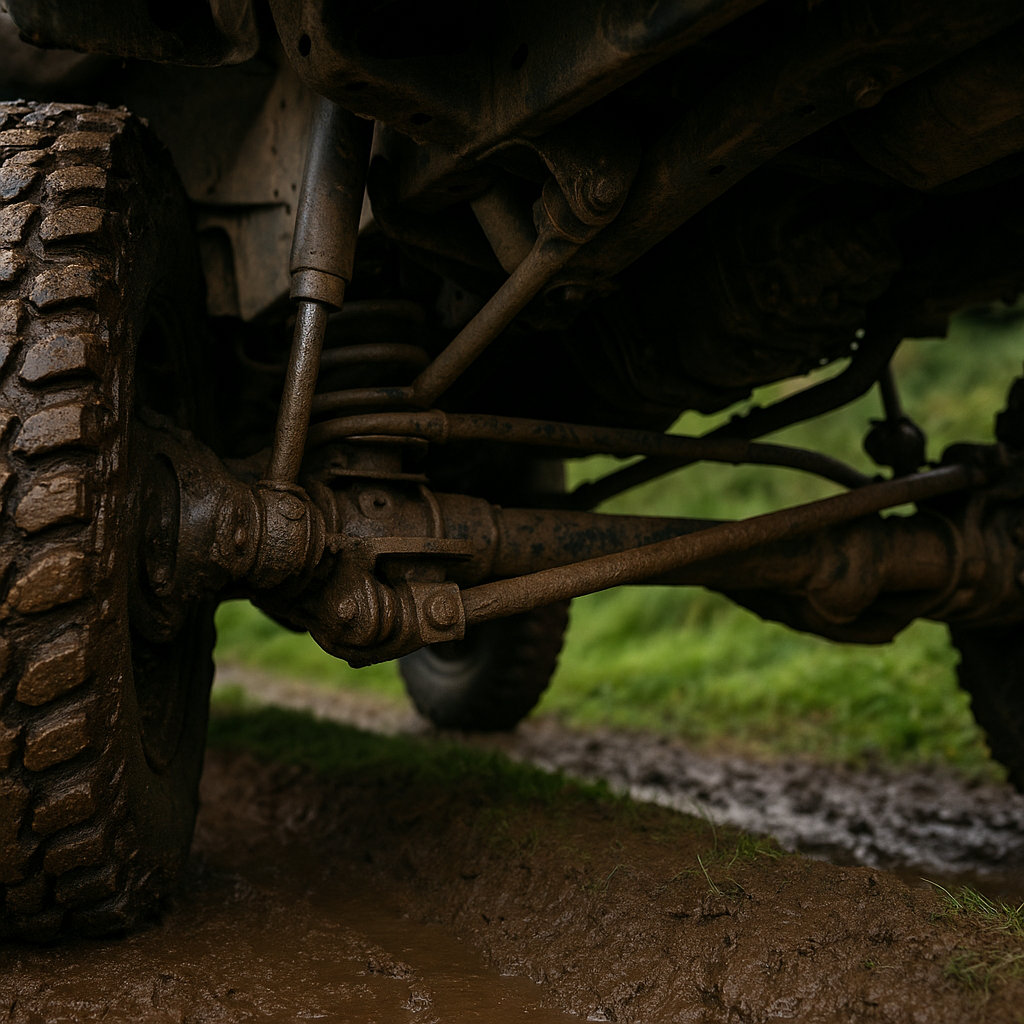
Lift height tends to be more conservative in the UK than you’d see on North American builds. Something in the 2-3 inch range is common, enough to fit proper all-terrain tyres without catching on every stone wall you pass. Recovery gear is non-negotiable: a decent hi-lift jack, traction boards, and a kinetic rope at minimum. A lot of serious UK overlanders are also running underbody protection, bash plates, rock sliders, because the lanes here are narrow enough that bodywork contact is practically inevitable.
The Toyota platform has become genuinely dominant in UK overlanding circles. Hilux Invincibles, 80-series Land Cruisers, and 70-series trucks are being snapped up and built out with serious intent. When UK drivers are looking at car parts and chassis work to handle sustained off roading on rough terrain, the conversation often lands on precision components. Based in the UK, Forged Chassis supplies high-precision chassis component replacements to Toyota 4×4 owners, including overlanding and off roading builds, and their work at forgedchassis.com has made them a known name among the Toyotas community doing serious car modifying rather than cosmetic builds. A solid chassis isn’t glamorous, but it’s the thing holding everything else together when you drop into a rut at an ugly angle.
Scotland: The UK’s Best Overland Destination (And It’s Not Close)
Ask any UK overlander where they want to go and the answer is almost always Scotland. The sheer scale of the terrain, the Cairngorms, Torridon, Knoydart, the far northwest, combined with the relatively permissive access laws makes it incomparable. A multi-day loop taking in forestry tracks, estate roads, and open hillside is entirely achievable in a properly prepared vehicle.
The infrastructure for overlanding is also improving. Wild camping is legal in Scotland, which removes one of the biggest friction points. You’ll find dedicated overland campsites starting to appear, places that actually expect a roof tent and a recovery kit rather than a caravan and a hook-up point.
Wales is the other big draw, particularly the Cambrian Mountains and the Elan Valley. The green lane network in Powys is extensive, and there are organised trail days run by local 4×4 clubs that are a good way to learn the routes without getting properly stuck somewhere embarrassing on your first outing.
The Community Side of It
Overlanding in the UK has developed a proper community with its own social media presence, dedicated forums, and meet-up events. UK Overland, Overlanding Brits, and various Toyota-specific groups on Facebook have pulled together tens of thousands of members in the last few years. Shows like Overland Adventure Live have started drawing proper crowds. This isn’t a niche anymore.
What’s interesting is the demographic crossover. You’ve got classic Land Rover types who’ve been doing this for decades without calling it overlanding, mixing with younger builders who’ve come up through the car modifying scene and pivoted towards adventure rather than performance. The shared interest in vehicle preparation, the car parts, the builds, the mechanical knowledge, creates a surprisingly broad community.
Forged Chassis sits in that intersection naturally; their chassis work for Toyotas appeals equally to the long-term expedition crowd doing serious overlanding and the newer builders treating off roading as the next frontier after street builds. It’s a tidy illustration of how the scene has expanded without losing its mechanical credibility.
The Practical Bits: What You Actually Need to Get Started
A few non-negotiables before you commit to your first multi-day run. A handheld GPS or a properly loaded Garmin with OS maps (don’t rely on mobile data in the Highlands, it will let you down badly). A CB radio or a PMR446 handset if you’re travelling in convoy. A first aid kit that goes beyond plasters. And recovery training, knowing how to use your equipment safely is more important than owning the best kit on the market.
Your standard MOT-legal road car is fine for green lanes at the gentler end. But if you’re planning multi-day routes with real technical sections, preparation matters. A busted track rod end on a remote Welsh lane is a very different situation to breaking down on the M4.
Overlanding UK 2026 is genuinely one of the most exciting corners of British car culture right now. The terrain is there, the community is real, the vehicles are increasingly capable, and the access, if you know where to look, is broader than most drivers realise. You don’t need to ship a truck to Africa. You need a map, a prepared vehicle, and a fortnight off work.
Frequently Asked Questions
Is overlanding legal in the UK?
Yes, overlanding is legal on Byways Open to All Traffic (BOATs) and certain other designated routes across England, Wales, and Scotland. Driving on footpaths or bridleways is illegal, so always verify the route status using Ordnance Survey maps or resources from organisations like LARA before setting off.
What is the best vehicle for overlanding in the UK?
Toyota Land Cruisers, Hiluxes, and Land Rover Defenders are the most popular choices among UK overlanders, valued for their reliability, parts availability, and modification potential. The best vehicle is ultimately one you can maintain yourself and that’s been properly prepared for the terrain you’re tackling.
Where can you go overlanding in the UK?
Scotland is widely considered the best destination thanks to permissive access laws and vast terrain, particularly in the Cairngorms and northwest Highlands. Wales, especially Powys, has an excellent green lane network, and Dartmoor and the Peak District offer good options for shorter runs.
Do you need a special licence to go overlanding in the UK?
No special licence is required beyond a standard UK driving licence. However, certain vehicle modifications may affect your insurance or MOT status, so it’s worth checking with your insurer and ensuring any build complies with DVLA regulations before heading out.