Author: Alex Mason

  • The Best UK Driving Roads South of the Border: England’s Hidden B-Road Gems Mapped Out

    Scotland gets all the love. The NC500 has been hashtagged to death, the Bealach na Bà has its own fan club, and every automotive YouTube channel has done the Glencoe run at least twice. Fair enough, those roads are genuinely spectacular. But here’s the thing: some of the best driving roads in England and Wales are sitting right there, largely ignored, with better surfaces, lighter traffic and scenery that’ll stop you mid-gear-change. I’ve spent the better part of two years hunting these down, and I’m done keeping them quiet.

    Why England and Wales deserve more credit from driving enthusiasts

    The bias towards Scotland is partly cultural, partly geography. But England and Wales have something Scotland’s famous routes often don’t: variety. You can go from a moorland blast through the Peak District to a tight, hedge-lined Devon lane to a sweeping Welsh mountain pass within a few hours of each other. The southern half of the island has its own rhythm, its own character. And crucially, the best bits aren’t all clogged with caravans and campervans doing 40mph.

    Surface quality is where England quietly wins, too. The A-class roads through Derbyshire and the B-roads threading across the Brecon Beacons have had recent resurfacing work done in patches that Scottish single-track roads simply haven’t. If pothole damage is already hammering your car, you’ll appreciate tarmac that doesn’t feel like it’s been through a war.

    The Snake Pass (A57): Peak District’s unsung superstar

    Let’s start obvious, then get weird. The Snake Pass connecting Sheffield to Glossop is technically well known, but most people drive it like they’re afraid of it. Done properly, on a dry Tuesday morning in late October when the mist sits in the valleys and you’ve got the road to yourself, it is genuinely one of the best driving roads in England. Full stop.

    The surface is patchy in a few spots near Ladybower Reservoir but the fast, flowing crests and the long sightlines on the eastern descent reward smooth driving over aggression. Traffic patterns matter here: avoid weekend afternoons and any bank holiday. Midweek mornings before 9am are a different planet. The Snake Pass Inn at the top is long gone as a functioning pub, but there’s a petrol station in Glossop about 8 miles west that’ll sort you out before or after a run.

    The B4391 across the Berwyn Mountains, Wales

    This is the one I genuinely keep to myself at parties, but I’ll share it here. The B4391 between Bala and Llangollen cuts across some of the most dramatic and underrated hill country in Wales. The road climbs sharply out of Llangynog, narrows through the upper moorland section and then opens up into a series of fast sweepers with visibility stretching for miles. The surface is good. The traffic is virtually non-existent outside of summer weekends.

    What makes it special is the texture of the drive. It demands full concentration but never feels dangerous if you respect the pace notes the road gives you. It’s the kind of route that makes you understand why certain car journalists keep coming back to Wales with test cars when they need an honest assessment. I’d pair this with a run back along the A494 Bala to Dolgellau stretch, which is a different kind of brilliant, smoother, faster, more open.

    The B3212 across Dartmoor: slow it down to speed it up

    Dartmoor splits opinions. The B3212 between Moretonhampstead and Princetown is genuinely wild and genuinely narrow in places, and if you meet a tractor you’re going to have a bad time. But get it right and you’re rewarded with some of the most atmospheric driving in England, granite tors on the horizon, wild ponies doing their best to step in front of you, and corners that require actual thought. I’ve driven it in a hot hatch and a sports car and both experiences were completely different. The car matters less than the approach.

    Fuel is the practical concern here. Yelverton has a petrol station on the western side, Moretonhampstead has one on the eastern approach. Fill up before you go because the moor itself has nothing. The road can also close in genuinely bad weather, so check the Met Office forecast before you commit to a January blast. Snowfall on Dartmoor hits harder than it looks from the M5.

    The A44 over Plynlimon: Wales’s quiet answer to everything

    The A44 from Rhayader to Aberystwyth via the Plynlimon plateau is what I’d call a thinking driver’s road. It’s not a sequence of hairpins. It’s long, flowing, exposed, and slightly savage in a way that builds on you. The road climbs above 400 metres and then sweeps back down towards the coast with a view that’ll genuinely make you say something out loud. On a clear day in summer, you can see into four directions simultaneously and feel like you’ve found something the rest of the car community hasn’t catalogued yet.

    Traffic is minimal outside of late July and August. The surface is predominantly good, with a few rougher sections on the upper plateau that ease off once you descend towards Ponterwyd. There’s a petrol station in Rhayader on the eastern end and another as you approach Aberystwyth from the west. Fill up in Rhayader, the plateau section is long enough to matter if you’re in something thirsty.

    Kirkby Stephen to Brough via the B6276: the north’s secret weapon

    The B6276 between Brough and Middleton-in-Teesdale through the North Pennines doesn’t get talked about enough. This is wild, exposed moorland driving with long straights interrupted by sudden compression corners that catch you out if you’re not paying attention. The landscape is bleaker than Dartmoor, more industrial in its history, but no less dramatic for it. In a rear-wheel-drive car on a cool autumn morning, it’s a joy. In anything with decent chassis balance, honestly one of the best driving roads in England that fewer than a hundred people are actively seeking out.

    Nearby, the A686 between Penrith and Haydon Bridge is in the same tier. These Pennine roads are often overlooked because they don’t carry the romantic branding of Snowdonia or the Lakes, but the driving quality is real. They’re also well-served by small towns: Alston is worth a stop, and there are several independent garages in the area if something goes wrong on your run. If your car is freshly modified, make sure your insurance is up to scratch before heading to roads this remote, the sort of Japanese performance cars that suit this kind of driving sometimes carry modifications that need specific disclosure.

    How to actually plan a driving road trip in England or Wales

    The practical stuff matters as much as the romance. The National Highways website carries live road condition updates for major routes, and most county councils publish their own resurfacing schedules if you dig around. Fuel stops in rural Wales and the northern Pennines are further apart than Google Maps suggests, the pin exists but the petrol station it marks sometimes closed three years ago.

    I plan every road trip run with a fuel reserve margin: never drop below a quarter tank before I know exactly where the next stop is. On moorland and mountain routes, that’s not over-caution, it’s just sense. And if you’re running anything modified, keep your documentation in the car. These roads draw attention, some of it warranted, and being able to demonstrate your car is road-legal matters.

    Scotland will always have its mythology. But the best driving roads in England and Wales are here, they’re real, and they’re available most Tuesday mornings without a queue of Instagram cars ruining the shot. Get out there before everyone else figures it out.

    Frequently Asked Questions

    What are the best driving roads in England for car enthusiasts?

    The Snake Pass (A57) in Derbyshire, the B3212 across Dartmoor and the B6276 through the North Pennines are consistently rated among the best by enthusiasts. They offer a mix of surface quality, flowing corners and light traffic when driven at the right time of day and week.

    Are Welsh driving roads better than Scottish ones for enthusiasts?

    It depends what you’re after. Welsh roads like the B4391 and the A44 over Plynlimon offer dramatic scenery with better tarmac than many Scottish single-track routes. They also tend to have lighter tourist traffic outside of school holidays, which makes for a more rewarding drive.

    When is the best time to drive the Snake Pass to avoid traffic?

    Midweek mornings before 9am are ideal, particularly in spring and autumn. Avoid bank holidays and weekend afternoons when leisure traffic, cyclists and motorbikes all share the road. Winter can bring closures due to ice and snow, so always check the Met Office forecast first.

  • The Best UK Driving Roads South of the Border: England’s Hidden B-Road Gems Mapped Out

    Everyone bangs on about the NC500. Fair enough, it’s spectacular. But if you’ve ever driven south of Hadrian’s Wall with an open mind and a full tank, you’ll know the best driving roads in England can absolutely hold their own against anything Scotland throws at the map. I’ve spent the better part of three years hunting them down, and what I’ve found is genuinely brilliant.

    The problem isn’t that these roads don’t exist. It’s that the enthusiast community has collectively decided they don’t count. Too many roundabouts. Too many caravans. Too much England. Rubbish. There are stretches of tarmac in the Pennines, the Marches, and the Welsh borders that would make your palms sweat and your grin embarrassingly wide.

    Why English B-roads get unfairly written off

    Scotland gets the credit because it photographs well. Wide open glens, dramatic skies, zero traffic on a Tuesday in February. But “dramatic photography” and “genuinely involving drive” are two different things. The best driving roads in England tend to be narrower, more technically demanding, and riddled with the kind of unpredictable corners that actually teach you something about your car’s chassis. Blind crests over limestone ridges, cambered bends through ancient hedgerows, long third-gear sweepers that drop away into valleys. It’s proper driving.

    Surface quality is where England genuinely struggles, though. Pothole damage is a real and expensive problem on many rural routes, so checking road condition reports before you set off is not optional, it’s survival instinct. That said, several of the routes below have been resurfaced recently and are currently in excellent nick.

    The B6255 through Ribblesdale, North Yorkshire

    Start here if you want to understand what I mean. The B6255 between Horton-in-Ribblesdale and Hawes is one of those roads that rewards commitment. It climbs hard, flattens across moorland, then drops through tight S-bends with dry-stone walls close enough to remind you that concentration matters. Traffic is genuinely light mid-week, surface quality is decent after Highways England work done in late 2025, and there’s a proper café in Hawes for a debrief when you arrive. I’ve done this road in a hot hatch and in a rear-wheel-drive classic, and it rewards both completely differently.

    The A4069 Black Mountain Pass, Carmarthenshire

    Cross into Wales and the arguments get even stronger. The A4069 over the Black Mountain between Llangadog and Brynaman is one of the most criminally underrated pieces of road in Britain. Tight hairpins climbing through the Brecon Beacons national park, a summit with views that go forever, and a descent that tests your braking discipline hard. Surface is variable near the top, so tyre choice matters. A set of decent performance road tyres makes a genuine difference up here, more so than on smooth motorway tarmac.

    Fuel up in Llangadog before you go. There’s nothing at altitude, and you do not want to be coasting down the back side on fumes.

    The B4520 through the Epynt Military Ranges, Powys

    This one sounds alarming but is completely accessible on weekdays. The B4520 north of Brecon cuts through military range land, and the result is a road with almost zero development alongside it, a surface that’s kept in better condition than most civilian roads, and bends that flow beautifully. On a dry morning this road is as good as anything. The MOD takes maintenance seriously because heavy vehicles use the area regularly. Mad, but true. Check access on the Ministry of Defence website to confirm the route is open before you go.

    The A537 Cat and Fiddle Road, Cheshire/Derbyshire border

    Yes, it’s well-known in biking circles. But car drivers often skip it because of the biker association. Their loss. The A537 between Macclesfield and Buxton has long fast sweepers, a genuine altitude change, and enough technical sections to keep things interesting from end to end. The Cat and Fiddle pub itself is closed, which means one less distraction and more road to enjoy. Surface condition is good on the Cheshire side; the Derbyshire descent gets more patchy closer to Buxton.

    Traffic is heavier on summer weekends and bank holidays. The move is to be there before 8am or after 6pm. I’ve done it at 7am on a Sunday in autumn and barely seen another vehicle for twenty minutes.

    The B4368 through Corvedale, Shropshire

    Shropshire is genuinely overlooked. The B4368 between Craven Arms and Much Wenlock runs through Corvedale, a quiet valley that feels like it’s been forgotten by modernity in the best possible way. The road is narrow in places, technical throughout, and surrounded by that rolling border-country landscape that nobody seems to put on a driving bucket list. Surface is mostly solid. Traffic is agricultural during the week and almost nothing at weekends. If you want a road that doesn’t feel like a performance because you saw it on Instagram, this is it.

    Craven Arms has fuel, a decent butcher, and that’s about it. Which is exactly what you want.

    The B3212 across Dartmoor, Devon

    England’s wildest peninsula delivers on the southern end. The B3212 across the middle of Dartmoor between Moretonhampstead and Yelverton is raw, exposed, and genuinely challenging in a way that surprises people who write off the South West. Ponies on the road are a genuine hazard. Mist rolls in fast. But on a clear day, the visibility from the high moor is extraordinary, and the road surface on this particular route has been maintained better than most of Dartmoor’s network. Drop into Moretonhampstead for fuel before you head west.

    Planning your run: what actually matters

    Getting the most from these roads comes down to timing and preparation, and neither of those is complicated. Mid-week mornings are universally better than weekend afternoons. Check the Met Office forecast the night before because a damp road on the Black Mountain Pass or Dartmoor is a very different proposition to a dry one. Check your tyres. I’d argue that understanding the difference between track-day and road tyre performance is actually relevant here, because these are roads that expose tyre behaviour in a way that motorway miles never will.

    And if you’re planning a longer enthusiast road trip that strings several of these routes together, the practicalities matter more than you’d think. Fuel planning specifically. These routes are rural and petrol stations are sparse. Run your tank low at your peril.

    One more thing: if you’re putting together a list of cars to take on roads like these, a used Japanese performance car under £15,000 would be an absolutely cracking choice. Reliable, capable, and the kind of machine that makes every B-road feel like a gift rather than a commute.

    Scotland’s roads are brilliant. Nobody’s arguing otherwise. But if you live south of Edinburgh and you’ve been ignoring what’s on your doorstep, you’ve been leaving serious driving pleasure on the table. Get out there.

    Frequently Asked Questions

    What are the best driving roads in England for car enthusiasts?

    Some of the finest include the B6255 through Ribblesdale, the A537 Cat and Fiddle Road on the Cheshire/Derbyshire border, and the B4368 through Corvedale in Shropshire. Each offers a mix of technical corners, light traffic, and genuinely rewarding surfaces that most enthusiasts overlook in favour of Scottish routes.

    Are Welsh driving roads included in English B-road guides?

    Wales is a separate nation but geographically accessible from England, and routes like the A4069 Black Mountain Pass and the B4520 through Epynt are within easy reach for English-based drivers. Many enthusiast guides bundle the Welsh borders and Welsh roads together for good reason: they’re exceptional.

    When is the best time to drive B-roads in England without traffic?

    Early weekday mornings are the gold standard, particularly before 8am on a Tuesday or Wednesday. Summer bank holidays and Sunday afternoons bring recreational traffic, especially on routes near national parks. Autumn weekdays offer some of the cleanest, quietest driving of the year.

  • Speed Awareness Courses vs Fixed Penalty Points: What UK Drivers Should Actually Choose in 2026

    Speed Awareness Courses vs Fixed Penalty Points: What UK Drivers Should Actually Choose in 2026

    Nobody enjoys seeing those blue lights in the rear-view mirror. But if you’ve been caught doing 35mph in a 30 zone and the officer hands you an offer, you’re suddenly facing a genuinely consequential choice: take the National Speed Awareness Course and wipe your slate, or accept the Fixed Penalty Notice, bank three points on your licence, and pay the £100 fine. Simple, right? Not even close. Especially if you’re running something modified, turbocharged or otherwise enthusiast-spec. The speed awareness course vs points UK debate is murkier than most people realise, and the stakes are higher if your car already costs a fortune to insure.

    Police car on roadside speed check relevant to the speed awareness course vs points UK decision
    Photo by Kindel Media on Pexels

    What actually qualifies you for a speed awareness course?

    The course isn’t a guaranteed option. Each police force sets its own eligibility window, but the general rule across England and Wales is that you’re eligible if you were caught between 10% + 2mph and 10% + 9mph over the limit. So on a 30mph road, that’s between 35mph and 42mph. Go above that threshold and you’re looking at a Fixed Penalty Notice at minimum, or a court summons if it’s serious. You also can’t have attended a speed awareness course in the previous three years. Miss either criterion and the choice is made for you.

    The course itself typically runs for about four hours, either in a classroom or online, and costs roughly £80 to £100 depending on the area. You pay instead of the fine, you get no points, and technically no conviction is recorded. On paper, it sounds like a complete win.

    The insurance angle that most people completely miss

    Here’s where it gets interesting, and slightly frustrating. A speed awareness course doesn’t go on your DVLA record, which means you don’t have to declare it to your insurer the same way you’d declare points. But, and this is a significant but, most UK insurers still ask specifically: “Have you attended a speed awareness course in the past X years?” Some ask for three years, some for five. If you lie on that form, your policy could be voided. That’s not a technicality; it’s the kind of thing that means your insurer walks away from a claim entirely.

    I’ve spoken to a few enthusiasts who assumed the course was a clean slate in every sense. It isn’t. The question on renewal forms catches people out regularly. The upside is that in many cases, declaring a course still results in a smaller premium increase than declaring three points would. According to research from the BBC, penalty points can push premiums up by 5% to 25% depending on insurer and driver profile. For a young driver or someone already paying elevated rates, that’s a meaningful annual figure.

    Modified and performance car owners: this decision hits differently

    If you’re already running a modified car, you already know how brutal the insurance market can be. Engine swaps, remaps, suspension upgrades, even cosmetic changes can significantly inflate your premium. The last thing you need layered on top is a set of points that tells your insurer you’re a speed risk on top of being a modification risk. That’s a compounding problem.

    My take: for anyone with a modified or performance car, the speed awareness course is almost always the smarter move if you’re eligible. Three points plus a modification disclosure is a very expensive combination. I’d argue it’s worth every penny of that course fee to keep your record cleaner. For context on what modifications already do to your insurance premiums, our piece on what happens to your car insurance when you modify your engine is genuinely eye-opening reading if you haven’t been through it already.

    Performance car drivers on PCP finance deals should also pay close attention. Some lenders have clauses around licence endorsements, particularly if you’re financing something with serious power. Three points could technically complicate matters at renewal. Another reason the course option deserves serious consideration rather than a casual shrug.

    When taking the points might actually make sense

    There are situations where the course isn’t the obvious answer. If your insurer’s renewal form only asks about convictions and endorsements, and not courses specifically, the points declaration might be less damaging than you’d assume, especially if it’s your first offence and the insurer’s pricing algorithm treats it mildly. Some older drivers with clean records and standard cars see minimal premium movement from a single SP30.

    There’s also the time commitment factor. Four hours isn’t nothing. If you’re self-employed and that half-day costs you more than the premium difference, some people genuinely do the maths and take the points. I’d still lean toward the course in most circumstances, but I understand the logic.

    And if you’re already sitting on six or more points from a previous offence, adding three more edges you toward the territory where insurers start refusing cover altogether or quoting figures that are essentially punitive. In that case, the course isn’t just preferable; it’s arguably essential.

    The three-year course lockout: plan around it

    One thing that catches people off guard is the three-year eligibility rule. If you’ve done a course within the last three years, the next time you’re caught speeding you’re going straight to points with no alternative offered. So ironically, the course has its own kind of record, even if it doesn’t live on your DVLA licence. Keep that in mind if you’re a regular motorway driver who pushes limits, or if you regularly take on challenging mountain roads at speed. The course buys you breathing room, but it isn’t unlimited amnesty.

    Fans of getting out into the countryside who also enjoy performance driving might want to read our breakdown of the rise of overlanding in the UK, where speed is rarely the priority but road awareness absolutely is.

    What about younger drivers and black box policies?

    Young drivers on telematics policies face a slightly different calculation. If your black box is already tracking your speed and flagging it back to your insurer, a speed awareness course won’t erase the data your insurer already holds from the device. Points versus course matters less in that context; the telemetry is the real record. We covered the full picture on black box insurance for young UK car enthusiasts if you want to understand where the real risk sits on those policies.

    For young drivers not on telematics, the course is an even clearer win. Insurers treat younger drivers as higher risk regardless; piling points on top accelerates premium increases faster than for older drivers with established no-claims histories.

    The practical verdict

    If you’re eligible for a National Speed Awareness Course, take it. Pay the course fee, sit through the four hours, and keep your licence cleaner. The premium difference over three years, particularly on a modified or performance car, will almost certainly outweigh the course cost by a significant margin. Just be honest on your renewal form; declare the course if the insurer asks. That honesty protects your policy when you actually need it. Getting caught out by a voided policy over a course declaration would be a genuinely painful lesson to learn the hard way.

  • How UK Mechanics Are Using AI Diagnostics in 2026 and What It Means for Your Garage Bill

    How UK Mechanics Are Using AI Diagnostics in 2026 and What It Means for Your Garage Bill

    Something shifted in independent garages across the UK over the last couple of years, and I don’t think enough people are talking about it. The old ritual of plugging in a basic OBD reader, squinting at a fault code, and either Googling it or billing you for an hour of head-scratching is quietly being replaced. AI-powered diagnostic platforms, paired with increasingly sophisticated OBD hardware, are landing on workshop benches from Inverness to Ipswich. Whether that’s brilliant news or a clever new way to inflate your invoice depends entirely on how you look at it.

    Mechanic using AI car diagnostics in a UK garage with OBD tool and laptop
    Photo by Artem Podrez on Pexels

    What AI car diagnostics actually do in a UK garage

    Let’s be straight about what this tech is. At the consumer end, you’ve always had your basic Bluetooth OBD2 dongles that pair with a phone app and spit out a P-code when your engine management light flares up. That still exists and still works fine for reading and clearing simple faults. What’s changed is the layer of intelligence sitting on top.

    Platforms like Opus IVS, Snap-on’s CloudDX system, and Bosch ESI[tronic] now feed live OBD data into machine learning models trained on millions of real-world fault patterns. Instead of telling a technician “P0300: random misfire detected”, the system cross-references the specific vehicle trim, mileage band, current sensor readings, and historical repair data to suggest the three most statistically likely causes in order of probability. It’s the difference between a symptom and a differential diagnosis. For garages, that matters because misdiagnosis wastes time, upsets customers, and sometimes means replacing an expensive part that wasn’t even faulty.

    The Society of Motor Manufacturers and Traders (SMMT) noted in its 2025 aftersales report that diagnostic complexity has grown in direct proportion to the rise of ADAS systems, hybrid drivetrains, and over-the-air software on modern vehicles. A modern family hatchback can have upwards of 70 electronic control units. No technician can hold the full fault tree for all of them in their head. AI fills that gap.

    Is this actually making your garage bill bigger?

    Here’s where it gets interesting. The honest answer is: sometimes yes, sometimes no, and the reason it’s complicated is worth understanding.

    On one hand, better diagnostics mean fewer comebacks. If a garage correctly identifies that your rough idle is down to a faulty camshaft position sensor rather than misattributing it to injectors, you avoid paying for parts and labour twice. That’s a genuine saving for you. Independent garages I’ve spoken to reckon AI-assisted systems cut their average diagnostic time by 30 to 40 per cent on complex faults, and that time saving can be passed on.

    On the other hand, the platforms themselves carry subscription costs that weren’t there before. Bosch’s dealer-level diagnostic kit runs into thousands of pounds annually. Garages are businesses, not charities, and those costs get baked into your hourly labour rate or your diagnostic fee. Some independents now charge a flat £60-£80 diagnostic fee where they used to include a quick check for free. If you’re just popping in because your tyre pressure warning won’t clear, that stings.

    There’s also the question of what happens when the AI recommendation is wrong. These systems are probabilistic, not infallible. A technician who blindly follows a software prompt without applying their own experience can still make expensive mistakes. The best garages use AI as a starting point, not a conclusion.

    The independent garage vs dealership divide

    For years, one of the main arguments for going to a main dealer was diagnostic capability. Only they had the manufacturer-level software to communicate with every module on your car. That gap has narrowed sharply. Third-party platforms now support deep OEM-level access on most mainstream brands, and a sharp independent running Autel’s MaxiSYS Ultra or the Delphi DS platform is genuinely competing with franchised dealers on diagnostic depth.

    Where the gap still exists is on proprietary resets and programming. BMW coding, Mercedes-Benz SCN coding, and certain ADAS calibration procedures after a windscreen replacement still often require OEM tools or a specialist. If you’ve been reading about the world of engine modifications and how they interact with your car’s ECU, you’ll already know how quickly software-level complications can escalate when you’re dealing with a modern car’s systems.

    How enthusiasts can use the same tech at home

    This is the bit I actually love. The democratisation of diagnostic tech means you don’t have to be a trained technician to get genuinely useful data from your car. Here’s the honest breakdown of what’s available to home enthusiasts right now.

    At the entry level, a Bluetooth OBD2 adapter (Veepeak, OBDLink MX+, or the iCarSoft branded units) paired with a free app like Car Scanner or Torque Pro will read and clear fault codes, show live sensor data, and let you monitor fuel trims, coolant temps, and throttle position in real time. For under £30, that’s seriously useful. If you’ve just bought a used Japanese performance car and want to check its health before you’ve even left the seller’s driveway, there’s nothing stopping you. I’d always run a scan on anything I was thinking about buying.

    Step up to something like the Autel MaxiCheck MX808 (around £200-£250) and you’re into bidirectional control territory. You can actuate individual solenoids, do service resets, read ABS and airbag modules, and run active tests. That’s not far off what an independent garage has on its bench.

    For the full AI-assisted experience at home, CarMD and similar US-derived platforms haven’t fully landed in the UK with the same depth, but BlueDriver’s premium app subscription offers repair report functionality that cross-references your specific fault codes with known fixes for your exact vehicle. It’s not perfect but it’s a solid second opinion before you authorise work at a garage.

    One thing I’d flag: reading codes is easy. Interpreting them correctly takes experience. A P0420 catalyst efficiency code on a high-mileage Golf could mean a dead cat, a knackered lambda sensor, or an exhaust leak messing with the readings. The code tells you where to look, not what to do. Keep that in mind if you’re planning to use home diagnostics to dispute a garage’s recommended work.

    What to watch out for in 2026

    A few things are worth flagging as this tech matures. First, data privacy. Modern AI diagnostic platforms send your vehicle’s data to cloud servers for processing. The Information Commissioner’s Office has been increasingly active on vehicle data rights, and it’s worth asking any garage what data they collect and how long it’s retained. Your car’s fault history, mileage, and location data have real commercial value.

    Second, as EVs become a bigger proportion of the used market (even if the used EV market is having a rough time right now), the diagnostic landscape for battery management systems is still catching up. BMS diagnostics on Nissan Leafs, early Renault Zoes, and even some Teslas requires genuinely specialist knowledge that even good AI systems aren’t fully handling yet.

    Third, if you’re spending serious money on a performance car purchase and want peace of mind, a pre-purchase inspection from an RAC or AA approved inspector still makes sense alongside any OBD scan. Digital diagnostics tell you about electrical and software faults; they can’t tell you whether the clutch is slipping or the chassis has been bent and badly repaired. Those things still need human eyes and a ramp.

    For enthusiasts building a proper home setup, it’s also worth thinking about where you’re working from. The UK garage culture scene has grown massively, and having a dedicated space with a decent OBD setup and a laptop makes the whole diagnostic process far more manageable than crouching in a driveway.

    The bottom line on AI car diagnostics in the UK garage world is this: the tech is genuinely good, genuinely useful, and not going away. The best independent garages are using it to be faster and more accurate. A few are using it to justify charging more. And enthusiasts who learn to use even basic OBD tools at home will always be in a stronger position when that engine light comes on at 6pm on a Friday.

    Frequently Asked Questions

    What is AI car diagnostics and how does it work in a UK garage?

    AI car diagnostics combines traditional OBD fault code reading with machine learning models trained on millions of real-world repair cases. When your car is plugged in, the system cross-references live sensor data with known fault patterns for your exact vehicle to suggest the most likely causes rather than just listing a fault code. Garages use platforms like Bosch ESI[tronic] or Snap-on CloudDX to make faster, more accurate diagnoses.

    Will AI diagnostics make my garage bill more expensive?

    Not necessarily, though it can go either way. Accurate diagnostics reduce the risk of replacing the wrong parts, which saves money in the long run. However, garages now often charge a dedicated diagnostic fee of £60-£80 to cover the cost of their subscriptions to AI platforms. Whether you save or spend more overall depends on the complexity of the fault and the garage you use.

    Can I use AI car diagnostic tools at home in the UK?

    Yes. An OBDLink MX+ or iCarSoft Bluetooth adapter paired with an app like Car Scanner costs under £30 and reads fault codes, monitors live sensors, and clears warning lights. Stepping up to an Autel MX808 (around £200-£250) gives you bidirectional control and multi-system access. You won’t get full AI-assisted repair probability reports at home, but you’ll have much more information than most people realise is available.

    Are independent garages using the same diagnostic tools as main dealers now?

    For most mainstream brands, the gap has closed significantly. Third-party platforms now offer deep OEM-level module access on vehicles from Ford, Volkswagen, BMW, and others. The remaining gap is mainly around proprietary programming functions, such as SCN coding or ADAS calibration after a windscreen replacement, which sometimes still require official manufacturer tools or specialist equipment.

    Should I be worried about my car's data being shared during AI diagnostics?

    It’s a fair concern. AI diagnostic platforms upload your vehicle’s fault history, sensor data, and sometimes location information to cloud servers for processing. Ask your garage what data is collected, how long it’s stored, and whether it’s shared with third parties. The Information Commissioner’s Office (ICO) is increasingly active on vehicle data rights, and you’re entitled to ask these questions.

  • Why Buying a Nearly New Performance Car on PCP Is a Trap Most UK Drivers Walk Straight Into

    Why Buying a Nearly New Performance Car on PCP Is a Trap Most UK Drivers Walk Straight Into

    Walk into any franchised dealer forecourt in the UK right now, point at the shiniest hot hatch on the lot, and you will be handed a monthly payment figure before you’ve even sat in the thing. It sounds reasonable. Suspiciously reasonable, actually. That’s the point. The PCP deal performance car UK showrooms are pushing in 2026 is one of the most seductive financial products in consumer motoring, and I’d argue it’s also one of the least understood. I’ve spent time digging into the numbers, talking to people who’ve been stung, and reading the small print that most buyers never get around to. What I found wasn’t pretty.

    Salesman with PCP deal paperwork next to a hot hatch in a UK car showroom
    Photo by Ayyeee Ayyeee on Pexels

    What the monthly payment isn’t telling you

    Personal Contract Purchase works by splitting the car’s value into three chunks: a deposit (often dressed up as a part-exchange contribution or manufacturer deposit contribution), a series of monthly payments covering depreciation over the term, and a final balloon payment, also called the Guaranteed Minimum Future Value (GMFV), which is the lump sum you’d need to pay if you want to actually own the car at the end.

    Dealers love leading with the monthly figure because it’s small. A £42,000 hot hatch like a new Golf R or a Hyundai i30 N can be made to look like a £499-a-month decision. What they don’t volunteer is that balloon payment sitting at the back end, which on a three-year PCP on something like that can comfortably hit £18,000 to £22,000. You are essentially renting the depreciation, not buying the car. The car’s equity at the end might be zero, or in a bad market, negative.

    Mileage penalties: the clause that bites hardest

    Every PCP agreement has a contracted annual mileage limit, and most dealers will set this low to keep your monthly payment looking attractive. Standard agreements on performance cars typically come in at 8,000 to 10,000 miles per year. If you’re actually driving your hot hatch the way it was designed to be driven, including the odd track day, weekend blasts up to Scotland, or even just a longer commute, you will exceed that.

    The penalties for going over are not trivial. Pence-per-mile charges on performance cars typically sit between 8p and 15p per mile over the agreed limit. Run 5,000 miles over a three-year term and you’re looking at a bill of £400 to £750 landing the moment you hand the keys back. Some buyers I’ve spoken to have faced over £1,200 in excess mileage charges on a car they thought they were returning for nothing. That figure comes out of nowhere at the end of an already expensive relationship with a car you no longer own.

    If you’re the kind of driver who genuinely uses their performance car, think hard about whether a PCP deal on a performance car in the UK is structured around your life, or around a showroom’s sales target.

    The balloon payment problem nobody explains properly

    Here’s where it gets genuinely complicated. At the end of your PCP term you have three options: hand the car back, use any equity in the car as a deposit on your next deal, or pay the balloon and own the car outright. Most buyers assume option two will always be available. It won’t necessarily be.

    The GMFV is set by the finance company at the start, based on predicted residual values. If the used car market moves against you during the term, the car could be worth less than the balloon payment. You’d be handing back a car worth £17,500 with a £19,000 balloon, meaning you walk away with nothing and have to start from zero. Given what’s been happening in the used market lately, that scenario is more realistic than dealers want to admit. I’d point you at our look at why used car prices are still stubbornly high in 2026 for some context on how volatile residual values have become.

    The FCA regulates motor finance in the UK, and their rules do require dealers to explain the full cost of credit clearly, but the reality is that showroom conversations are fast, the paperwork is dense, and buyers are usually too excited about the car to read the terms properly. The FCA’s own guidance on car finance is worth twenty minutes of your time before you sign anything.

    GAP insurance: the upsell you probably ignored

    Most dealers will offer GAP insurance at the point of sale, often bundled in a way that makes it sound optional but almost obligatory. GAP (Guaranteed Asset Protection) covers the difference between what your insurer pays out if the car is written off and what you still owe on the finance. On a PCP for a performance car in the UK, that gap can be significant.

    Performance cars depreciate sharply in the first year. If you’re in a Golf R on a 48-month PCP and it gets written off at month 18, your insurer pays market value, which might be £31,000. Your outstanding finance might still be closer to £38,000. Without GAP cover, you’re personally liable for that £7,000 shortfall. Dealer-sold GAP insurance is frequently overpriced, though. Buying it independently from a standalone provider will typically save you between £100 and £300 over the same policy from the showroom floor. Compare before you commit.

    What the dealer almost never mentions at the point of sale

    There are a few things that consistently get glossed over or skipped entirely in the excitement of a performance car purchase. First, the condition requirements on return. PCP agreements have fair wear and tear guidelines, and anything beyond that gets charged. Stone chips, kerbed alloys, scuffs on bumpers from tight car parks, all of it gets assessed. On a performance car with wider tyres and lower ride height, minor kerb damage is almost inevitable.

    Second, modification restrictions. If you’re the kind of enthusiast who likes to personalise a car, a PCP is actively hostile to that impulse. Any unapproved modification could invalidate the finance agreement or result in charges on return. We’ve written in detail about how engine modifications affect car insurance in the UK, and the same logic applies to your PCP terms. The car is not really yours until the balloon is paid.

    Third, early termination. Life changes. Jobs move, families grow, circumstances shift. Getting out of a PCP early is expensive. The Voluntary Termination rule under the Consumer Credit Act does allow you to hand the car back once you’ve paid 50% of the total finance amount, but on a performance car deal with a large balloon, hitting 50% often takes longer than most people expect, sometimes not until well into year two or three of a four-year term.

    So should you avoid PCP entirely?

    Not necessarily. A PCP deal on a performance car in the UK can absolutely make sense if you go in with your eyes open. The monthly payments are genuinely lower than a personal loan for the same car, you get access to newer metal more frequently, and manufacturer deposit contributions can be legitimately good value on fast-moving models. I’ve seen Honda Civic Type R and Volkswagen Golf GTI deals where the headline deposit contribution shaved a meaningful amount off real-world costs.

    The trap isn’t the product. The trap is the information gap at the showroom. Know your true mileage before you agree a limit. Read the fair wear and tear guidelines before you sign. Price GAP insurance independently. Understand the balloon figure and what happens if the used market shifts. And if you’re buying something exotic or quirky, like an import or a lightly modified car from a private seller, PCP won’t be on the table anyway. That whole world plays by different rules, and you can read more about buying a performance car at auction if you’re open to routes outside the dealer network.

    The headline payment is the beginning of the conversation, not the end. Treat it that way and you’ll be fine. Walk in starstruck and sign on the line without asking a single question, and that shiny hot hatch will cost you a lot more than the brochure ever suggested.

  • The Hottest Used Japanese Performance Cars Under £15,000 in UK Classifieds Right Now

    The Hottest Used Japanese Performance Cars Under £15,000 in UK Classifieds Right Now

    There has never been a better time to go hunting through the UK classifieds for a properly exciting Japanese machine on a real-world budget. The sweet spot of around £10,000 to £15,000 is genuinely stacked right now. You’ve got turbocharged saloons with rally pedigree sitting next to nimble little coupes that embarrass cars twice their price on a Sunday morning B-road. Used Japanese performance cars have always punched above their weight, but in 2026 the value on offer is something else.

    Depreciation has eaten through a lot of the aspirational JDM stuff that was once strictly the territory of bigger budgets. That’s your gain. Here’s what’s worth chasing, and what to watch out for.

    Toyota GR86 on a UK country road, a prime example of used Japanese performance cars under £15,000

    Toyota GR86: The Sweet-Spot Sports Car That Keeps on Giving

    If there’s one car that defines accessible driving joy in 2026, it’s the GR86. The second-generation model launched in 2022 with a 2.4-litre naturally aspirated flat-four pushing out 234bhp. Crisp, rev-happy, rear-wheel drive, and small enough to feel playful on UK roads. Early examples are now appearing in classifieds for £14,000 to £15,000, just about within our budget ceiling.

    Community support is enormous. Clubs, forums, Facebook groups, specialist insurers, the GR86 world is welcoming and incredibly well-resourced. Parts availability through Toyota’s UK dealer network is solid too, and there’s a thriving aftermarket for those who want to go further. My take? This is the benchmark. If you can stretch to one, do it.

    Mitsubishi Lancer Evolution VIII and IX: Rally Car for the Road

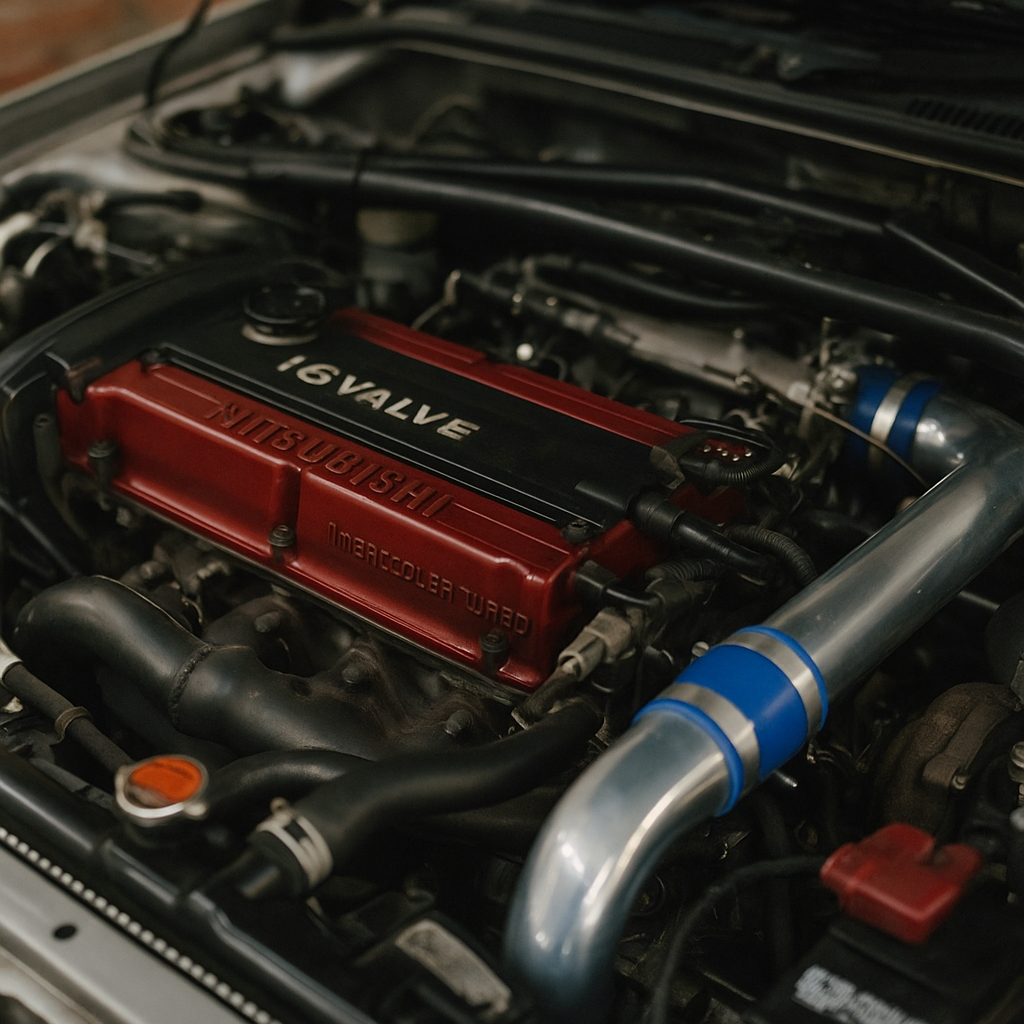
    The Lancer Evolution remains one of the most complete performance packages ever bolted together for the public. The Evo VIII (2003-2005) and Evo IX (2005-2007) sit right in that £8,000 to £14,000 bracket depending on condition and mileage. Four-wheel drive, a torque-vector rear differential on the later IX, and that legendary 4G63 turbocharged engine. On a wet roundabout on a Tuesday morning, nothing touches it.

    Parts supply is genuinely reassuring for a car of this age. Specialists around the UK hold stock, and if you’re doing your own maintenance, sourcing lancer parts is far less of a headache than you might expect for a Japanese import from two decades ago. The community is also fiercely loyal, Evo owners talk to each other, share knowledge, and hold events year-round. That social infrastructure is worth its weight in turbo boost.

    The caveat: check for crash history obsessively. These cars attract drivers who use them hard, and a poorly repaired Evo is a money pit. Full checks through a service like the DVLA’s online vehicle enquiry and an HPI report are non-negotiable.

    Mitsubishi Lancer Evolution engine bay, a popular choice among used Japanese performance cars

    Subaru Impreza WRX STI: The Other Rally Legend

    You can’t talk about used Japanese performance cars without giving proper respect to the STI. Blobeye, Hawkeye, GDB, there’s a whole alphabet of Impreza generations to navigate, and each has its devotees. For under £15,000, you’re looking at 2004 to 2007 examples of the WRX STI with the EJ257 2.5-litre turbo producing around 276bhp from the factory.

    The symmetrical all-wheel drive system still feels special. It’s old tech by 2026 standards, but it works with a directness that modern electronically managed systems can struggle to replicate. Driving one back-to-back with something newer is a revelation, you feel everything.

    Be aware that the EJ engine has a known weakness around head gaskets, particularly on harder-used cars. A compression test and thorough coolant inspection before purchase isn’t optional; it’s essential. Budget-conscious buyers should also look at insurance costs early, the STI can catch you off-guard if you’re in a younger age bracket or live in a high-theft postcode.

    Honda Civic Type R (FK2 and FK8): Hot Hatch Royalty

    The FK2 Type R from 2015 to 2017 brought the red H badge back to the UK in spectacular fashion, 306bhp, front-wheel drive, and a chassis that still makes track day instructors raise an eyebrow. You can find solid FK2 examples around the £12,000 to £15,000 mark now if you’re patient with the classifieds.

    The FK8 that followed pushed power to 316bhp and added proper refinement. It’s tipped into the £15,000 region for cleaner examples, though budget-hunters occasionally find higher-mileage versions that still have years of service left. Honda’s UK dealer network means servicing is straightforward, and the community support is exceptional, CTUK and similar clubs run trackdays, social meets, and technical resources that make ownership much less daunting.

    One thing that tends to catch people out: Honda warranties on performance-oriented cars can be voided by modifications, so check the history carefully. A standard car is always worth more at resale anyway.

    Nissan 350Z and 370Z: The V6 Wildcard

    Not everyone wants all-wheel drive and turbos. Some want a big naturally aspirated V6, rear-wheel drive, and a proper sports car silhouette. The 350Z and 370Z deliver that in spades. The 350Z (2003-2009) now sits below £10,000 for decent examples, while 370Zs from 2009 onwards are available from around £12,000 upwards.

    The 370Z’s 3.7-litre V6 with 328bhp still sounds absolutely filthy through a decent aftermarket exhaust, and the driving experience has aged well. Parts availability is solid, and Nissan’s UK network provides backup. These cars attract a colourful community of owners who are passionate about keeping them on the road, which matters enormously for long-term running costs and general sanity.

    What to Check Before You Buy Any of These

    A few things apply across all of these models regardless of which badge you’re chasing. Service history is obvious, but try to verify it beyond a bundle of receipts, ask for MOT history through the government’s official MOT check tool, which is free and takes thirty seconds. It’ll show you mileage at each test and any advisories, which is incredibly revealing on a performance car.

    Check for modifications and disclose them to your insurer. We covered how engine modifications affect UK car insurance in a previous piece on the Steer Drive blog, it’s worth a read before you start bolting things on. Similarly, if you’re buying something that’s been imported or already modified, our guide to UK road legal modifications covers the current legal landscape clearly.

    Budget for the first year of ownership generously. Even a healthy used Japanese performance car will want fresh rubber, possibly a cambelt service, and maybe a fresh set of brake pads once you start using it properly. That’s not a downside, that’s the deal. You’re buying something genuinely exciting for the price of a boring family hatchback. A bit of maintenance is a small price for the smiles per mile on offer.

    Frequently Asked Questions

    What are the best used Japanese performance cars under £15,000 in the UK right now?

    Top picks include the Toyota GR86, Mitsubishi Lancer Evolution VIII/IX, Subaru Impreza WRX STI, Honda Civic Type R FK2, and Nissan 370Z. Each offers strong performance, good parts availability, and active UK owner communities within that budget.

    Are used Japanese performance cars reliable for daily driving in the UK?

    Many of them are surprisingly reliable daily drivers if bought in good condition with a proper service history. The Honda Civic Type R and Toyota GR86 in particular are known for solid everyday usability, though all performance cars benefit from attentive maintenance and regular servicing.

    How much does it cost to insure a used Japanese performance car in the UK?

    Insurance varies significantly by model, your age, postcode, and driving history. High-performance JDM cars typically sit in insurance groups 35-50, which can mean annual premiums ranging from around £800 to well over £2,000. Always get quotes before committing to a purchase.

    Is it worth buying a modified used Japanese performance car in the UK?

    Modified cars can offer great value if modifications have been done properly and disclosed to insurers, but they also carry more risk around previous owner use and insurance complications. A standard, unmodified car is generally easier to insure, sell, and cheaper to maintain long-term.

    How do I check the history of a used Japanese performance car before buying?

    Run a free MOT history check via the government’s official tool at gov.uk, which shows mileage records and advisories. Pair this with a paid HPI check to identify outstanding finance, write-off history, or stolen status. A pre-purchase inspection from a specialist is also strongly recommended.

  • Vinyl Wrap vs Respray: Which Is Actually Worth Your Money for UK Enthusiasts in 2026?

    Vinyl Wrap vs Respray: Which Is Actually Worth Your Money for UK Enthusiasts in 2026?

    Few decisions split car enthusiasts more sharply than this one. Wrap it or spray it? Both can look absolutely stunning. Both can also go spectacularly wrong if you pick the wrong shop or skip the prep. And in Britain, where your car spends half its life being pelted with rain, road salt, and general misery, the choice carries more weight than it does in sunnier climates. So let’s get into the honest reality of vinyl wrap vs respray UK cost in 2026, money, durability, insurance headaches and all.

    Professional vinyl wrap vs respray UK cost 2026, installer applying deep blue wrap to a hot hatch bonnet

    What Does a Vinyl Wrap Actually Cost in the UK Right Now?

    Prices have settled somewhat after the post-pandemic chaos, but expect to pay anywhere from £1,500 to £3,500 for a full wrap on a standard hatchback or saloon from a decent installer. Go for a premium brand like 3M or Avery Dennison, or choose a complex finish like satin chrome or colour-shift, and you’re looking at £4,000 to £6,000 without blinking. Supercars, naturally, cost more, wrapping something like a Porsche 911 or an AMG GT can push past £8,000 once you account for complex panel geometry and extra material waste.

    What drives costs up sharpest? Poor prep work hidden inside a cheap quote. Any reputable wrapper will spend serious time cleaning, decontaminating and sometimes wet-sanding the surface before a single strip of vinyl goes on. If someone quotes you £900 for a full-car wrap, they’re either skipping steps or using vinyl that’ll be peeling off your bonnet by the time summer arrives.

    And a Professional Respray, What’s the Real Figure?

    A proper professional respray in the UK is expensive. Not London-sandwich expensive. Actually expensive. A quality full respray on a standard car, done correctly through primer, colour coats and lacquer, typically runs from £3,000 to £7,000. Factory-correct resprays with colour matching and full strip-down of trim and glass can reach £10,000 to £15,000 at top-tier bodyshops.

    The key word there is correctly. Budget resprays in the £500-to-£1,500 bracket exist, and they show. Orange peel, paint runs, over-spray on rubber seals, and fading within two years are all common outcomes. A respray is genuinely only as good as the prep and the painter, and skilled body painters are rarer than they used to be in Britain, which keeps quality prices high.

    How Does Each Option Hold Up in Britain’s Actual Weather?

    This is where the UK context really bites. British roads in winter are brutal, grit lorries scatter salt from October through to March, drainage is patchy, and standing water is basically a national pastime. Both wraps and resprays face the same enemies: salt, UV (yes, even here), bird droppings, tree sap, and the general griminess of urban driving.

    Quality vinyl wrap, properly installed, is actually quite robust. The film itself creates a barrier over the original paint, protecting it from minor stone chips and UV degradation. The weak points are the edges, door shuts, bonnet gaps, and leading edges of bumpers. In wet conditions, if those edges haven’t been properly sealed or tucked, moisture wicks underneath and you get lifting. It’s not rare in the UK, and it’s the number-one complaint you’ll hear from wrap owners who went with a budget installer.

    A quality respray, done with a proper lacquer topcoat, handles British weather well for the long term. It’s bonded to the car; there are no edges to lift. But it’s not invincible either, stone chips expose bare metal faster than you’d like, and if the prep work was poor, moisture can creep under the lacquer and cause bubbling or rust, particularly around sills and wheel arches where salt accumulates most aggressively.

    Insurance: The Bit Nobody Warns You About

    Both options can affect your insurance, and this is where a lot of enthusiasts get caught out. A colour change wrap absolutely must be declared to your insurer, failing to do so can invalidate your policy entirely. Under UK law, you also need to update your V5C logbook to reflect the new colour if the wrap is a permanent change of appearance. The DVLA guidance on changing vehicle colour makes this clear, and ignoring it isn’t worth the risk.

    A respray carries the same obligation if you’re changing colour. Some insurers treat a wrap more sceptically than a respray, viewing it as a modification that could affect resale value assessment in a claim. Others are fine with it. The honest advice: ring your broker before you book the appointment, not after you collect the car.

    Resale Value: Which One Hurts or Helps?

    Wraps have a genuine advantage here, assuming they’re in good condition. A well-maintained wrap can be removed before sale to reveal the original factory paint beneath, which is a real selling point. Buyers know the underlying paint is protected. That said, a tatty, lifting or sun-faded wrap actively destroys resale value, it looks neglected, and buyers immediately start mentally docking money for removal costs.

    A respray, if done in the original factory colour, has minimal negative impact on resale. A non-standard colour respray almost always hurts the market value on common cars, you’re narrowing your buyer pool considerably. On certain enthusiast or collector cars, a concours-quality respray in period-correct colour can actually add value. Context is everything.

    For most buyers of everyday performance cars, your Golf Rs, your Civic Type Rs, your BMW M2s, a colour-matched or original-spec respray is safer for resale than a wild wrap. For show cars, track builds, or cars you genuinely plan to keep, wrap opens up possibilities that paint simply can’t match at the same price point.

    So Which Should You Actually Choose?

    For reversibility and cost-effectiveness at the sub-£5,000 mark, a quality vinyl wrap from a reputable UK installer is genuinely compelling. You get the colour change, the protection layer, and the ability to go back to stock. For longevity, structural integrity, and long-term weather resistance without the edge-lifting concern, a proper respray wins. It’s the more permanent, more traditional answer.

    The mistake most people make is treating price as the primary filter and ending up with a cheap version of either option. A botched wrap looks tragic within eighteen months. A budget respray looks terrible within three years. If your budget only stretches to a cut-price job, honestly, a good detail and some high-quality paint protection film on the high-impact areas might serve you better until you can afford to do it properly.

    If you’re weighing up what finish to choose for a performance car you’re building up, check out our guide on restomod builds and how owners are approaching paint choices on reimagined classics, the same principles apply. The short version on vinyl wrap vs respray UK cost in 2026: spend properly, choose based on your long-term plans for the car, and never let a cheap quote make the decision for you.

  • Dashcam Laws, Data and Privacy: What Every UK Driver Actually Needs to Know in 2026

    Dashcam Laws, Data and Privacy: What Every UK Driver Actually Needs to Know in 2026

    Dashcams are everywhere now. Nearly one in three UK drivers has one mounted to their windscreen, and that number keeps climbing every year. They have gone from a niche bit of kit favoured by lorry drivers to an absolutely standard piece of motoring gear. But here is the thing most people do not realise: owning a dashcam and using one legally are two very different conversations. The dashcam laws UK 2026 landscape is messier than most drivers expect, touching on GDPR obligations, police evidence requirements, insurance small print, and what happens when you post a clip online. Let us untangle it properly.

    Dashcam mounted behind rear-view mirror on a UK motorway, relevant to dashcam laws UK 2026
    Dashcam mounted behind rear-view mirror on a UK motorway, relevant to dashcam laws UK 2026

    Do UK Dashcam Users Need to Worry About GDPR?

    Short answer: yes, but not in the way you might think. The UK GDPR, enforced by the Information Commissioner’s Office (ICO), has a handy exemption called the “domestic purposes” exemption. If your dashcam is purely for your own personal use, recording your commute or capturing evidence if someone clips your wing mirror, you are largely protected under that exemption and do not need to register with the ICO.

    The moment you start sharing footage publicly, though, things change. Uploading a clip to YouTube, posting it to a Facebook group, or chucking it on TikTok with someone’s face or number plate visible crosses you into personal data territory. At that point, UK GDPR applies. You become what is legally described as a data controller. Technically, you should have a lawful basis for processing that data. In practice, most people who post dashcam clips rely on the “legitimate interests” basis, which broadly means: you have a genuine reason to share this and it does not unfairly override the other person’s rights.

    The ICO has published specific guidance on dashcams and domestic CCTV, and it is worth reading if you are a regular sharer. Blurring faces and plates before posting is good practice and keeps you well clear of any grey areas. You can find the ICO’s guidance at ico.org.uk.

    Will Police Actually Accept Your Dashcam Footage as Evidence?

    This is where a lot of drivers get a rude surprise. Yes, police can and do accept dashcam footage, but there are real conditions attached.

    Operation Snap, which started in Wales and has since been adopted by forces across England and Scotland, is the main mechanism for submitting footage of dangerous driving or road traffic offences. You upload the clip through an online portal, usually via your force’s website, and it gets reviewed. If the footage is clear enough to identify the vehicle and the offence, it can lead to a prosecution or a driver awareness course being issued.

    The catch is quality. Footage that is blurry, overexposed, or where the timestamp has not been set correctly will be dismissed. Police need to be able to identify the registration plate of the offending vehicle and see the incident clearly. A cheap dashcam with poor night vision or aggressive automatic exposure compensation can make a clip legally useless even if it captures something genuinely serious.

    Footage timestamping matters more than most people realise. If your camera’s internal clock drifted or was never set properly, a defence solicitor can challenge the timeline of events. Keep your camera’s date and time settings accurate. It sounds minor. It is not.

    Dashcam screen showing GPS data and clear road footage, illustrating dashcam laws UK 2026 evidence requirements
    Dashcam screen showing GPS data and clear road footage, illustrating dashcam laws UK 2026 evidence requirements

    Dashcam Laws UK 2026 and Insurance: What You’re Actually Entitled To

    Insurance companies love dashcams in theory. In practice, your experience depends heavily on who you are insured with and what you have told them.

    Many UK insurers, including Direct Line, Aviva, and several smaller specialist providers, offer a discount of anywhere between 5% and 15% for drivers who fit an approved dashcam. Some will only offer this discount if the camera is a GPS-enabled model that records speed and location data alongside video. Read your policy documents carefully because the definition of an “approved” dashcam varies between providers.

    More importantly, footage can cut both ways in a claim. If you submit dashcam footage to support your case and it turns out the clip contradicts your version of events, you have handed your insurer a reason to reject the claim. This does not mean you should hide footage. Attempting to conceal evidence is fraud. But it does mean you should review your own footage before submitting anything and understand exactly what it shows.

    There is also the question of what happens when the other party has a dashcam. In a disputed claim, both parties’ footage can be requested by insurers. The presence of a dashcam has effectively raised the evidentiary stakes of every single road incident in the UK.

    How to Choose a Dashcam That Holds Up Legally

    If you want a camera that actually performs when it matters, here is what to look for in 2026.

    Resolution: 1080p is the Minimum, 2K is Better

    For plate identification at distance, especially on a motorway, 1080p at 60fps is genuinely the bare minimum. Models from Nextbase, Viofo, and Garmin in the 2K and 4K range give you the kind of detail that holds up under scrutiny. The Nextbase 622GW and the Viofo A229 Pro are both popular choices in the UK right now for good reason.

    GPS Logging: Non-Negotiable for Serious Evidence

    A camera that logs your speed, location, and heading alongside video footage creates a much more robust evidential record. If you are ever in a serious incident, having corroborating GPS data makes your footage significantly harder to dismiss.

    Parking Mode and Constant Power

    Parking mode, where the camera activates on motion or impact while your car is stationary, is increasingly useful given the rise in car park scrapes and low-speed drive-offs. Make sure your camera has a hardwire kit option if you want reliable parking coverage without draining your battery.

    Front and Rear: Cover All Bases

    Rear-end shunts are one of the most common disputed claims in the UK. A dual-channel setup with a rear camera removes all ambiguity about who was following too closely or who reversed into whom. It is the single most practical upgrade you can make to a basic dashcam setup.

    The Stuff Nobody Talks About: Windscreen Positioning and Obstruction Laws

    Here is one that catches drivers out regularly. Under Rule 235 of the Highway Code and the relevant Road Traffic Acts, any obstruction to the driver’s view of the road is a potential offence. Mounting a dashcam in a position that obstructs your view through the windscreen, particularly if it is large or poorly positioned, can result in a vehicle defect notice or worse if you are stopped.

    The general guidance from the Driver and Vehicle Licensing Agency (DVLA) and road policing units is to mount the camera behind the rear-view mirror, keeping it within the area swept by your windscreen wipers, and ensuring it does not infringe on your direct line of sight. Keep it neat, keep it small, and keep the cable tidy. A dashcam that causes distraction could ironically undermine your legal position in any incident.

    Being clued up on dashcam laws UK 2026 is part of being a genuinely switched-on driver. The technology has got genuinely brilliant, the legal framework has mostly caught up, and the benefits in a disputed claim or a serious incident are real. Just make sure yours is set up properly, footage is stored securely, and you know exactly what you are looking at before you share anything. If you want more on keeping your car legally and technically sorted, have a read of our guide on what car mods are still road legal in 2026 and our breakdown of track day tyres vs road tyres. The more you know, the less anything can catch you out.

    Frequently Asked Questions

    Is it legal to use a dashcam in the UK in 2026?

    Yes, dashcams are completely legal to use in the UK for personal motoring purposes. As long as the camera does not obstruct your view and footage is used responsibly, you are within the law. If you share footage publicly showing identifiable people or plates, UK GDPR applies.

    Can dashcam footage be used as evidence in UK courts?

    Yes, dashcam footage is admissible as evidence in UK courts and is regularly accepted by police through schemes like Operation Snap. The footage must be clear, timestamped accurately, and show the incident and involved vehicles identifiably. Poor quality or incorrectly dated footage can be challenged or rejected.

    Do I need to tell my car insurer I have a dashcam?

    You are not legally required to declare a dashcam to your insurer, but many UK insurers offer discounts of 5-15% if you have one fitted. Check your policy, as some discounts only apply to specific approved GPS-enabled models. Always review your own footage before submitting it in a claim.

    Does having a dashcam affect my GDPR obligations as a UK driver?

    For purely personal use, the ICO’s domestic purposes exemption covers you. If you post footage online showing identifiable people or number plates, you become a data controller under UK GDPR and need a lawful basis for sharing. Blurring plates and faces before uploading is the safest approach.

    Where should I mount my dashcam to stay within UK law?

    Mount your dashcam behind the rear-view mirror within the area swept by your windscreen wipers, where it does not obstruct your forward line of sight. Positioning it outside this area can constitute a windscreen obstruction offence under UK road traffic law. Keep cables tidy to avoid distraction claims.

  • ULEZ, CAZ and the Future of Classic Car Ownership in the UK: What Nobody Is Telling You

    ULEZ, CAZ and the Future of Classic Car Ownership in the UK: What Nobody Is Telling You

    Clean air zones are spreading across the UK like a slow, bureaucratic tide, and if you own a classic or a performance car that drinks petrol with any real enthusiasm, it’s time to pay attention. The conversation around the ULEZ classic car exemption UK situation has been bubbling for a while, but most of the coverage glosses over the bits that actually matter to drivers who care about what’s sitting in their garage. So here’s the frank version.

    Let’s start with the basics, because there’s a lot of confusion out there. The Ultra Low Emission Zone in London, run by Transport for London, charges non-compliant vehicles £12.50 per day. Most cars registered before September 2015 (petrol) or September 2015 (diesel) fail the Euro 6/Euro 4 standards that determine compliance. But here’s where it gets interesting for classic car owners specifically.

    Classic British sports car on a London street with ULEZ signage, illustrating the ULEZ classic car exemption UK debate
    Classic British sports car on a London street with ULEZ signage, illustrating the ULEZ classic car exemption UK debate

    Historic Vehicle Status: The Golden Ticket (With Small Print)

    Vehicles that are 40 years old or older and have not been substantially modified are classified as historic vehicles under DVLA rules, and they are exempt from the London ULEZ charge. Full stop. If your classic is 40-plus years old and remains broadly original, you drive through without paying a penny. That’s a meaningful carve-out, and it’s one the classic car community has fought hard to protect.

    The catch is the phrase “substantially modified.” TfL and local councils don’t publish a precise definition, which leaves a grey area that’s uncomfortable for the growing restomod scene. If you’ve swapped a period-correct engine for something modern, or converted your classic to a different fuel type, your historic vehicle status could be called into question. It’s not hypothetical either, as restomods become more common, this ambiguity is going to cause real headaches. We’ve already written about the booming restomod culture in the UK, and the regulatory picture around these builds is something every owner needs to think through carefully.

    What About Performance Cars That Aren’t Old Enough to Be Historic?

    This is where it genuinely stings. Say you own a 2009 BMW M3, a first-gen Audi R8, or a naturally aspirated Porsche 911 from the mid-2000s. These cars are old enough to feel special but nowhere near the 40-year threshold. They’re likely Euro 4 or Euro 5, which means they fail the London ULEZ standard. You’re paying £12.50 every time you drive into the zone. That’s £87.50 a week for someone commuting in, which is obviously not most classic drivers, but even occasional runs into the city add up fast.

    The ULEZ classic car exemption UK rules don’t offer any middle ground for these vehicles. There’s no “interesting car” discount, no heritage bypass. A 2006 Ferrari 430 and a 2006 Vauxhall Astra face the same charge. One of those feels a lot more like a cultural loss than the other.

    Vintage car dashboard interior detail representing classic car ownership affected by ULEZ classic car exemption UK rules
    Vintage car dashboard interior detail representing classic car ownership affected by ULEZ classic car exemption UK rules

    Which Cities Are Next in Line for Clean Air Zone Charges?

    London gets all the press, but the Clean Air Zone network is growing. Bath has had a charging CAZ since 2021. Birmingham’s was introduced and then controversially scrapped for private cars in 2023 after significant pushback, though it remains in place for some commercial vehicles. Bristol, Bradford, Portsmouth, and Sheffield all have schemes at various stages of implementation or planning.

    The government’s Clean Air Zone framework, overseen by DEFRA and detailed on gov.uk, sets out the standards local authorities must meet to improve air quality. More cities will follow. If you’re based outside London and think this is someone else’s problem, start checking your local council’s air quality plans. The direction of travel is clear.

    Each city runs its own scheme with its own rules, and crucially, historic vehicle exemptions are not guaranteed across all of them. Bath’s CAZ exempts pre-Euro 3 vehicles, which effectively benefits many older classics but the wording differs from TfL’s 40-year rule. You genuinely need to check each scheme individually before driving in.

    The ZEZ Creep: Zero Emission Zones Are Coming Too

    Beyond ULEZ and CAZ, a newer and more aggressive instrument is emerging: the Zero Emission Zone. Oxford has been piloting ZEZs since 2022, restricting certain roads to zero-emission vehicles only during set hours. These zones don’t just charge you, they can outright ban non-electric vehicles from specific roads. Historic vehicle exemptions in ZEZ frameworks are even less clear than in ULEZ, and with more cities exploring the concept, this is the next frontier for classic car owners to watch.

    If you’re thinking about buying a used performance car and the daily usability in your city matters to you, it’s worth reading our guide on buying used performance cars in the UK, the emissions compliance question is one that should absolutely factor into your decision-making process right now.

    What Can Classic Car Owners Actually Do?

    Practically speaking, you have a few options depending on your situation. If your car qualifies for historic vehicle status, document it thoroughly and keep records proving it hasn’t been substantially modified. If you’re considering a restomod build, think hard about what changes might affect your exemption status before committing.

    For performance cars in that awkward 15-to-39-year window, the calculus is trickier. Some owners are choosing to register their cars as SORN and use them purely for track days and rural drives, sidestepping urban zones entirely. Others are factoring daily running costs differently, treating the ULEZ charge as just another motoring expense alongside insurance and fuel. Neither approach is wrong. It depends entirely on how and where you use your car.

    What nobody should do is ignore this. The ULEZ classic car exemption UK framework will continue to evolve, cities will tighten their rules, and the cars caught in the middle will only grow in number as time passes. Staying informed isn’t just smart, it’s how you protect the thing you’ve invested real money and genuine passion into.

    The Bigger Picture for Car Culture

    There’s a broader cultural argument here that’s worth making. Classic and performance cars represent a living, driving history of automotive engineering. They’re driven to shows, used on track days, and maintained by a community that genuinely loves them. They represent a tiny fraction of total vehicle miles driven in the UK, and their collective impact on air quality is marginal compared to the volume of everyday traffic.

    That doesn’t mean clean air isn’t important, it absolutely is, especially in cities where pollution causes real health harm. But a blanket emissions charge that doesn’t distinguish between a daily diesel estate and a weekend-only 1970s roadster feels blunt. The classic car community, represented by bodies like the Federation of British Historic Vehicle Clubs, has made this case repeatedly, and it’s a reasonable one. The conversation between policymakers and enthusiasts needs to get sharper and more nuanced as these zones expand.

    For now: know your status, check each city’s specific rules, and don’t assume an exemption applies just because it did somewhere else. The rules are live documents, and they’re changing.

    Frequently Asked Questions

    Are classic cars exempt from ULEZ in London?

    Yes, vehicles that are 40 years old or older and have not been substantially modified are exempt from the London ULEZ charge under the historic vehicle classification. However, performance or classic cars that are newer than 40 years old and don’t meet Euro 4 (petrol) or Euro 6 (diesel) standards are subject to the £12.50 daily charge.

    What counts as 'substantially modified' for ULEZ historic vehicle exemption?

    TfL does not publish a precise definition, which creates genuine ambiguity, especially for restomods. Generally, if a vehicle retains its original engine type and drivetrain and hasn’t been fundamentally rebuilt, it should qualify. If you’ve made major mechanical changes, particularly an engine swap, your exemption status may be uncertain.

    Do clean air zones outside London have the same historic vehicle exemption rules?

    Not necessarily. Each city runs its own Clean Air Zone scheme with its own rules. Bath’s CAZ, for example, exempts pre-Euro 3 vehicles, which differs from TfL’s 40-year rule. You must check the specific rules of each city’s scheme before driving in, as exemptions are not uniform across the UK.

    Which UK cities are planning new clean air zones in 2026?

    Several UK cities are at various stages of implementing or expanding clean air zones, including Bristol, Bradford, Portsmouth, and Sheffield. DEFRA’s Clean Air Zone framework sets out the requirements, and local councils are under pressure to meet air quality targets, so further expansions are likely in the coming years.

    Can I drive my classic car on a SORN to avoid ULEZ charges?

    A SORN (Statutory Off Road Notification) means your vehicle is declared off the road, so it cannot legally be driven on public roads at all, not just in ULEZ zones. Some owners choose to SORN their performance cars and use them exclusively on private circuits or track days, but this means zero road use of any kind.

  • Why Petrol Cars Are Becoming the New Collectibles (And Which to Buy Now)

    Why Petrol Cars Are Becoming the New Collectibles (And Which to Buy Now)

    There’s a quiet gold rush happening in UK car parks, lock-ups, and damp garages up and down the country. As the government’s EV push intensifies and zero-emission zones start sprawling across major cities, something unexpected is going on with petrol collector cars: people want them more than ever. Classic economics, really. When something becomes genuinely rare, it becomes genuinely desirable. And nothing says rare quite like a naturally aspirated V8 in a world increasingly full of silent electric crossovers.

    This isn’t just nostalgia talking. Values on certain ICE models have started creeping up in a way that looks less like coincidence and more like a pattern. The smart money is already moving. The question is whether you’re in on it yet.

    Red Honda Civic Type R on a British country road, a rising petrol collector car in 2026
    Red Honda Civic Type R on a British country road, a rising petrol collector car in 2026

    Why Petrol Cars Are Suddenly Worth Collecting

    The UK government’s Zero Emission Vehicle mandate is tightening every year, and the phasing out of new petrol car sales (now pushed to 2035) has created a very specific kind of urgency among enthusiasts. Every year that passes is another year closer to these cars being a finite, non-replenishable resource. Production lines will stop. Replacement parts will dry up. The culture around ICE motoring will become niche in the same way vinyl records did, and we all know what happened to vinyl prices.

    Hedge fund managers aren’t the only ones noticing. Car auction houses like Historics and H&H Classics have reported notable upticks in interest around late-model performance petrol cars, particularly anything with character, provenance, or a famous badge. The window to buy before values properly surge is real, and it’s closing.

    The Petrol Collector Cars Worth Buying Right Now

    Honda Civic Type R (FK8, 2017-2022)

    Already a modern legend. The FK8 Type R was the darling of the hot hatch world and it’s ageing into iconic status faster than almost anything else in its class. Prices have already started rising on clean, low-mileage examples. Find one with a full service history, leave it mostly standard, and you’re sitting on something that’ll only get more interesting over time. These are the Mk2 Golf GTIs of the 2030s. Seriously.

    Porsche 718 Cayman GTS 4.0 (Manual)

    Porsche made a brave call putting a naturally aspirated flat-six back in the 718 after years of turbo-only options, and enthusiasts absolutely lost their minds for it in the best possible way. The manual gearbox version of the GTS 4.0 is, quite simply, one of the finest driver’s cars ever made. Residuals are holding strong, but they haven’t gone stratospheric yet. They will. Get in now if budget allows.

    Ford Focus RS (Mk3, 2016-2018)

    Ford has confirmed the Focus RS is dead as a nameplate. That makes every existing Mk3 a piece of automotive history. The Drift Mode alone is enough to guarantee cult status. Prices on well-maintained examples are climbing, and there aren’t enough clean ones left. Any survivor with sensible mileage is worth snapping up. Just budget for upkeep because these aren’t cheap to maintain properly.

    Porsche 718 GTS 4.0 flat-six engine bay detail, one of the most sought-after petrol collector cars
    Porsche 718 GTS 4.0 flat-six engine bay detail, one of the most sought-after petrol collector cars

    Toyota GR86 (First Generation, 2012-2021)

    The original GT86 (and its Subaru BRZ sibling) represented something rare: a manufacturer actually building a lightweight, rear-wheel-drive sports car for the joy of it rather than the spec sheet. Values dipped for a while as the new GR86 arrived, but first-gen prices are quietly firming back up. Low-mileage, unmodified examples are already getting hard to find. The original always becomes the collectible. Buy the original.

    Mitsubishi Lancer Evolution X

    Mitsubishi walked away from performance cars, full stop. That means the Evo X is the last of a dynasty that defined rally-bred performance for a generation. Parts support is tightening, which actually makes values rise on the good ones. If you’re tracking down spares for a project Evo or even looking into what’s available for related Mitsubishi performance hardware, you’ll find yourself hunting for everything from turbos to suspension components. The same applies if you’re keeping an older 4WD Mitsubishi alive, like sourcing pajero parts for an off-road build. Enthusiast parts knowledge runs deep in this community.

    BMW M3 Competition (G80, Manual)

    Yes, the current M3. Specifically the rare manual transmission version. BMW is already signalling that the M3’s next generation will likely go fully electric or hybrid. The G80 manual might be the last traditional M3 you can buy new. It already isn’t selling in huge numbers in manual spec because most buyers tick the automatic box, which perversely makes the manual more collectible. Future classic written all over it.

    What Makes a Petrol Car Collectible, Exactly?

    Not every petrol car is going to become a gold bar in your garage. The models most likely to appreciate share a few common traits: limited production numbers, a driving experience that’s genuinely hard to replicate electrically, a strong enthusiast community, and some kind of cultural or motorsport significance. A mid-spec family saloon isn’t going to double in value because it has a petrol engine. But a naturally aspirated manual sports car with a badge that means something? That’s a different story entirely.

    Condition matters enormously too. Original paint, matching numbers, full service history, and minimal modifications dramatically affect long-term value. The UK weather doesn’t help here, and rust is the eternal enemy. A car stored well in a dry garage is worth meaningfully more than the same model that’s spent its winters on salted roads.

    The Bigger Picture for UK Petrol Enthusiasts

    There’s something genuinely poignant about all of this. The internal combustion engine, for all its flaws, represents over a century of mechanical ingenuity, motorsport culture, and pure driving joy. The smell of hot oil, the crack of an exhaust on a cold morning, the feel of a gear change timed perfectly through a corner: none of that translates into an EV, however good the instant torque feels.

    Collecting petrol collector cars right now isn’t just a financial play, though the financial case is solid. It’s also a way of preserving a culture. The best time to buy any of the cars mentioned above was three years ago. The second best time is right now, before the rest of the market catches up with what enthusiasts already know.

    If you want to read more about the evolving world of performance cars, check out our guides on buying a used performance car in the UK and the best affordable hot hatches for track days. The internal combustion engine isn’t dead. It’s just becoming something more precious.

    Frequently Asked Questions

    Which petrol cars are most likely to increase in value in the UK?

    Models with limited production runs, strong enthusiast communities, and genuine driving character tend to appreciate most. Examples include the Honda Civic Type R FK8, Porsche 718 GTS 4.0 manual, and Ford Focus RS Mk3. Low mileage and original condition are critical factors.

    Is it worth buying a petrol car as an investment in 2026?

    For the right models, yes. As the UK transitions toward EVs and petrol production phases out, genuinely special ICE cars are becoming a finite resource. However, buying purely for investment is risky; buy cars you’d also enjoy owning and running.

    Will petrol cars be banned in the UK?

    The UK government has set 2035 as the deadline for ending new petrol and diesel car sales, though existing petrol cars will remain legal to own and drive indefinitely after that date. This is precisely what’s driving collector interest in desirable ICE models.

    How should I store a petrol collector car to preserve its value?

    Keep the car in a dry, ventilated garage to prevent rust and damp damage, which are the biggest threats to UK-stored vehicles. Use a breathable car cover, maintain tyre pressure, and start the engine periodically to keep seals and fluids in good condition.

    Does modifying a petrol car hurt its collector value?

    Generally, yes. Standard, unmodified examples with original parts command significantly higher values among serious collectors. If you want to modify for fun, keep all the original parts so the car can be returned to stock if needed.