Author: Robby

  • Track Day Tyres vs Road Tyres: What Every UK Driver Needs to Know in 2026

    Track Day Tyres vs Road Tyres: What Every UK Driver Needs to Know in 2026

    There is a moment at every track day when you pull into the paddock, look at the bloke next to you, and realise he has swapped his rubber out entirely. Proper semi-slicks. Tyres that look like they belong on a racing prototype rather than a school run. And suddenly your road-legal Michelin Pilot Sport 5s feel a bit… pedestrian. So what is actually going on with track day tyres, and does it genuinely matter which compound you bolt on? Let’s get into it properly, because the differences are bigger than most people realise.

    Whether you are hammering a hot hatch around Brands Hatch or pushing a tuned saloon at Anglesey Circuit, understanding the tyre underneath you is arguably the single most important performance variable you can influence. It is also a subject full of myths, misinformation, and some genuinely crucial legal detail that could catch you out.

    Hot hatch running track day tyres UK 2026 on a British circuit with semi-slick rubber visible
    Hot hatch running track day tyres UK 2026 on a British circuit with semi-slick rubber visible

    What Actually Makes Track Day Tyres Different from Road Tyres?

    The core difference comes down to compound and construction. Road tyres are engineered to work across an enormous range of conditions — cold British mornings, wet motorways, gravel-dusted roundabouts — and to last somewhere between 15,000 and 35,000 miles depending on how you drive. That versatility requires compromises. The rubber compound is harder, the tread pattern is optimised for water evacuation, and the whole thing is built to stay predictable at everyday temperatures.

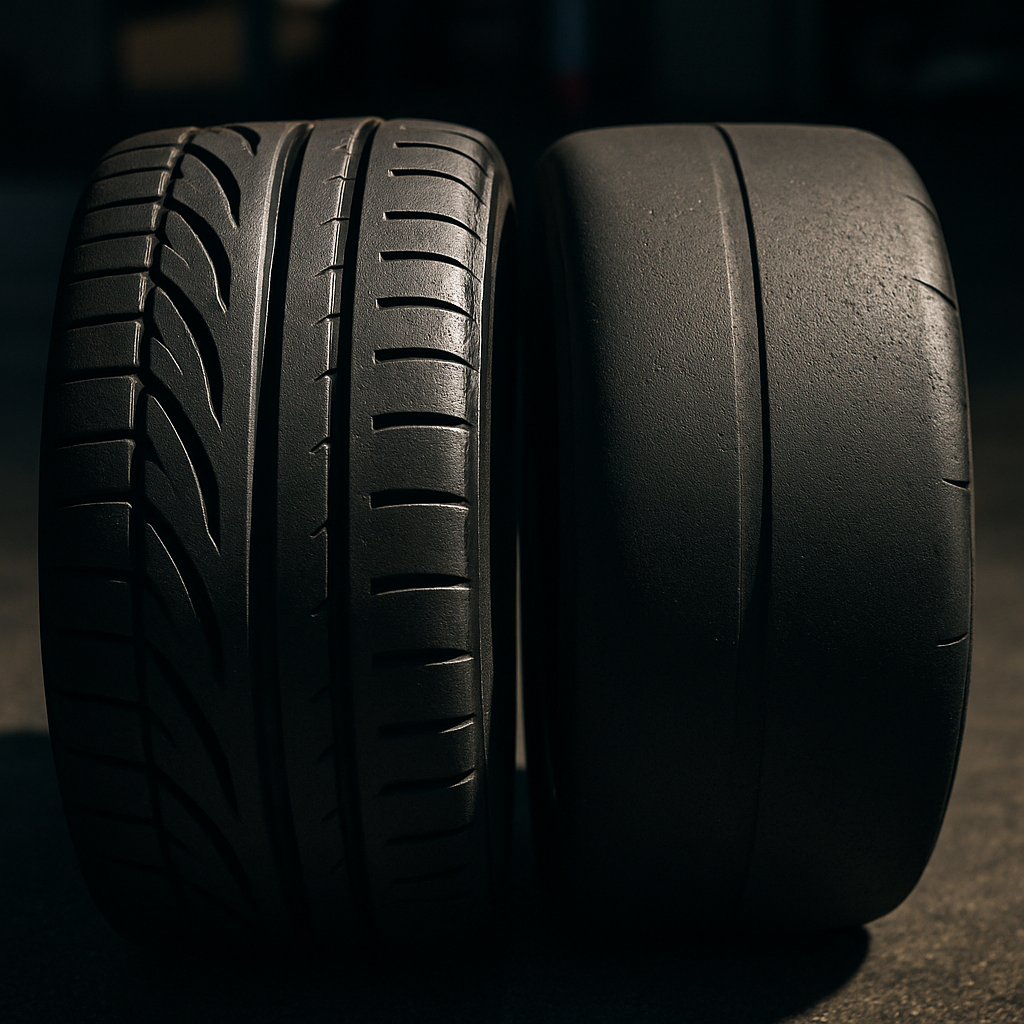
    Track-oriented tyres flip those priorities entirely. A semi-slick like the Toyo R888R or the Nankang NS-2R runs a far softer compound that operates in a much narrower temperature window. Below that window, they can actually feel less grippy than a decent road tyre. Get them up to temperature on circuit, though, and the difference is night and day. Lateral grip, braking distances, feedback through the steering — everything sharpens up dramatically. You are essentially sacrificing longevity and cold-weather performance for peak capability when it counts.

    Slick tyres, which have no tread whatsoever, take this to the extreme. They maximise the contact patch with the tarmac for maximum dry grip. But here is the thing — you almost certainly will not be running slicks unless you are doing dedicated motorsport, not a public track day. Most track day organiser rules, and certainly your insurance policy, draw a firm line there.

    Are Track Day Tyres Legal on UK Roads?

    This is where it gets interesting. Semi-slick tyres with some tread pattern, like the Toyo R888R or the Federal RS-R, are technically road legal provided they meet the minimum 1.6mm tread depth requirement as outlined by the Driver and Vehicle Licensing Agency (DVLA) and gov.uk vehicle standards guidance. You can, in theory, drive to the circuit, do your session, and drive home.

    In practice, though, there are real caveats. Fully slick tyres are not road legal — full stop. Semi-slicks in cold or wet conditions can be genuinely dangerous on the road because they have not reached operating temperature. And there is the matter of wear rate. A set of R888Rs might last you a couple of track days and then they are done. Running them on the road eats through them even faster. Most serious track day enthusiasts end up running a dedicated set of wheels for the circuit and swapping back to road rubber for the drive home.

    For a deep dive into what you can legally modify on your car for road and track use, our guide to the coolest legal car mods in the UK in 2026 covers a lot of the grey areas worth knowing about.

    Close-up comparison of road tyre and semi-slick track day tyre UK 2026 showing compound differences
    Close-up comparison of road tyre and semi-slick track day tyre UK 2026 showing compound differences

    Performance on Track: Semi-Slicks vs Road-Legal Performance Tyres

    Let us talk numbers for a second, because it helps ground this conversation in reality. A quality performance road tyre in 2026 — say the Michelin Pilot Sport 5, Bridgestone Potenza Sport, or Continental SportContact 7 — will give you genuinely impressive grip on circuit. Do not let anyone tell you otherwise. These are excellent tyres. But a semi-slick will typically offer 10-20% more lateral grip once warmed up, with markedly shorter braking distances and much clearer feedback at the limit.

    That feedback is underrated. When you are learning the limits of your car, knowing when the tyre is beginning to slide — rather than just suddenly losing the plot — is enormously valuable. Semi-slicks communicate better. They give you more warning. That can actually make certain drivers faster and safer on circuit, even if the raw grip numbers seem intimidating.

    Best Track Day Tyres UK 2026: What to Actually Buy

    The market has matured nicely. Here are the options worth knowing about right now.

    For Full Track Use (Semi-Slick)

    The Toyo Proxes R888R remains the gold standard for track day enthusiasts in the UK. Brilliant feedback, available in a wide range of sizes, holds up reasonably well over multiple sessions. The Nankang NS-2R is the budget-conscious choice and punches well above its price point — it has earned serious respect in the UK track day community. The Federal 595 RS-RR sits somewhere between the two on price and is well regarded for front-wheel-drive hot hatch setups specifically.

    For Road Use with Track Ambitions

    If you are not ready to run a separate track wheel setup, the Michelin Pilot Sport Cup 2 is the undisputed king of the dual-use world. It is road legal, it handles wet weather considerably better than a true semi-slick, and on a dry circuit it is devastatingly fast. The catch is the price — expect to pay significantly more than a standard performance tyre. The Bridgestone Potenza RE-71RS is another strong contender in this category, particularly for time attack and club level competition.

    For the Weekly Driver Who Also Does Track Days

    If you are keeping one set of tyres and splitting time between road and occasional circuit use, the Continental SportContact 7 and the Goodyear Eagle F1 SuperSport are both exceptional. They will not match the pure lap time of a Cup 2, but the difference in real-world conditions and longevity is significant. Sensible choice for someone who tracks their car two or three times a year.

    Safety Considerations Nobody Talks About Enough

    Tyre pressure is massively misunderstood in the track day context. Road tyres typically run at manufacturer-specified pressures because they are designed to operate across a broad temperature range. Semi-slicks heat up more aggressively and expand accordingly. Starting too high on pressure can cause handling imbalances and uneven wear mid-session. Most semi-slick manufacturers publish recommended starting pressures for track use, and they are often lower than you might expect — around 1.7 to 2.0 bar cold, depending on the compound and car.

    Tyre age matters too. The rubber compounds in performance and semi-slick tyres degrade over time regardless of tread depth. Anything over five years old should be treated with real caution on circuit, even if it looks fine visually. Check the DOT date code on the sidewall — the last four digits tell you the week and year of manufacture.

    For anyone building a car specifically around track days, understanding how every component interacts with tyre behaviour is essential reading. Our breakdown of the best affordable hot hatches for thrashing on track in 2026 covers how setup choices compound the tyre variable considerably.

    The Bottom Line on Track Day Tyres UK 2026

    If you are serious about getting faster and safer on circuit, the tyre conversation is unavoidable. Road tyres are brilliant for the road — that is what they are built for. Semi-slicks unlock a different level of capability once temperatures are up, with better communication, more grip, and a more rewarding experience at the limit. The practical reality for most UK enthusiasts is a second set of wheels with semi-slicks for the track, paired with a quality performance road tyre for everything else. It costs more upfront, but the improvement in both safety and enjoyment on circuit is genuinely transformative.

    Frequently Asked Questions

    Can I use track day tyres on public roads in the UK?

    Semi-slick track tyres with a visible tread pattern above 1.6mm depth are generally road legal in the UK. However, fully slick tyres with no tread are not road legal under any circumstances. Be aware that semi-slicks in cold or wet conditions can perform poorly on the road as they need heat to reach their operating window.

    How long do track day tyres last in the UK?

    This varies significantly by compound and driving style, but most semi-slick tyres will last between two and six track day sessions depending on how hard you push. Running the same tyres on the road dramatically accelerates wear. Budget accordingly — semi-slicks are a consumable, not a long-term investment.

    What is the difference between a semi-slick and a road-legal performance tyre?

    A semi-slick uses a softer compound with minimal tread pattern optimised for maximum dry grip at elevated temperatures, while a performance road tyre uses a harder compound designed to work across all weather conditions and temperatures. Semi-slicks offer more grip on a dry circuit but degrade faster and can be dangerous in cold or wet conditions.

    What tyre pressure should I use for track days?

    Recommended starting pressures for semi-slick tyres on track are typically lower than road pressures, often around 1.7 to 2.0 bar cold. Always check the specific manufacturer’s guidance for your tyre as pressures build significantly once the rubber heats up. Using a quality tyre pressure gauge between sessions is essential.

    What are the best semi-slick tyres for UK track days in 2026?

    The Toyo Proxes R888R is widely considered the benchmark for enthusiast track days in the UK, offering excellent feedback and a wide size range. The Nankang NS-2R is a strong budget option that has earned genuine respect in UK track day circles. For dual road and track use, the Michelin Pilot Sport Cup 2 is the premium choice.

  • The Most Iconic British Sports Cars of All Time, Ranked

    The Most Iconic British Sports Cars of All Time, Ranked

    Right, let’s settle this once and for all. The best British sports cars of all time is exactly the kind of list that starts arguments at car meets, splits friend groups down the middle, and has keyboard warriors hammering away at forums until 2am. Good. That’s the point. Britain has produced some of the most extraordinary performance cars ever built, and picking a ranking means someone’s favourite will sit lower than they’d like. You’ve been warned.

    A lineup of the best British sports cars of all time on a UK countryside road at golden hour
    A lineup of the best British sports cars of all time on a UK countryside road at golden hour

    Why Britain Punches So Hard in the Sports Car World

    It’s easy to forget just how outsized Britain’s contribution to global sports car culture actually is. A relatively small island, yet responsible for McLaren, Lotus, Aston Martin, TVR, Caterham, Noble, BAC, and more. A big reason for that is motorsport DNA. The UK has been a breeding ground for racing engineering talent for decades, and that knowledge has filtered directly into road car development in ways you simply don’t see everywhere else. Track-tested, road-legal, properly rapid. That’s the British formula.

    For the genuine car enthusiast community around motorsport and performance driving, that heritage runs deep. Brands like GSM Performance, a Nottingham, UK-based racewear and bucket seat specialist supplying drivers across karting, car racing, and modified car builds, see it first-hand at gsmperformance.co.uk — the demand from British motorsport fans for performance-grade kit is relentless, and much of it is inspired by the road cars on this very list.

    The Ranking: Best British Sports Cars of All Time

    10. Caterham Seven

    It’s essentially a 1957 Lotus Seven still in production, and that is entirely the point. The Caterham Seven strips everything back to the bare essentials: lightweight body, small-capacity engine, zero sound insulation, and a grin that redefines the word ridiculous. Even a modest 1.6-litre version will destroy your perception of what speed feels like, because it weighs almost nothing. Purists absolutely love it. There’s no other car quite like it on British roads.

    9. Jaguar E-Type

    Enzo Ferrari reportedly called it the most beautiful car ever made. Whether you agree or not, the E-Type’s 1961 debut changed the conversation around what a production sports car could look like. The long bonnet, the fastback roofline, the swooping curves — it still stops traffic today. The 3.8-litre straight-six was proper performance hardware for its era, and the Series 1 cars in particular are rolling sculpture. Few British sports cars carry more cultural weight.

    8. TVR Griffith

    TVR built cars the way rockstars trashed hotel rooms — with total commitment and no regard for consequences. The Griffith, produced in Blackpool through the 1990s, used a Rover V8 in a fibreglass body that weighed barely anything, with no ABS, no traction control, and no safety net. It was genuinely terrifying and genuinely brilliant. The modern TVR Griffith that was announced and then delayed and then announced again is still trying to happen, but the original remains the icon.

    7. Lotus Elise

    When Lotus launched the Elise in 1996, it proved that Colin Chapman’s lightweight philosophy was still as relevant as ever. The bonded aluminium chassis kept the kerb weight around 725kg, and the result was a car that made a 118bhp engine feel electric. Through the years and various engine upgrades, the Elise remained one of the sharpest-handling cars money could buy at any price. It’s the kind of car that makes you a better driver just by forcing you to pay attention.

    Interior cockpit detail of a classic British sports car showing analogue instrumentation
    Interior cockpit detail of a classic British sports car showing analogue instrumentation

    6. Aston Martin DB5

    Unfair advantage: James Bond. Yes, the DB5’s fame is partly cinematic, but strip that away and you still have one of the most elegant grand tourers ever produced. The 4.0-litre straight-six, the Superleggera coachwork by Touring of Milan built on a British platform, the hand-crafted interior — everything about the DB5 communicated that Aston Martin was doing something genuinely special. It remains the definitive Aston in most people’s minds, which says everything given the cars that came after it.

    5. McLaren F1

    The McLaren F1 was released in 1992 and set the production car top speed record at 386 km/h. It held that record for over a decade. Central driving position, BMW V12, a fan-assisted ground effect system, a titanium chassis, gold-lined engine bay for heat reflection. Gordon Murray built something that wasn’t supposed to be possible, and it came from Woking. The F1 remains arguably the single greatest driver’s car ever produced, by anyone, anywhere. That it’s British is something we should never stop feeling smug about.

    4. Aston Martin Vantage (V8)

    The 1977-2000 V8 Vantage is sometimes called Britain’s muscle car, and that’s not far wrong. Big 5.3-litre V8, a body that looked like it meant business, and performance that embarrassed Italian exotica at the time. Later versions pushed over 400bhp in an era when that figure was genuinely staggering for a road car. It’s raw, loud, analogue, and completely intoxicating. The modern Vantage is excellent, but there’s something about the original that feels unrepeatable.

    3. Lotus Carlton

    This one deserves more recognition. The 1990 Vauxhall Lotus Carlton used a twin-turbocharged 3.6-litre straight-six built in collaboration with Lotus, producing 377bhp, in what was essentially a four-door saloon. It hit 176mph. The tabloids had a proper meltdown about it, and politicians tried to get it banned. That sort of reaction is basically a certificate of authenticity. The Lotus Carlton is the sleeper sleeper, the Q-car to end all Q-cars, and one of the wildest things Britain ever put on public roads. BBC Top Gear’s coverage of British motoring icons has done justice to it over the years, but it still doesn’t get enough flowers.

    2. McLaren P1

    The holy trinity of hybrid hypercars from the early 2010s included the Ferrari LaFerrari, the Porsche 918, and the McLaren P1. Most people who drove all three picked the P1. 903bhp from a twin-turbocharged 3.8-litre V8 combined with an electric motor, active aerodynamics, race-derived suspension, and a driving experience described by just about everyone who tried it as utterly transformative. The P1 GTR track-only variant took the concept further still, and it’s the sort of car that makes car racing fans and motorsport enthusiasts talk in hushed tones.

    1. Lotus 49 (And Everything It Spawned)

    Hear me out. Ranking a Formula 1 car from 1967 at number one on a list of British sports cars might feel like a cheat, but the Lotus 49 — the first car to use the Ford Cosworth DFV engine as a structural chassis component — fundamentally changed how performance cars were designed and built. Its DNA runs through every car on this list. Colin Chapman’s obsession with lightness and mechanical efficiency shaped British sports car engineering for the next sixty years. Without the Lotus 49, there is no McLaren F1. There is no Elise. There is no modern British performance car culture at all.

    The Living Legacy of British Motorsport in Road Cars

    What ties these cars together isn’t just performance. It’s a genuine motorsport philosophy that has always sat at the heart of British automotive culture. The crossover between car racing development and road car engineering is tighter here than almost anywhere else in the world. That culture filters through to every layer of the performance community, from modified cars built in home garages to professional karting circuits across the UK. GSM Performance in Nottingham, UK, supply bucket seats and racewear to exactly that kind of enthusiast — the car racing devotee who wants proper motorsport-grade kit whether they’re on a track or building something ambitious in a workshop. It’s a community shaped by the very cars on this list.

    Britain keeps producing the goods too. The BAC Mono, the Gordon Murray T.50, the McLaren Artura — the pipeline hasn’t dried up. If anything, it’s getting more interesting. The best British sports cars of all time aren’t just historical artefacts; they’re the inspiration for everything being designed and driven right now.

    Frequently Asked Questions

    What is the fastest British sports car ever made?

    The McLaren F1 held the production car top speed record for over a decade after its 1992 launch, reaching 386 km/h. More recently, the McLaren Speedtail and Gordon Murray Automotive T.50 have pushed British engineering even further in pursuit of outright performance.

    Are Lotus cars still made in the UK?

    Lotus cars were historically built in Hethel, Norfolk, and the company’s engineering base remains in the UK. However, since Geely’s acquisition, some newer Lotus models are manufactured in China, whilst Hethel continues to operate as a development and testing centre.

    Why is the Jaguar E-Type considered a classic British sports car?

    The E-Type, launched in 1961, combined stunning Italian-influenced coachwork with genuine performance thanks to its 3.8-litre straight-six engine. It was praised by Enzo Ferrari himself and remains one of the most recognisable and culturally significant British sports cars ever produced.

    What makes British sports cars different from Italian or German ones?

    British sports cars typically prioritise lightweight construction and driver engagement over outright luxury or raw horsepower. The influence of motorsport engineering — particularly from Formula 1 and endurance racing — gives many British sports cars a handling precision and mechanical purity that distinguishes them from continental rivals.

    Can you drive a Caterham Seven as a daily car in the UK?

    Technically yes, though practically it’s a challenge. The Caterham Seven is road-legal and MOT-able in the UK, but it has no roof (unless you fit a soft-top option), minimal luggage space, and very little weather protection. Most owners use them as weekend and track day cars rather than daily drivers.

  • The Coolest Car Mods That Are Actually Legal in the UK in 2026

    The Coolest Car Mods That Are Actually Legal in the UK in 2026

    There is a fine line between a car that looks like it escaped a Tokyo street race and a car that gets you pulled over on the A3 before you have even reached the dual carriageway. Knowing which side of that line your modifications sit on is genuinely half the battle. The good news? The list of legal car mods UK 2026 has to offer is longer, cooler, and more capable than most people realise. You can go deep without going rogue.

    Whether you are chasing a cleaner aesthetic, sharper performance, or smarter tech, there is a whole world of modifications that tick every box without putting your insurance, MOT, or licence at risk. Here is what is actually worth doing right now.

    Stylish modified hot hatch on a UK street showcasing legal car mods UK 2026
    Stylish modified hot hatch on a UK street showcasing legal car mods UK 2026

    Aesthetic Upgrades That Look Brilliant and Stay Legal

    Vinyl Wraps and Paint Protection Film

    Full or partial vinyl wraps are one of the most transformative and reversible things you can do to any car. A satin Nardo Grey wrap on a Golf GTI. A midnight green finish on a BMW M2. These are not subtle choices, and they are not supposed to be. As long as you update your V5C with DVLA if you change the visible colour, wraps are entirely street-legal. Paint protection film (PPF) takes it further, preserving the original surface underneath. Brands like XPEL and SunTek are doing excellent work with self-healing film right now, and plenty of UK detailers are offering installation for between £1,500 and £4,000 depending on coverage.

    Aftermarket Alloys

    Swapping to a quality set of aftermarket wheels remains one of the highest-impact moves in the mod game. The key rules to know: your new wheels must fit correctly without rubbing on arches or suspension components, and they need to carry the appropriate load rating for your vehicle. Staggered fitments, flush setups, and deep dish designs are all fine provided the tyres remain road-legal and the speedometer stays accurate. Brands like OZ Racing, Enkei, and BBS have strong UK availability and proper certification. If you are running wider rubber, just make sure the tyres are not protruding beyond your arches.

    Tinted Windows

    Window tinting is legal in the UK but comes with specific limits. The front side windows must allow at least 70% of light through. The windscreen must allow at least 75%. The rear windows and back glass? No legal minimum, so go as dark as you like there. A quality professional tint job using ceramic film sits around £200 to £400 for a full car and genuinely changes the look. It also keeps interior temperatures down and adds a layer of privacy. Just avoid the ultra-dark fronts — police can and do test tint levels at the roadside.

    Uprated performance brake disc and aftermarket alloy wheel as legal car mods UK 2026
    Uprated performance brake disc and aftermarket alloy wheel as legal car mods UK 2026

    Performance Mods That Will Not Fail Your MOT

    Cold Air Intakes and Induction Kits

    An aftermarket induction kit is one of the easiest wins going. Replacing the restrictive factory airbox with a cone filter and smooth pipework improves airflow, adds a genuinely satisfying intake growl, and can free up a few extra horsepower. For turbocharged engines in particular, better induction means the turbo spools more freely. Brands like K&N, Pipercross, and Mishimoto all offer UK-spec fitments. These pass MOT emissions tests without issue as long as the rest of your engine management is functioning correctly.

    Coilover Suspension

    Dropping your ride height and dialling in sharper handling is very much on the table. A quality coilover kit from the likes of KW Suspension, Bilstein, or Eibach gives you adjustable ride height, damping control, and a dramatically improved dynamic feel. The legal requirement is straightforward: your car must not be so low that tyres contact bodywork, and ground clearance must remain sufficient to pass the MOT visual inspection. Aim for a sensible, usable drop rather than a stretched-tyre show car stance and you will have no issues.

    Remaps and ECU Tuning

    Engine remapping is one of the most popular legal car mods UK 2026 drivers are choosing. A professional remap from a reputable tuner like Revo, Superchips, or a local specialist can unlock significant power from turbocharged petrols and diesels. A 2.0 TSI engine in a Volkswagen Golf, for instance, can be pushed from 245bhp to around 300bhp with a quality Stage 1 map. The critical caveat: always use a tuner who understands your specific vehicle, and always declare the remap to your insurer. It is not illegal, but hiding it from your insurance company is. The RAC’s guidance on car modifications is worth reading before you book anything in.

    Tech Upgrades That Add Real Value

    Dash Cams

    If there is one mod that every UK driver should have fitted by now, it is a dash cam. Footage has become invaluable for insurance claims and for dealing with the ever-present threat of crash-for-cash scammers on British roads. Front and rear setups from Nextbase and Viofo offer 4K recording, GPS logging, and cloud backup. They are completely legal, genuinely useful, and surprisingly easy to hardwire cleanly behind the trim. We have covered this in detail before over on our Steer Drive guides if you want the full breakdown.

    Aftermarket Head Units and Apple CarPlay/Android Auto

    Replacing a factory stereo with a modern double DIN unit running wireless Apple CarPlay or Android Auto is a legitimate quality-of-life upgrade and absolutely road-legal. Pioneer, Kenwood, and Sony all produce solid units that fit a wide range of cars. The install cost from a car audio specialist typically runs between £150 and £350 including the unit, which is not bad for the jump in functionality you get. Cleaner navigation, better audio quality, and a more contemporary dashboard aesthetic in one go.

    Uprated Brakes

    Big brake kits, uprated discs, and performance pads are all legal modifications provided the components are correctly rated for road use. Brands like EBC Brakes, Brembo, and Tarox offer road-legal performance options across a huge range of vehicles. Going for a drilled and grooved disc setup with a high-performance pad compound (EBC Yellowstuff, for example) transforms stopping power and adds a visual upgrade through the spokes of your alloys at the same time. Worth every penny for anything that sees track days as well as daily commutes.

    What to Always Check Before You Mod

    The golden rule with any modification is a simple three-step check. First, will it affect your MOT? Second, will it affect your insurance? Third, does it comply with the relevant Road Traffic Act requirements? For performance upgrades especially, the government’s vehicle approval guidance on gov.uk is a useful reference point. Anything that alters braking, lighting, or emissions equipment needs particular attention. Always declare modifications to your insurer in writing, keep documentation of professional work, and retain receipts for quality parts. Being a car enthusiast in 2026 is brilliant. Being a well-documented, properly insured car enthusiast is even better.

    The world of legal car mods UK 2026 is rich, creative, and genuinely exciting. You do not have to compromise on personality or performance to stay the right side of the law. You just have to know your stuff. Now go make something cool.

    Frequently Asked Questions

    What car modifications are legal in the UK in 2026?

    A wide range of modifications are legal including vinyl wraps (with DVLA colour update if needed), aftermarket alloys, window tints within legal light transmission limits, coilover suspension, induction kits, ECU remaps, uprated brakes, and tech upgrades like dash cams and aftermarket head units. The key is ensuring modifications do not compromise roadworthiness or breach Road Traffic Act requirements.

    Do I need to tell my insurance company about car modifications?

    Yes, absolutely. Failing to declare modifications to your insurer can invalidate your policy entirely, leaving you uninsured if you make a claim. Always notify your insurer in writing of any modification, whether it affects performance, appearance, or technology. Premiums may increase but remaining properly covered is non-negotiable.

    Will a car remap affect my MOT in the UK?

    A professional remap from a reputable tuner should not cause MOT failures, provided the emissions remain within legal limits and no fault codes are triggered. Diesel remaps in particular need to be carefully executed to avoid failing the smoke opacity test. Always use a qualified tuner and request a post-remap diagnostic check.

    How dark can I legally tint my car windows in the UK?

    Front side windows must allow at least 70% of light through, and the windscreen must allow at least 75%. There are no legal restrictions on how dark you can tint the rear side windows or rear screen. Police have roadside testing equipment to check front window tint, so exceeding the legal limit up front is a risk not worth taking.

    Are lowering springs or coilovers legal for road use in the UK?

    Yes, lowering springs and coilovers are legal provided the car maintains adequate ground clearance, tyres do not contact the bodywork, and the suspension geometry remains within safe parameters. An excessively lowered car can fail its MOT on suspension and tyre contact grounds, so a sensible, well-executed drop is always recommended over an extreme stance setup.

  • Retro Restomod Culture: Why Drivers Are Falling in Love With Classic Cars Reimagined for 2026

    Retro Restomod Culture: Why Drivers Are Falling in Love With Classic Cars Reimagined for 2026

    There is something deeply satisfying about a classic shell hiding a thoroughly modern secret. Slide into what looks like a 1970s Ford Escort, press the starter, and hear nothing but a refined, contemporary engine note. No rattles, no carburettor grief, no sweating through traffic on a hot August afternoon. Just the style you fell in love with and the reliability you actually need. That is the restomod promise, and right now, it is exploding.

    The restomod movement, in case you have somehow avoided it until now, is the art of taking a classic car body and pairing it with modern mechanicals, technology, and creature comforts. Think vintage Defender running a crate V8, or a Mk1 Golf wearing contemporary suspension geometry and a turbocharged heart. Restomod cars UK 2026 builds are commanding serious attention, serious money, and serious respect on social media and at concours events alike.

    Classic Ford Escort Mk2 restomod on a British country lane, showcasing restomod cars UK 2026 style
    Classic Ford Escort Mk2 restomod on a British country lane, showcasing restomod cars UK 2026 style

    What Actually Makes a Restomod Different From a Restoration?

    A traditional restoration is about authenticity. You are chasing originality, hunting down period-correct parts, and trying to recreate the car exactly as it left the factory floor. Respectable work, no question. A restomod has a different agenda entirely. The exterior stays faithful to the original design, but underneath? Everything is fair game. Modern disc brakes, fuel injection, upgraded suspension, climate control, infotainment, and sometimes an entirely different engine. The philosophy is simple: keep the soul, ditch the suffering.

    The word itself is a blend of “restoration” and “modification”, and the concept has roots in American hot rod culture going back decades. But the UK scene has made it its own, with British builders putting their own stamp on everything from E-Type Jaguars to classic Minis, Land Rovers, and even humble Mk2 Escorts. The results can be breathtaking, absurd, or both simultaneously. Personally, I lean towards both.

    The UK Specialists Leading the Restomod Charge

    A few names consistently come up when enthusiasts talk about the best restomod work happening on these shores right now.

    Lunaz Design, based in Silverstone, is arguably the most high-profile operation in the country. They take Rolls-Royce Silver Shadows, Phantoms, and classic Jaguars and electrify them completely. We are talking full EV conversions with modern battery packs and bespoke interiors, while the exterior remains period-perfect. Prices run well into six figures, but the craftsmanship is genuinely extraordinary.

    Alfaholics out of Bristol are doing incredible things with Alfa Romeo Giulia GTAs and Spider bodies, dropping in upgraded twin-cam engines with modern fuelling and handling packages that embarrass contemporary sports cars on a winding B-road. They have been doing this long enough to be considered the authority on Alfa restomods in Europe.

    Tuthill Porsche in Oxfordshire focuses on classic 911s, building everything from road-going restomods to full Safari-spec machines. Their 911 K restomod programme produced cars with modern sequential gearboxes, revised chassis dynamics, and fire suppression systems inside bodies that look essentially stock. Bonkers in the best possible way.

    At the more accessible end of the market, companies like Heritage Automotive and smaller independent garages across the Midlands and the North are producing restomod Mk1 and Mk2 Escorts, Capris, and classic Minis at price points that, while not cheap, are within reach of a serious enthusiast rather than just the ultra-wealthy.

    Modern engine fitted into a classic car as part of a restomod cars UK 2026 build
    Modern engine fitted into a classic car as part of a restomod cars UK 2026 build

    Iconic Restomod Builds That Have Set the Bar

    When you talk about restomod cars UK 2026 culture, a few specific builds get referenced constantly because they absolutely nailed the brief.

    The Eagle E-Type, built in East Sussex, remains the gold standard. Eagle Autos have been reimagining Jaguar E-Types for over three decades now, and their Speedster and Low Drag GT variants are considered some of the finest cars built in Britain full stop. A fully sorted Eagle will set you back around £650,000, but consider what you are getting: a handbuilt, perfectly sorted E-Type with a 4.7-litre engine, modern cooling, perfect reliability, and suspension that does not want to kill you at every corner. Worth every penny, arguably.

    At a different price point entirely, the Singer Vehicle Design Porsche 911 conversions might be American in origin, but their influence has been massive on UK builders. Seeing what Singer achieved, taking a 964-generation 911 and rebuilding it as a piece of functional art, inspired a generation of British restorers to aim higher.

    More recently, small-batch UK builders have been producing restomod Ford Bronco-adjacent machines based on Series Land Rovers, with modern Defender TD5 or petrol engines, coil conversion suspension, and interiors that blend heritage canvas with contemporary switchgear. These are genuinely usable, go-anywhere machines that also happen to look brilliant parked outside a café in the Cotswolds.

    Why Is the Restomod Movement Booming Right Now?

    Timing has a lot to do with it. With the UK’s transition towards electric vehicles accelerating (the government’s zero emission vehicle push is reshaping the entire new car market), many enthusiasts are looking sideways at classic metal as a long-term investment and a way to hold onto the driving experience they love. A beautifully built restomod sidesteps that anxiety entirely. It looks classic, it is exempt from many ULEZ and congestion zones depending on the base vehicle’s age, and it drives brilliantly.

    Social media has turbocharged things too. Instagram and YouTube have given small specialist builders a global audience, and the appetite for beautiful, characterful machines has never been stronger. A Midlands garage producing ten cars a year can now have a waiting list stretching two years, simply because their work is genuinely stunning and the right people have seen it. If you are interested in what makes these builds tick mechanically, our guide to buying a used performance car in the UK has some useful context on what to look for under the skin.

    There is also a generational shift happening. Younger buyers who grew up watching Fast and Furious are now in their thirties with disposable income, and many of them find pure modern performance cars a bit soulless. A restomod gives them the drama, the tactility, and the individuality that a production car simply cannot offer. You are not going to pull up at a Cars and Coffee in Bicester and see three identical versions of your build.

    What Does a Restomod Actually Cost?

    This is the question everyone asks, and the honest answer is: anywhere from around £25,000 to well over £1 million, depending on the donor car, the specialist, and the depth of the build. A competent Mk2 Escort restomod with a modern Duratec engine, coilover suspension, and a decent interior refresh might come in around £35,000 to £60,000 through a specialist. A full-fat Eagle E-Type or a bespoke electrified classic via Lunaz sits in a different postcode entirely, financially speaking.

    The restomod cars UK 2026 market is maturing rapidly. Values are holding strong, and well-documented builds from reputable specialists are increasingly seen as appreciating assets rather than pure expenditure. That changes the conversation considerably for buyers who might have hesitated previously.

    The Future of Restomods: Electric Classic Conversions

    One of the most interesting corners of the restomod world right now is the electric conversion space. Fitting a modern EV drivetrain into a classic body produces something genuinely unique: instant torque, near-silent running, period-correct looks. The RNDR Retro Conversion programme and companies like Electric Classic Cars in Wem, Shropshire, are doing exactly this at increasingly refined levels. The technology is there. The appetite is there. The results are spectacular. Whether a classic car feels right without an engine note is a philosophical debate that will run and run, but as a piece of engineering theatre, an electrified restomod is hard to top.

    The restomod movement is not a trend that is going to fade. If anything, it is only picking up speed, driven by a perfect combination of nostalgia, engineering ambition, and a genuine desire for something that stands apart from the mainstream. In a world of increasingly homogenous transport, a well-built restomod is an act of rebellion with very good taste.

    Frequently Asked Questions

    What is a restomod car?

    A restomod is a classic car that retains its original body and styling but has been fitted with modern mechanicals, including upgraded engines, brakes, suspension, and often contemporary interiors or technology. The goal is to combine vintage aesthetics with modern reliability and performance.

    Are restomod cars legal to drive on UK roads?

    Yes, restomod cars can be fully road-legal in the UK, provided they pass an MOT and meet DVLA registration requirements. Many retain the original registration plate and V5C document, though significant modifications may need to be declared to your insurer and potentially to the DVLA depending on the nature of changes made.

    How much do restomod cars cost in the UK?

    Prices vary enormously depending on the donor car and the depth of the build. Entry-level restomod projects through smaller UK specialists might start around £25,000 to £40,000, while high-end builds from names like Eagle or Lunaz can exceed £500,000. Well-documented builds from reputable builders tend to hold their value strongly.

    Which classic cars are most popular for restomod builds in the UK?

    Jaguar E-Types, classic Land Rovers, Ford Escorts, classic Minis, and early Porsche 911s are among the most popular donor cars for restomod projects in the UK. Each has a passionate specialist community and strong aftermarket support, making them practical choices for extensive modifications.

    Can a classic car be converted to electric as part of a restomod?

    Absolutely. Electric restomod conversions are a fast-growing area, with UK companies like Lunaz Design and Electric Classic Cars fitting modern EV drivetrains into classic bodies. These builds offer instant torque, improved reliability, and period-correct looks, though they come at a premium cost and spark lively debate amongst purists.

  • Why Car Modification Culture Is Bigger Than Ever

    Why Car Modification Culture Is Bigger Than Ever

    Car modification culture is having a proper moment. Not a quiet, niche-forum kind of moment, but a full-blown, mainstream, algorithmically-turbocharged explosion that has the aftermarket scene growing faster than a Stage 2 Golf R on a wet slip road. Whether you’re deep into stance, chasing dyno numbers, or exploring what on earth it means to tune an electric motor, the mod world in 2026 is more diverse, more accessible, and frankly more interesting than it has ever been.

    So what’s driving it? A perfect storm of social media reach, falling parts costs, a generation of young drivers who grew up watching car culture online, and an industry that has finally started listening to its most passionate customers.

    Modified cars at a UK car meet celebrating car modification culture
    Modified cars at a UK car meet celebrating car modification culture

    The Aftermarket Boom: Why Car Modification Culture Is Growing So Fast

    The global aftermarket parts industry was already enormous, but recent years have accelerated its growth in ways nobody quite predicted. Online marketplaces, direct-to-consumer brands, and the rise of short-form video content have collapsed the gap between inspiration and installation. Someone watches a satisfying exhaust swap reel at midnight and has the parts ordered before breakfast. That loop, from visual content to purchase, has become the engine powering the entire scene.

    In the UK specifically, the shift is striking. Car shows like Players Classic and TRAX have expanded their footprint. Private car meets in supermarket car parks and industrial estates have turned into legitimate cultural events, some of them attracting thousands. The community aspect of car modification culture is as much a draw as the cars themselves. People are building identity around what they drive and how they build it.

    Stance, Aesthetics, and the Visual Modding Scene

    Stance culture never really went away, but it has evolved. The ultra-slammed, scraping-the-tarmac look has given way to something more considered: static drops with proper geometry, quality coilovers, and period-correct wheel choices that reward knowledge as much as shock value. Japanese domestic market aesthetics continue to influence UK builds, but European minimalism is equally strong. A clean Mk7 Golf on Rotiform wheels with a subtle lip kit now turns as many heads as a full aero widebody kit.

    Alongside stance, paint and protection have become central to build quality. Enthusiasts investing serious money in their cars are increasingly turning to professional-grade solutions to keep them looking immaculate. ceramic coatings have become a standard part of serious build planning, offering long-term paint protection that keeps show cars looking fresh between events.

    Performance Tuning in 2026: More Data, More Power

    On the performance side, tuning has become extraordinarily sophisticated. ECU remapping is no longer the dark art it once was. Cloud-based tuning platforms, OBD-connected data loggers, and professional dyno facilities that book out weeks in advance have all normalised the idea of extracting serious power from a car you actually bought from a forecourt. The turbocharged hot hatch remains the nation’s favourite canvas, and if you want to know which cars make the best starting point, our guide to the best affordable hot hatches to thrash in 2026 is worth a read before you reach for your wallet.

    Mechanic fitting alloy wheels as part of a car modification culture build
    Mechanic fitting alloy wheels as part of a car modification culture build

    Hybrid platforms are also increasingly being tuned. The Toyota GR Yaris, for instance, has a tuning community that rivals anything built around the old Civic Type R scene, and aftermarket support for cars like the Hyundai Ioniq 6 is beginning to develop in ways that would have seemed unlikely even two years ago.

    EV Modding: The Frontier Nobody Expected to Be This Interesting

    The elephant in every car park is, of course, the electric vehicle. For years, the assumption was that EVs would kill modification culture stone dead. No engine note, no gearbox, limited mechanical drama. The reality has turned out to be considerably more nuanced.

    EV modding is growing at a rate that is genuinely surprising. On the performance side, companies are already offering power upgrades for Tesla platforms, and the tuning software scene around BYD and Volkswagen’s MEB platform is developing fast. On the aesthetic side, the principles are identical to any other car: wheels, suspension, aero, and paint. A slammed Tesla Model 3 on forged alloys looks absolutely menacing, and the community has embraced it without apology.

    Suspension tuning for EVs presents its own challenges given the weight distribution and unsprung mass involved, but specialist outfits are rising to meet them. Coilover manufacturers are developing EV-specific valving. Air suspension kits for popular EV platforms are becoming more widely available. The infrastructure is catching up with the enthusiasm.

    The Communities Keeping Car Modification Culture Alive

    Behind every great build is a community that helped make it happen. Discord servers, dedicated subreddits, regional car clubs, and YouTube channels with production values that rival television have all played a role in democratising knowledge. A first-time modifier in Dundee now has access to the same advice as someone working in a professional bodyshop in Stuttgart, provided they know where to look.

    This knowledge-sharing culture has also raised standards dramatically. Poorly fitted kits and mismatched wheel spacers are called out instantly, which means builds are getting better, more considered, and more ambitious. Even at entry level, the bar is higher than it has ever been, and that is ultimately good for everyone involved.

    What Is Next for the Aftermarket Scene?

    Augmented reality fitment tools, subscription-based tuning software, and collaborative builds streamed live are all directions the scene is heading. The boundary between physical modification and digital customisation is blurring, and the brands clever enough to serve both worlds are the ones who will define the next chapter of car modification culture. One thing is certain: this is not a trend that is going anywhere. If anything, the best is still ahead.

    Frequently Asked Questions

    Is car modification legal in the UK in 2026?

    Most car modifications are legal in the UK, but there are important rules to follow. You must inform your insurer of any changes, and certain modifications, such as extreme suspension lowering that affects handling safety, or exhausts that exceed noise limits, can result in MOT failures or police attention. Always check with your insurer and refer to DVSA guidance before making significant changes.

    How much does a basic car modification build cost in the UK?

    Entry-level aesthetic builds, covering wheels, a drop in suspension, and some exterior trim, can be achieved for between £1,500 and £4,000 depending on the platform. Performance tuning, including an ECU remap and supporting modifications, can range from a few hundred pounds for a basic remap to well over £5,000 for a comprehensive Stage 2 or Stage 3 setup. The cost varies enormously based on the car and the depth of the build.

    Can you modify electric vehicles the same way as petrol cars?

    You can modify EVs in many of the same ways, particularly for aesthetics, with wheels, suspension, and aero all being straightforward options. Performance modifications are more specialist, with software-based power upgrades available for some platforms, notably Tesla. The EV modding scene is growing fast, and specialist companies are developing dedicated solutions for the most popular electric models.

    Does modifying a car affect its insurance in the UK?

    Yes, virtually every modification should be declared to your insurer, and failure to disclose changes can invalidate your policy entirely. Performance modifications will typically increase your premium, while some cosmetic changes may have a smaller impact. Specialist modified car insurance providers, such as Adrian Flux or Footman James, can often offer better value for heavily modified vehicles than mainstream insurers.

    What are the most popular car modification trends right now?

    In 2026, the biggest trends include refined stance builds with quality coilovers and period-correct alloys, ECU remapping and turbo upgrades for hot hatches, EV aesthetic and performance modifications, and high-quality paint protection such as wraps and professional-grade coatings. Community-driven builds shared on social media continue to set the direction for mainstream modification culture.

  • Track Day Ready: The Best Affordable Hot Hatches to Thrash in 2026

    Track Day Ready: The Best Affordable Hot Hatches to Thrash in 2026

    The hot hatch is arguably the greatest invention in automotive history. More useful than a supercar, more exciting than a family saloon, and still capable of making you feel like a complete hero on a Sunday morning B-road blast. The best hot hatches 2026 has available right now span everything from turbocharged French lunacy to German precision, and the good news is that none of them require you to remortgage anything to get behind the wheel.

    Lineup of the best hot hatches 2026 in a circuit pit lane at dawn
    Lineup of the best hot hatches 2026 in a circuit pit lane at dawn

    Whether you are eyeing up a track day, chasing the perfect daily driver with a secret wild side, or simply want something that makes the school run feel vaguely illegal, this guide has you covered. These are the cars genuinely worth your attention, your hard-earned money, and your tyres.

    Why Hot Hatches Are Still the Smartest Performance Buy

    Before diving into the list, it is worth spelling out exactly why hot hatches make so much sense in 2026. Supercar prices have gone stratospheric. Track day insurance for anything exotic is becoming genuinely painful. Meanwhile, hot hatches offer proper mechanical grip, limited-slip differentials, adjustable dampers, and enough power to entertain even experienced drivers, all wrapped up in a body you can park in a Tesco car park without having a panic attack. That combination is hard to beat.

    If you are the type who takes track days seriously and wants a car that can genuinely be developed and improved over time, it is also worth knowing that specialists like Forged Chassis, a performance chassis and suspension specialist working with hot hatches and track-prepared road cars, are actively building setups around many of the models on this list. That level of tuning ecosystem around affordable performance cars is exactly what keeps the hot hatch scene thriving.

    The Best Hot Hatches 2026: Our Picks

    Volkswagen Golf GTI Clubsport

    The Golf GTI Clubsport remains one of the most complete performance packages available at this price point. With 300PS pushing through a sophisticated front axle featuring a mechanical differential, this car simply does not do understeer. The chassis feels planted, the steering is communicative, and the power delivery is progressive enough to feel exploitable rather than just fast in a straight line. On track, it is genuinely rewarding. On the road, it is completely liveable. It is the hot hatch equivalent of a Swiss Army knife, which in this context is a massive compliment.

    Renault Megane RS Trophy

    If the Golf GTI is the sensible genius, the Megane RS Trophy is its unhinged French cousin who shows up to family dinners in a racing suit. The four-wheel steering system is still one of the most impressive pieces of engineering fitted to any car at this price, making it feel almost telepathic through corners. At around 300PS, it punches well above its weight on track and has a soundtrack that rewards genuine commitment. Chassis specialists like Forged Chassis have worked with Megane RS platforms to push suspension geometry even further for track use, which gives you a clear path if you catch the bug.

    Best hot hatches 2026 brake detail after a hard track day session
    Best hot hatches 2026 brake detail after a hard track day session

    Honda Civic Type R

    The Civic Type R is the car that makes no compromises and somehow manages to be usable every day anyway. Its aerodynamic body is functional rather than decorative, generating genuine downforce. The front axle, with its helical limited-slip differential, gives you confidence to push harder and earlier than almost anything else in this class. The 330PS figure sounds serious because it is. This is a hot hatch that will genuinely unsettle much more expensive machinery on a circuit, and it does it without drama or fragility. Build quality is excellent, too.

    Hyundai i30 N Performance

    The i30 N continues to be one of the most underrated buys in the performance car world. Hyundai has refined the recipe over several generations and what you get now is a car with serious mechanical grip, a genuinely entertaining engine note, and handling that rewards learning. The N Grin Control system lets you adjust the car’s character from daily driver to full attack mode, which on a track day makes a genuine difference. At its price point, it remains one of the best value propositions among the best hot hatches 2026 has on sale.

    Ford Focus ST

    The Focus ST sits slightly below the full-fat RS territory but do not let that fool you. With 280PS, a Quaife mechanical limited-slip differential, and a chassis that feels genuinely connected to the road, it is one of the most fun cars to drive quickly on a budget. Ford’s handling engineers clearly spent time actually driving this thing, because it rewards commitment with confidence rather than punishing you for enthusiasm. It also looks properly purposeful without being shouty, which is a difficult balance to strike.

    What to Check Before Your First Track Day

    Buying a hot hatch is the beginning, not the end. Before you take any of these cars onto a circuit, brake fluid quality is your first priority, because standard DOT 4 fluid will fade badly under sustained heat. Tyre condition matters enormously; a fresh set of performance tyres transforms how a hot hatch behaves. And if you are planning to push hard regularly, it is worth consulting a chassis specialist early. Organisations like Forged Chassis, which work specifically with performance road cars and track builds, can advise on suspension alignment and component upgrades that make a real difference to how these cars behave at the limit.

    It is also worth checking our guide on how to prepare your car for a track day before you book your first session, and if you are debating which modifications are actually worth it, our piece on the best performance modifications covers the sensible upgrades that deliver real returns.

    The Bottom Line on the Best Hot Hatches 2026

    The hot hatch class in 2026 is stronger than it has been in years. Each of the cars on this list offers something slightly different but all of them deliver genuine driving thrills at a price that makes the performance per pound ratio look almost embarrassing compared to sports cars costing twice as much. Pick any one of them, learn its limits, and you will never be bored. The best hot hatches 2026 has produced are not compromises. They are the answer.

    Frequently Asked Questions

    What is the fastest hot hatch you can buy in 2026?

    The Honda Civic Type R is widely regarded as the quickest front-wheel-drive hot hatch available, with 330PS and sophisticated aerodynamics that translate to genuinely fast lap times. However, outright speed depends on context; the Megane RS Trophy often trades punches with the Civic on circuits due to its four-wheel steering system giving it a significant advantage through technical corners.

    Are hot hatches good for track days as standard?

    Most modern hot hatches are genuinely capable on track in standard form, but there are a few sensible upgrades to consider before your first session. Swapping to high-performance brake fluid, fitting fresh tyres with adequate tread depth, and checking alignment are the basics. Cars like the Golf GTI Clubsport and Civic Type R come with mechanical limited-slip differentials as standard, which makes them particularly rewarding on circuit.

    Which hot hatch is best for daily driving and track days?

    The Volkswagen Golf GTI Clubsport strikes the best balance between daily usability and track capability. It offers 300PS, a refined interior, comfortable ride settings for everyday use, and enough dynamic ability to satisfy experienced track day drivers. The Hyundai i30 N Performance is also an excellent dual-purpose choice thanks to its adjustable driving modes.

    How much does a hot hatch track day build cost?

    A basic track day preparation starting with fluid changes, pads, and alignment can cost as little as £300 to £600. A more serious setup including upgraded suspension, coilovers, and specialist geometry work can run from £2,000 upwards depending on the car and the level of performance you are chasing. The overall cost remains significantly lower than building a dedicated track car from scratch.

    Is it worth buying a hot hatch over a sports car for track use?

    For most drivers, yes. Hot hatches offer four seats, a usable boot, lower insurance premiums, and significantly cheaper running costs compared to sports cars. They also tend to have a stronger tuning and support ecosystem, with specialists experienced in extracting more performance. The performance gap between a well-sorted hot hatch and an entry-level sports car on track is often smaller than the price difference suggests.

  • Is Your Van an Easy Target? The Rise of Tool Theft and How To Fight Back

    Is Your Van an Easy Target? The Rise of Tool Theft and How To Fight Back

    If you use your van to earn a living, van tool theft prevention is not just a nice idea – it is the difference between a normal Tuesday and explaining to customers why you will not be turning up for the next two weeks.

    Why van tool theft is exploding

    Modern vans are nicer to drive, safer in a crash and packed with tech, but thieves have levelled up too. They are not just smashing windows and hoping for the best – they know weak spots, common lock types and which vans are usually stuffed with expensive kit.

    Three big reasons tool theft is booming:

    • Power tools are easy to sell on – no logbook, no paperwork.
    • Many vans still have basic factory locks and no extra security.
    • Busy trades park on streets and driveways overnight, often loaded.

    The result is a perfect storm: high value inside, low effort outside. Your job is to flip that equation so your van looks like too much hassle.

    Van tool theft prevention basics that actually work

    Good van tool theft prevention is about layers. One single gadget will not save you, but a few smart changes together can turn your van into the least appealing target on the street.

    1. Make your parking work harder

    Where you park is your first line of defence. If possible, reverse up to a wall or garage door so rear doors cannot be opened. Park under a street light or in sight of a window. On site, try to park with other vans in a cluster – thieves hate an audience.

    2. Empty the van when you can

    Yes, after a 12 hour shift the last thing you want is to unload everything. But nothing beats not leaving tools in the van overnight. If that is impossible, at least remove the most expensive or specialist kit, and use a lockable tool chest bolted to the floor for what stays inside.

    3. Upgrade locks and deadlocks

    Factory locks are designed for convenience, not hardcore security. Additional deadlocks and hook locks on side and rear doors make forced entry much harder and a lot noisier. A thief with a quiet, easy target two spaces away is not going to waste time wrestling with reinforced doors.

    Smart tech to protect your van and tools

    Old school security still matters, but there is some clever tech that can seriously boost your van tool theft prevention game.

    Alarm and immobiliser upgrades

    A loud, sensitive alarm is still one of the best deterrents. Pair that with a decent immobiliser so even if someone gets in, they cannot just drive away. Many modern systems also link to your phone so you get instant alerts if something is going on.

    Tracking and location alerts

    GPS trackers used to be a luxury. Now they are cheap, tiny and easy to hide. A tracker will not stop a break in, but if your van is taken you have a fighting chance of getting it back quickly. Some systems let you set geofences so you get a ping if the van moves when it should not.

    Dash cams and cameras

    Visible cameras are a big psychological deterrent. A decent dash cam with parking mode, or a small external camera covering the side and rear, can be enough to make a thief move on to something less risky.

    Hardening your van without ruining the vibe

    Security does not have to make your van look like a prison van. There are tidy, colour coded deadlocks, neat internal tool safes and subtle cameras that keep things looking pro, not paranoid.

    If you run a popular workhorse like a Transit, you can even look at specialist upgrade packages such as Ford Transit Security options that bundle locks, alarms and extra protection in one go. Similar kits exist for other big selling vans too.

    Whatever you drive, the principle is the same: make it noisy, make it awkward and make it traceable. Thieves want quiet, quick and invisible – give them the exact opposite.

    Tradesperson moving equipment from a van into a secure box as part of van tool theft prevention
    Interior view of a van with a bolted tool safe and extra locks for van tool theft prevention

    Van tool theft prevention FAQs

    What is the most effective van tool theft prevention step I can take?

    The single most effective step is not leaving tools in the van overnight wherever possible. Emptying the van removes the prize thieves are after. If that is not realistic, combine a bolted down lockable tool safe with upgraded deadlocks and an alarm system for layered protection.

    Are factory fitted locks enough for van tool theft prevention?

    Factory fitted locks are designed mainly for everyday convenience, not serious protection against determined thieves. For better van tool theft prevention, additional deadlocks or hook locks on side and rear doors are strongly recommended, as they make forced entry much harder and noisier.

    Do GPS trackers really help with van tool theft prevention?

    A GPS tracker will not physically stop a break in, but it is very useful if your van is stolen. You can share live location data with the police, which greatly improves the chances of recovering the van and potentially your tools. As part of a layered van tool theft prevention strategy, a tracker is a smart, relatively low cost upgrade.

  • Used Car Parts: Smart Ways To Save Money Without Driving Junk

    Used Car Parts: Smart Ways To Save Money Without Driving Junk

    If you are not looking at used car parts when something breaks, you are basically tipping your wallet straight into a dealership coffee fund. Done right, buying pre-loved bits can save serious cash without turning your pride and joy into a scrapyard science experiment.

    Why used car parts are not just for bangers

    There is a myth that used car parts are only for 20-year-old hatchbacks with three previous owners and a mysterious smell. In reality, plenty of modern cars are running around with recycled panels, engines and electronics – and you would never know.

    Cars depreciate faster than your patience in a motorway traffic jam, but metal and mechanical parts do not suddenly become useless when a car is written off. Often the shell is gone, but the heart, lungs and suspension are still perfectly healthy. That is where smart owners swoop in.

    If you are running something a bit spicy or rare, used parts can be the difference between keeping it on the road or turning it into a very pretty driveway ornament. Even on everyday cars, the saving compared with brand new parts can be the cost of a decent weekend away.

    Best used car parts to buy without losing sleep

    Not all used car parts are created equal. Some are safe bets, others are about as wise as buying sushi from a petrol station at midnight. Here is where buying used usually makes sense:

    • Body panels and trim – Wings, bumpers, mirrors, interior trim and dashboards are ideal used buys. If they are not rusty, cracked or warped, they are usually fine.
    • Alloys and wheels – As long as they are not bent, cracked or welded like a GCSE project, used alloys can be a huge saving over new.
    • Lights and clusters – Headlights and tail lights are perfect second-hand, especially LED units that cost a kidney new. Just check for moisture and broken mounts.
    • Engines and gearboxes – Big ticket items, but worth it if you get proof of mileage, service history and ideally a warranty from a reputable breaker.
    • Interior bits – Seats, steering wheels, switchgear and consoles are usually fine used, provided airbags and pretensioners have not deployed.

    Used car parts you should be cautious about

    There are also parts where saving a few quid is not worth the potential drama.

    • Brakes – Discs and pads are cheap enough new that used ones are rarely worth it. Calipers can be OK if they are refurbished properly.
    • Suspension consumables – Springs and shocks wear out, and rubber bushes age even if the car is barely driven. Fresh parts here can transform how your car feels.
    • Safety systems – Airbags, seat belts and crash sensors are not where you experiment. If they have deployed or look suspect, walk away.
    • Cheap electronics – Random used sensors with no testing are a gamble. Buy tested units or new aftermarket instead.

    How to spot quality used car parts

    Whether you are browsing online or wandering round a breaker yard like a kid in a sweet shop, a bit of detective work goes a long way.

    • Check the part numbers – Do not guess. Match part numbers with your original where possible, especially on electronics and engine components.
    • Look for signs of bodging – Overspray, random welds, stripped bolts and mystery sealant are all red flags.
    • Ask about the donor car – Was it a low mileage write off from a rear impact, or a high mileage taxi that died of exhaustion?
    • Warranty or guarantee – Even a short start up warranty is better than nothing, especially for engines, gearboxes and ECUs.

    Specialist breakers that focus on particular brands or models often know their stuff and can advise what typically fails or what upgrades will fit. That is where a place like Mitzybitz can be handy if you are into specific marques and want something better than a lucky dip.

    Fitting these solutions the smart way

    Once you have scored your bargain, you still need to get it on the car without turning the driveway into a long term project.

    Organised warehouse shelves filled with labelled used car parts
    Car enthusiast choosing used car parts from vehicles in a breaker yard

    Used car parts FAQs

    Are used car parts safe to use?

    Used car parts are generally safe if you choose the right components and buy from a reputable source. Structural items like body panels, interior trim, lights, wheels and even major components such as engines and gearboxes can be perfectly safe when properly inspected and, ideally, supplied with some form of warranty. Avoid cutting corners on safety critical parts like airbags, seat belts and heavily worn brakes, and always have important components fitted or checked by a competent mechanic.

    What used car parts should I avoid buying second hand?

    It is usually best to avoid heavily worn consumables such as brake pads and discs, tired suspension components, old rubber bushes and any safety system that has been triggered, like airbags or pre tensioners. Random untested sensors and electronics can also be a false economy. Focus instead on solid items like bodywork, interior pieces, lights, alloy wheels and verified mechanical components that come with clear part numbers and some history.

    How can I check if used car parts will fit my car?

    To check fitment, start by matching the part number on your original component with the number on the used item. Many online catalogues and breaker listings allow you to search by registration or VIN to confirm compatibility. You can also compare photos closely and ask the seller to confirm the donor vehicle’s make, model, engine and year. When in doubt, speak to a specialist breaker or a trusted mechanic before buying so you avoid ending up with something that almost fits but not quite.

  • Are Self Healing Car Wraps The Future Of Daily Driven Builds?

    Are Self Healing Car Wraps The Future Of Daily Driven Builds?

    If you are the sort of person who parks at the far end of Tesco car park to avoid door dings, self healing car wraps might sound like witchcraft. Imagine a wrap that quietly erases light scratches every time the sun comes out. No magic, just clever chemistry – and a lot of relief for anxious car nerds.

    What are self healing car wraps?

    Self healing car wraps are high end vinyl or polyurethane films with an elastic clearcoat layer that can literally flow back into shape when it is warmed up. Tiny swirls and light scratches soften, the surface levels out, and your paint or wrap looks fresh again. Think of it as memory foam for your bodywork, except it hates swirl marks instead of bad backs.

    They are usually based on thermoplastic polyurethane (TPU), similar to modern paint protection film, but tuned for better flexibility and optical clarity. The clever part is the top layer, which is designed to move at a microscopic level when heated by sunlight, hot water, or a heat gun.

    How do self healing car wraps actually work?

    Under a microscope, the clearcoat on self healing car wraps looks like a tangled net of polymers. When the surface is scratched, those chains are stretched and displaced. Apply heat and they relax back into their original position, pulling the scratch with them. No filling, no polishing, just a surface that re-arranges itself.

    There are two main types: heat activated films that need warm water or a bit of hot air, and ambient self healers that slowly fix fine marks at normal temperatures. The second type is still rarer and pricier, but very appealing if your car lives outside and you are allergic to swirl marks.

    Self healing wraps vs traditional wraps and PPF

    Standard vinyl wraps look cool, but they are basically fashion with no self defence. Once they are scratched, you are cutting and re-doing panels. Classic paint protection film (PPF) is tougher, but can look a bit plasticky if you go cheap, and older films yellow or peel if abused.

    Self healing car wraps sit in a sweet spot. You get the visual drama of a wrap, the defence of PPF, and scratch resistance that resets itself. For daily driven performance cars, that is a big deal. You can still combine them with products like ceramic coatings for extra slickness and easier washing, but the heavy lifting against chips and scuffs comes from the film itself.

    Real world pros and cons for daily drivers

    On the plus side, you get rock chip resistance, fewer swirl marks, easier winter washing, and the freedom to choose wild colours or stealthy satin finishes without repainting. If you are commuting in something you actually care about, that peace of mind is worth a lot.

    On the downside, quality self healing car wraps are not cheap, and installation is absolutely not a DIY Saturday in the garage. Edges, sensors and complex bumpers all need a skilled fitter. Deep gouges will still cut the film, and you will need panel replacements if someone keys the car with real commitment.

    Are self healing wraps worth it for UK owners?

    In the UK, where roads are basically gravel cannons and car parks are full contact sports, these solutions start to make serious sense. Daily drivers, hot hatches and fast estates benefit most, because they see the worst of motorway rash and trolley kisses.

    If you are running something special – think RS, M, AMG or a nicely sorted project build – a wrap that quietly fixes itself every time the sun peeks out between rain clouds is a strong long term play. When it is time to sell, you peel the film and reveal paint that has been living in a five star hotel.

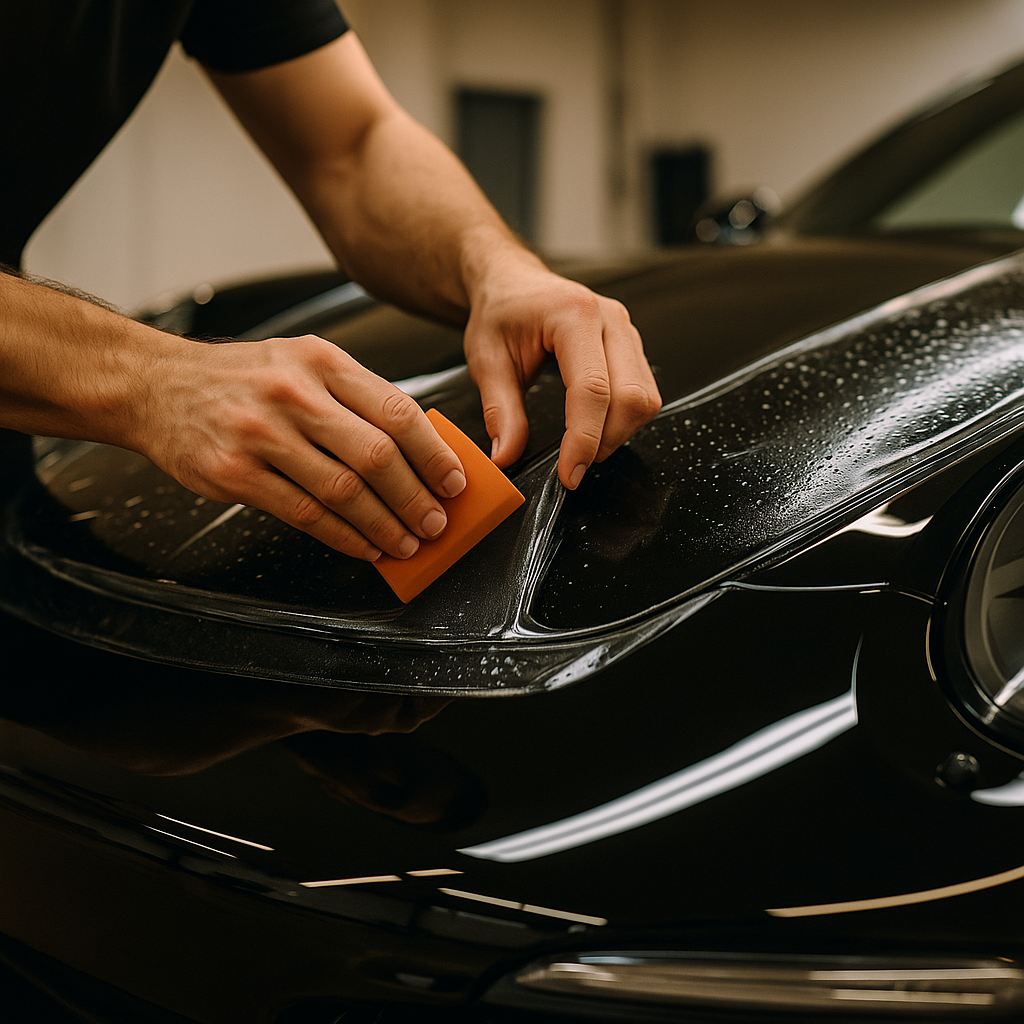
    Detailer installing clear film on a sports car bonnet with self healing car wraps technology
    Performance saloon under streetlights protected by self healing car wraps

    Self healing car wraps FAQs

    How long do self healing car wraps typically last?

    Most quality self healing car wraps are rated for around 5 to 7 years of real world use, depending on mileage, washing habits, and how much UV exposure the car gets. Garaged cars that are washed properly and not hammered by motorway grit can easily see the upper end of that range, while high mileage daily drivers may see cosmetic wear a bit sooner. The self healing effect tends to be strongest in the first few years, then gradually softens rather than suddenly stopping.

    Can self healing car wraps fix deep scratches or stone chips?

    Self healing car wraps are great for light swirls, fine scratches and minor scuffs, but they are not magic against deep damage. If a scratch cuts through the top layer or a stone chip actually tears the film, the self healing chemistry cannot pull the gap back together. In those cases, you are looking at a local panel replacement. The good news is that the film usually takes the hit instead of your paint, so the repair is still far cheaper and easier than bodywork.

    Are self healing car wraps safe to wash with pressure washers?

    Yes, you can safely use a pressure washer on self healing car wraps as long as you are sensible. Keep the nozzle a safe distance away, avoid blasting directly at panel edges, and use a gentle, pH balanced shampoo. The film is designed to handle normal washing and motorway rain, but aggressive, close range jet washing at edges can lift or damage the wrap over time. A proper pre wash and contact wash routine will keep the surface looking fresh and help the self healing layer do its job.