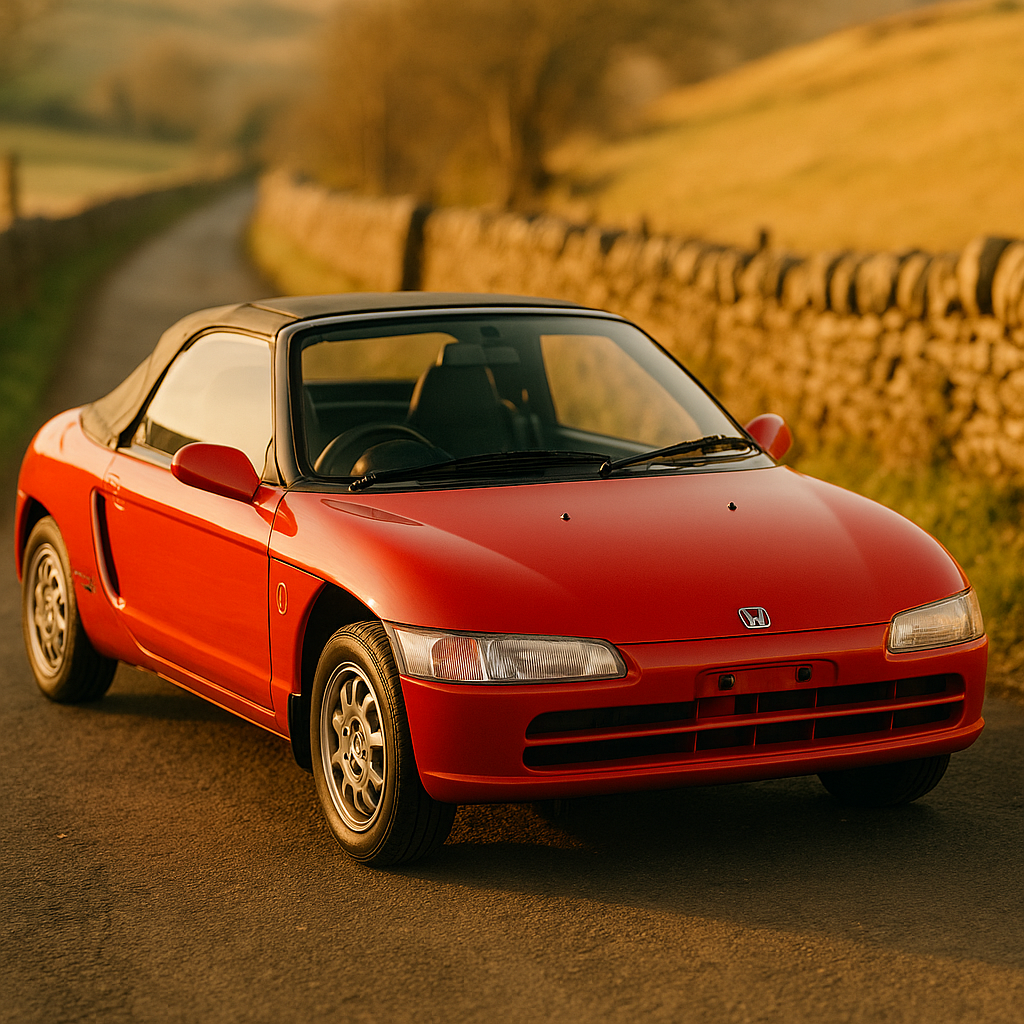
There’s something gloriously unhinged about the Honda Beat, the Suzuki Cappuccino and the Autozam AZ-1. Three tiny, mid- or rear-engined, turbocharged pocket rockets built in the early 1990s, all capped by Japan’s kei car regulations at 660cc and 47bhp. On paper they’re laughable. On a British B-road they’re absolutely electric. Importing a kei sports car to the UK has quietly become one of the most exciting rabbit holes in the enthusiast scene right now, and this is the end-to-end, no-fluff breakdown of how to actually do it in 2026.
The 25-year import rule that governs the US market doesn’t apply here, which is one reason the UK has always had a steady trickle of Japanese grey imports. These three in particular hit their eligibility sweet spot years ago, but availability has genuinely tightened. Low mileage, unmodified examples are becoming rarer, and prices in Japan have crept up accordingly. Act sooner rather than later is the honest advice.
Finding a Honda Beat, Suzuki Cappuccino or Autozam AZ-1 in Japan
Most UK buyers start on Japanese auction sites like USS, TAA, or the big one, JDM Export portals such as Goo-net or Be Forward. You can browse directly, but unless you read Japanese fluently you’ll want a registered import agent. Firms like Torque GT, Auto Village and Japan Car Direct have long track records in the UK grey import space. Expect agents to charge anywhere from £300 to £600 on top of the vehicle price for handling the Japanese auction and export paperwork.
Auction grades matter massively. Grade 4 or above is the target, that means minor surface imperfections at worst. Grade 3 is fine if you’re planning a light restoration, but stay clear of anything below that unless you know exactly what you’re walking into. All three of these cars are now over 30 years old, so rust inspection reports and engine compression readings are non-negotiable asks before you bid.
Price-wise in 2026, budget roughly £4,000 to £7,000 for a tidy Honda Beat, £5,000 to £9,000 for a Cappuccino, and the AZ-1 (with its gullwing doors and Mazdaspeed cooperation) now commands £8,000 to £14,000 for anything half-decent. These have appreciated considerably. A genuinely pristine AZ-1 with low kilometres cleared £17,000 at UK auction last autumn.
Shipping Costs and What to Expect at the Port
Shipping from Japan to the UK typically goes via a Roll-on/Roll-off (RoRo) vessel to Southampton or Tilbury. Transit time runs roughly 6 to 8 weeks depending on the shipping line and route. For a kei car, RoRo freight usually costs between £800 and £1,200. Container shipping, which gives your car better protection, adds another £400 to £700 on top of that. Most agents bundle these costs, but always ask for an itemised quote.
Once the vessel docks, you’ll pay port handling and storage fees. Budget around £150 to £300 for that. Then comes the bit that catches people out: customs duty and VAT. Import duty on passenger vehicles entering the UK from Japan sits at 6.5%, levied on the vehicle’s customs value (essentially what you paid plus freight). VAT at 20% then applies on top of that combined figure. On a £6,000 Beat with £1,000 freight, you’re looking at roughly £450 duty and then £1,490 VAT. So factor in a total landed cost that’s typically 30 to 35% above your purchase price before you’ve spent a penny on compliance.
IVA Exemptions and Why These Kei Cars Often Qualify
This is where things get genuinely interesting. The Individual Vehicle Approval (IVA) test is the standard UK compliance route for imported vehicles that don’t have European type approval. It’s thorough, it’s expensive (around £700 for the test itself, often more with preparation work), and it’s genuinely daunting for a 660cc car built to JDM spec.
However, vehicles that are over 40 years old qualify for a full IVA exemption. The Honda Beat, Cappuccino and AZ-1 are all from the 1991 to 1992 period, which means they crossed that 40-year threshold recently or will do so imminently. A 1991 Beat hits the exemption in 2031 if you go purely by build year, so most examples in circulation today are not yet exempt on that basis.
What many owners do instead is register under the Mutual Recognition or, more practically, use a Specialist Vehicle Approval (SVA) examiner to assess modifications needed. Some importing kei sports car to UK buyers use the gov.uk Vehicle Approval overview to map out which route fits their specific car and year. The government portal is actually decent for this, start there and then speak to an IVA preparation specialist before committing to the test itself.
DVLA Registration: Quirks, Logbooks and Age-Related Plates
Once compliance is sorted, DVLA registration involves submitting a V55/5 form along with your customs clearance documentation (the C384 form), proof of identity, the Japanese export certificate, and the IVA certificate (or exemption confirmation). The DVLA’s import team at Swansea handles these; processing can take anywhere from 2 to 8 weeks depending on how busy they are.
Age-related number plates are one of the genuinely satisfying perks. Because these cars were built in the early 1990s, you can apply for a historic registration plate that reflects the year of manufacture rather than the year of UK registration. A 1991 J-reg, for instance, ties the car beautifully to its era without a new-format plate looking incongruous on a period machine. It also means the car can qualify as a historic vehicle for road tax purposes once it hits 40 years old, making it free to tax.
One quirk worth knowing: Japanese odometers read in kilometres. The DVLA will record the mileage as shown, but you’ll want written confirmation from your agent of the kilometre-to-mile conversion for your own records and any future sale. It’s not a blocker, just something that trips people up when they sell.
What Ownership Actually Feels Like on UK Roads
Owning one of these things day-to-day in Britain is best described as joyfully absurd. The Honda Beat is mid-engined, naturally aspirated at 656cc, revs to 8,100rpm and makes its 47bhp feel like considerably more because the car weighs around 760kg. Fling it down a narrow country lane in Derbyshire or the Cotswolds and it’s genuinely one of the most alive driving experiences you can have for under a grand in running costs per year.
The Cappuccino adds a turbocharged edge and a folding metal roof in three configurations (full open, targa or T-top), which is ridiculous for a kei car and brilliant in equal measure. The AZ-1’s gullwing doors mean car park choreography becomes a daily event. People stop and stare. Constantly.
Parts are the main concern. None of these three have a rich UK aftermarket. You’ll be sourcing from Japan via Amayama or Monotaro, or hunting on specialist forums like JDM Legends UK. Servicing-wise, any competent independent mechanic who’s comfortable with Japanese cars can handle the basics. The engines are simple and very well built. The fragility is in trim, rubber seals, and soft-top mechanisms on the Cappuccino. Join the relevant owners’ clubs before you buy, the community knowledge is invaluable.
Insurance is another consideration. Agreed value classic car policies from firms like Adrian Flux or Footman James tend to suit these far better than standard comprehensive policies, which often undervalue Japanese grey imports significantly. Mileage limits apply but are rarely an issue given how you’ll likely use the car.
Importing kei sports car to UK ownership isn’t for the faint-hearted logistically, but the payoff is a machine that no one else on your road, your track day, or your car meet will have. For enthusiasts who’ve read every review and driven every hot hatch, that sense of genuine discovery is priceless. Check out our JDM import guide and our rundown of returning JDM legends if you want the wider picture of what Japan is currently sending our way.