
Your electric car sitting on the driveway overnight is basically a giant battery doing absolutely nothing. That feels like a waste, right? Vehicle to grid technology UK is the concept that flips that idea on its head, turning your EV from a passive lump of lithium into an active part of the national energy system. It sounds like sci-fi. It is not. It is happening right now, and if you own an EV or you are thinking about getting one, this is worth understanding properly.
So What Exactly Is Vehicle-to-Grid (V2G)?
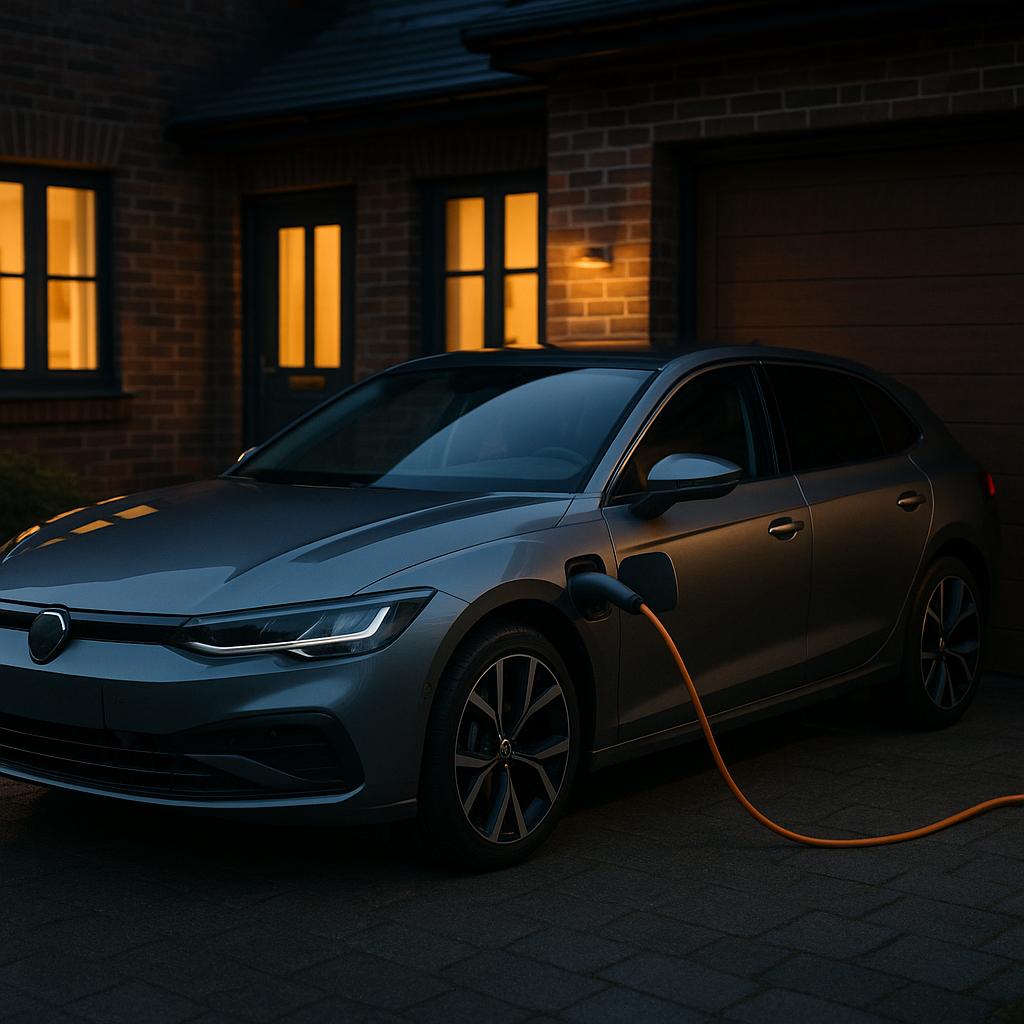
V2G, short for vehicle-to-grid, is a bidirectional charging system. Traditional EV charging only works one way: electricity flows from the grid into your car. V2G reverses that flow when needed, letting energy stored in your car’s battery feed back out, either into your home or directly into the National Grid. Your car becomes a distributed energy asset rather than just a thing you drive to Tesco and back.
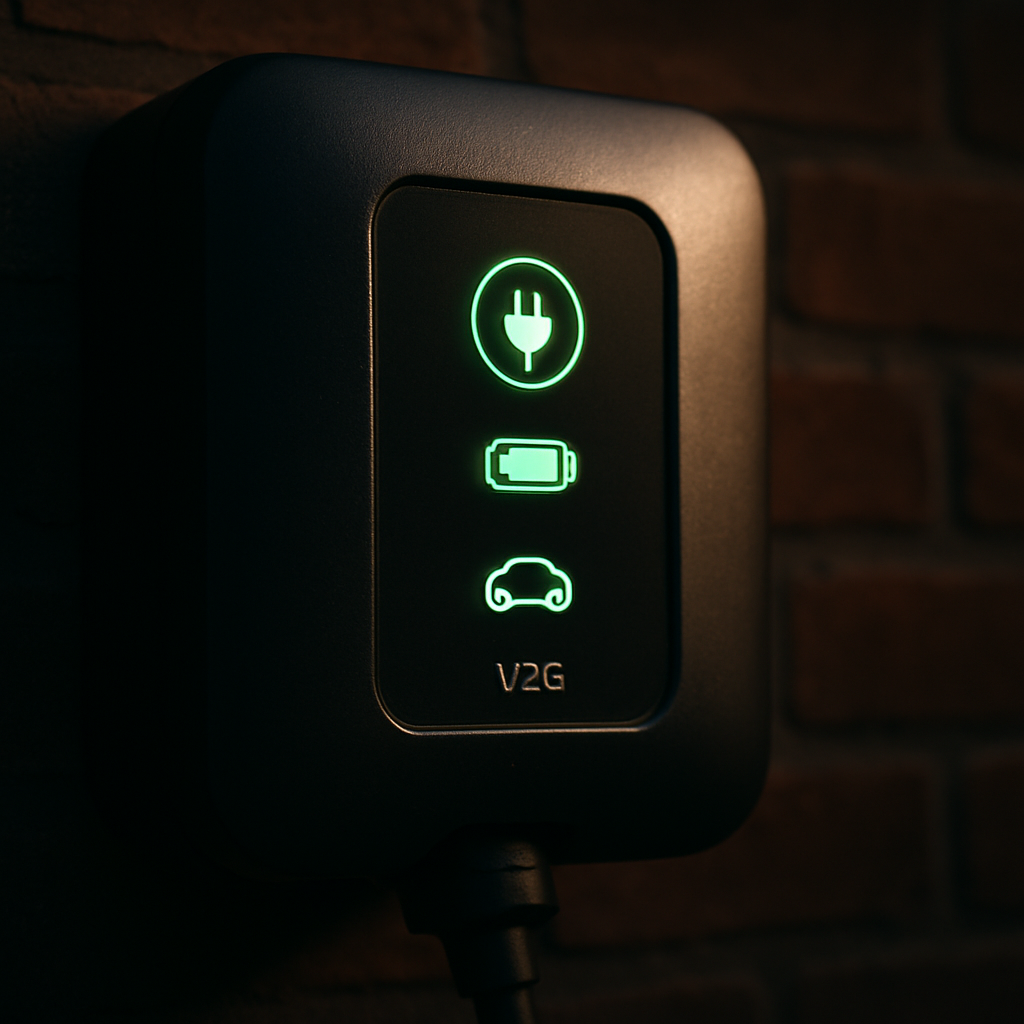
The mechanics involve a special V2G-capable charger and a compatible vehicle. Not all EVs support it yet, which we will get to shortly. But the principle is straightforward: the grid needs balancing at peak times, your battery has spare capacity, and V2G creates the conditions for energy to move in both directions intelligently, usually managed by smart software that monitors grid demand, your own energy usage, and how much charge you actually need for your next journey.
How Does V2G Actually Work in a UK Home?
Picture this. You plug in overnight. Your charger draws cheap off-peak electricity, typically between midnight and 6am, and tops up your battery. Then, during the evening peak, say between 4pm and 8pm when demand and prices spike, the system exports some of that stored energy back to the grid or diverts it to power your home directly. That second scenario is technically called vehicle-to-home (V2H), a closely related technology, but the two terms are often used loosely together.
In the UK, smart tariffs from suppliers like Octopus Energy make this genuinely compelling. Octopus Intelligent Flux, for example, prices electricity dynamically throughout the day. A V2G setup can buy at the cheap rate and export at the expensive rate, effectively arbitraging the price difference and earning you credits or reducing your bill. Some early trials suggest households could save between £400 and £700 per year, depending on their tariff and usage patterns.
Which EVs Support Vehicle-to-Grid in the UK Right Now?
This is where the reality check kicks in. V2G requires CHAdeMO charging compatibility for proper bidirectional operation, or increasingly, vehicles with CCS protocols that support it. Right now in the UK, the Nissan Leaf (with CHAdeMO) and the Nissan Ariya are among the most established V2G-ready vehicles. Mitsubishi’s Outlander PHEV has long supported V2H capability too. Volkswagen’s ID range is pushing towards V2H capability, and several manufacturers have confirmed full V2G support in upcoming models.
Honestly, the hardware has been slightly ahead of the ecosystem. Dedicated V2G chargers, like those from Wallbox and Indra, are available in the UK but still carry a premium over standard home chargers, typically £1,000 to £2,000 installed. The Office for Zero Emission Vehicles (OZEV) has been funding trial programmes, and the government’s smart charging regulations are building the framework for wider rollout. You can check the current guidance and eligible grant information over at gov.uk’s vehicle-to-grid collection.
Why V2G Matters Beyond Just Saving Money
The financial angle is the obvious hook, but vehicle to grid technology UK has implications that stretch well beyond your electricity bill. The National Grid Electricity System Operator has a significant challenge: as EV adoption scales up, millions of cars charging at peak times could destabilise the grid. V2G is a partial solution. Instead of being a problem, EVs become a flexible buffer, absorbing excess renewable energy when supply is high and returning it when demand spikes.
Think of it this way. The UK has committed to enormous offshore wind capacity. Wind does not care about what time of day it is. It blows when it blows. There are periods when wind generation outstrips demand and prices go negative. V2G-equipped vehicles can soak that up cheaply, then redistribute it later. At scale, this significantly improves grid efficiency and accelerates the viability of renewable energy. Your Nissan Leaf is not just your commuter car; it is quietly helping the country hit its net zero targets. That is a genuinely cool thing.
Is V2G Worth It for UK EV Owners in 2026?
The honest answer is: it depends on your setup, but the window is opening fast. If you already own a CHAdeMO-compatible Nissan or a newer vehicle with V2G capability, and you are on a time-of-use tariff, the economics are starting to make sense. The upfront cost of a V2G charger is the main barrier, but prices are falling and the savings accumulate over time.
For those still shopping for an EV, it is worth factoring V2G compatibility into your decision now, even if you do not set it up immediately. It adds long-term value to the vehicle and future-proofs your home energy setup. If you are deep into the EV rabbit hole already, you might want to pair your V2G research with a look at our used performance car buying guide to see what EV options are worth considering on the second-hand market right now.
The Bigger Picture for UK Car Culture
There is something genuinely exciting about the direction this is heading. Car enthusiasts have always been obsessed with what a vehicle can do beyond simply moving people from A to B. Modification culture, performance upgrades, track days, all of that stems from the same impulse: getting more out of a machine than its base specification suggests. V2G is that same energy, just pointed at the grid instead of a circuit.
The EV-sceptic crowd often argue that electric cars strip the soul out of driving. But V2G flips the script entirely. Your car earns money while parked. It powers your home during a blackout. It supports national renewable energy infrastructure. That is not a boring car; that is a ridiculously capable one. The tech is maturing quickly, the tariffs are getting smarter, and the compatible vehicle list is growing. Vehicle to grid technology UK is no longer a fringe concept. It is becoming a genuine selling point, and smart EV owners are already paying attention.
Frequently Asked Questions
What is vehicle to grid technology and how does it work in the UK?
Vehicle to grid (V2G) technology allows electric vehicles to send stored energy back to the National Grid or power your home, rather than just receiving charge. A bidirectional charger and a compatible EV are required, and smart tariffs help maximise the financial benefit by buying cheap overnight energy and exporting it at peak times.
Which electric cars support V2G in the UK?
Currently, the most established V2G-ready vehicles in the UK include the Nissan Leaf (CHAdeMO) and Nissan Ariya. Mitsubishi’s Outlander PHEV supports vehicle-to-home (V2H), and several new models from Volkswagen and others are adding V2G capability. Always check your specific model’s charging protocol before purchasing a V2G charger.
How much money can I save with vehicle to grid technology in the UK?
Early UK trials and estimates suggest households with a V2G-capable setup and a smart time-of-use tariff could save between £400 and £700 per year. Actual savings depend on your energy tariff, how much you drive, and how much spare battery capacity is available for export.
How much does a V2G charger cost to install in the UK?
A dedicated V2G home charger typically costs between £1,000 and £2,000 installed in the UK, compared to around £500 to £900 for a standard smart home charger. Prices are falling as adoption grows, and the Office for Zero Emission Vehicles (OZEV) has run grant-supported trial programmes worth monitoring.
Is vehicle to grid technology available across the UK or only in certain areas?
V2G technology is available across mainland UK in principle, as it relies on your home energy setup and a compatible charger rather than location-specific infrastructure. However, smart tariffs that maximise V2G benefits, like those from Octopus Energy, require a smart meter, which is now widely available through most UK energy suppliers.