
You don’t need a £10,000 camera rig and a professional studio to shoot cars that stop people mid-scroll. Some of the most iconic automotive photography floating around Instagram right now was shot on a mid-range mirrorless and a healthy obsession with golden hour. Whether you’re documenting your own build, trying to grow a following, or just want to do your motor justice, these car photography tips for beginners will get you from fumbling with your phone to producing proper editorial-level shots, without remortgaging your flat.
Why Location Is Everything in Car Photography
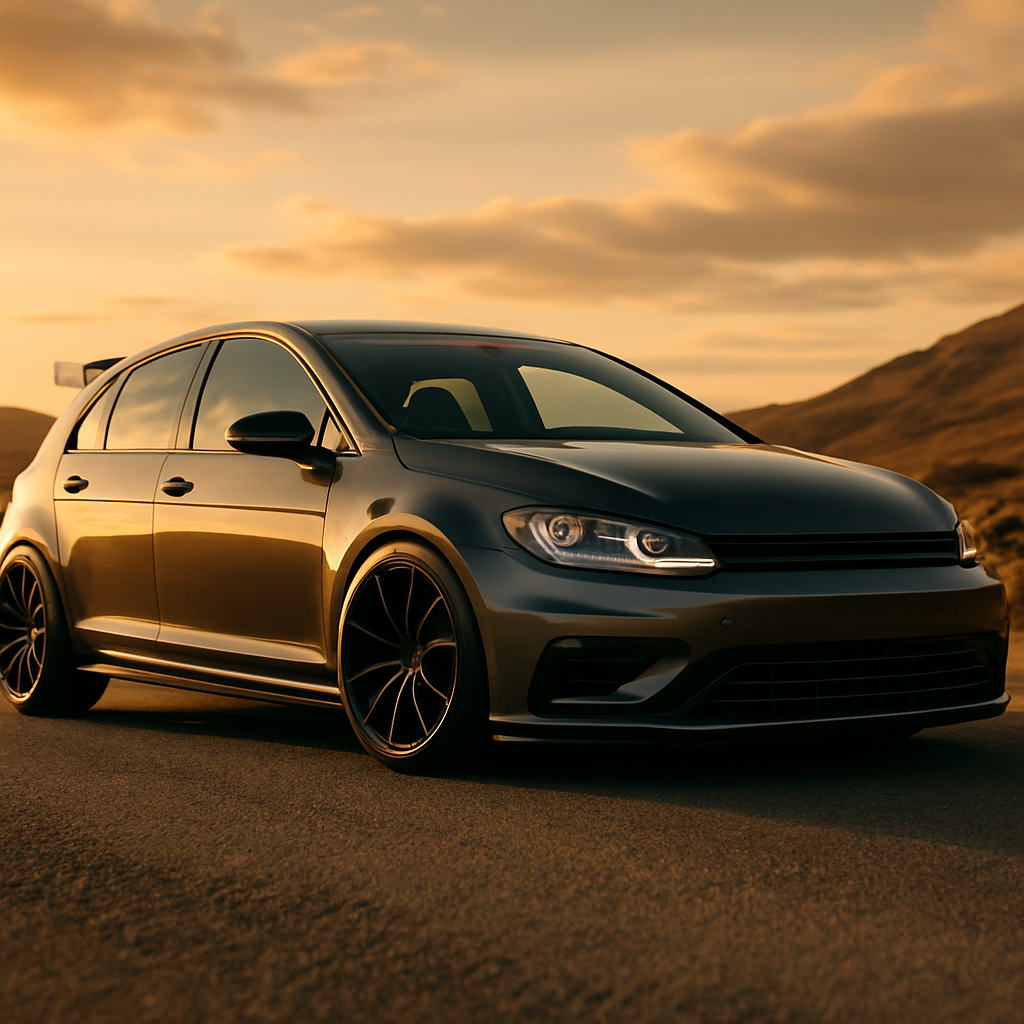
You could park a Ferrari next to a Lidl wheelie bin and it’d still look like a mess. Location is arguably the most powerful tool in your kit, and the good news is the UK is absolutely loaded with stunning backdrops that cost nothing to access.
Industrial estates around places like Sheffield, Manchester’s Trafford Park, and East London’s Hackney Wick offer raw, textured backdrops, exposed brick, rusted shutters, cracked tarmac, that give any car a gritty edge. For something more cinematic, the A537 Cat and Fiddle road in the Peak District is a properly dramatic stretch of tarmac. Wales hands you sweeping mountain passes like the Bwlch y Groes, which is genuinely world-class if you time it right. And if you’re after that clean, minimal look, multi-storey car parks (especially older, brutalist ones) give you geometric lines and shade that no studio can replicate.
Scout locations on Google Street View first. Check what direction the road faces so you can plan around the sun. The free Met Office weather forecast is your best mate for planning shoots, an overcast sky is actually perfect for car photography, as it acts like a giant softbox and eliminates harsh reflections on paintwork.
Lighting: The Thing Most Beginners Get Wrong
Hard midday sun is brutal for shooting cars. It creates hotspots on bonnets, deep shadows under wheel arches, and generally makes everything look flat and harsh. What you want is softer, directional light, and the UK’s naturally moody skies are genuinely an asset here.
Golden hour (the 30-45 minutes after sunrise and before sunset) is the classic choice. Light rakes across the car at a low angle, picking out body lines, casting dramatic shadows, and adding warmth to any colour. Blue hour, the brief window after sunset, gives you deep, cool-toned skies that look insane paired with a car’s interior lights or headlights switched on. For daytime shoots, look for open shade, the shadow side of a building or under a motorway bridge, which gives you even, diffused light with no nasty reflections.
One simple tool that makes a real difference: a cheap reflector (you can grab a 5-in-1 kit from Amazon for around £15) to bounce fill light into shadow areas. It sounds basic, but it genuinely transforms shots.
Camera Gear That Won’t Cost You a Fortune
Right, the gear talk. First, a reality check: your phone is probably better than you think. A modern iPhone 15 Pro or Samsung Galaxy S24 Ultra will produce images that, with good light and composition, rival entry-level DSLRs. If you’re starting out, shoot on your phone, learn the fundamentals, then upgrade.
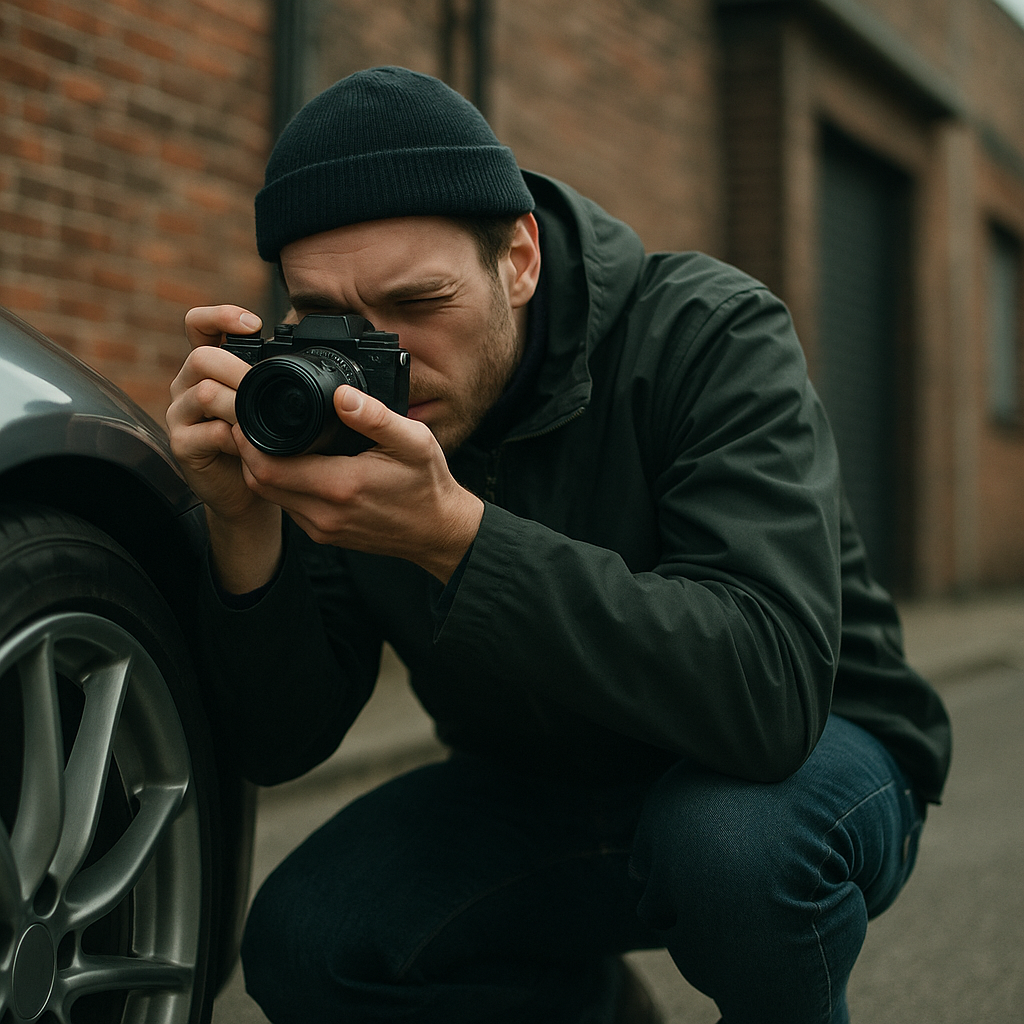
When you’re ready to step up, the second-hand mirrorless market is brilliant for this. A used Sony A6000 or Fujifilm X-T30 can be found for £250-£400 on MPB or Wex Secondhand, and both produce stunning results. For lenses, a 35mm or 50mm prime gives you a natural perspective that flatters car proportions, nothing too wide, which distorts panels, and nothing too long, which flattens depth. Wide-angle (anything under 24mm) is only really useful for dramatic low-angle detail shots, like a wheel or an exhaust tip.
A tripod is worth its weight in gold for static shots, particularly at blue hour when you need longer exposures. A decent carbon fibre travel tripod comes in around £60-£80 from brands like K&F Concept. Essential, not optional.
Composition Tricks That Actually Work
Composition is where most car photography tips for beginners fall flat, it gets overlooked in favour of gear chat. Here’s what actually moves the needle.
- Get low. Shooting from wheel height or below gives cars a more imposing, dramatic stance. Most people shoot from standing eye level, which produces boring, catalogue-style images.
- Use leading lines. Roads, kerb edges, painted lines in car parks, these naturally draw the eye toward the car. Park the car at the end of a long straight and shoot from distance.
- Leave breathing room. Don’t fill the entire frame with the car. Give it space, especially if the background is strong. Let the environment tell part of the story.
- Shoot the details. Badges, exhausts, stitching on the steering wheel, brake callipers peeking through spokes, macro-style detail shots make a set feel complete and professional.
- Try a rolling shot. For moving shots, you’ll need a second driver and either a camera arm or someone shooting out of a passenger window. Keep shutter speed low (around 1/60th to 1/100th of a second) to blur the background and convey speed. This takes practice but looks exceptional when nailed.
Editing on a Budget: Free Tools That Actually Deliver
Adobe Lightroom is the industry standard and worth every penny of the £11.99/month Photography Plan, but if you’d rather not subscribe, Lightroom Mobile is free and has most of the same sliders. Snapseed is a brilliant free option for mobile editing. For desktop users, Darktable is a genuinely powerful free alternative to Lightroom that handles RAW files without complaint.
Keep edits natural. The temptation early on is to crank contrast and clarity to eleven, but restraint usually wins. Lift the shadows slightly, recover highlights on the bodywork, add a subtle fade to the blacks for that filmic look, and be careful with saturation, a little goes a long way. Export at full resolution and always shoot RAW if your camera supports it. JPEG in, JPEG out leaves you very little room to work with.
If you’re building a portfolio or content calendar, consistency in your edit style matters more than any single brilliant shot. Find a look you like and apply it across a set of images, it makes your feed feel intentional rather than accidental.
Growing as an Automotive Photographer in the UK
Join a local car meet. Seriously. Events like the Caffeine and Machine gatherings in Warwickshire, Japanese car shows across the Midlands, and countless local cruise nights give you access to stunning metal at no cost, plus a genuinely enthusiastic community that’ll happily let you shoot their cars in exchange for the images. It’s the quickest way to build a portfolio fast.
Tag owners when you post their cars. Reach out, share the files, be generous with your edits. The automotive photography community in the UK is tighter-knit than you’d think, and reputation spreads quickly. If your shots are good and you’re easy to work with, word travels.
If you’re looking to sharpen your eye on what good automotive photography actually looks like, spend time on the editorial pages of publications like Evo and Autocar. Study how they compose moving shots, how they use landscape, and how they light hero images. It’s free education.
And if you need inspiration for your next shoot subject, check out our recent deep-dive into buying a used performance car in the UK, because the best car photography always starts with a brilliant car to shoot. These car photography tips for beginners only get you so far; the rest is reps, experimentation, and turning up even when the weather looks sketchy. (Spoiler: moody skies nearly always look better in photos than you’d expect.)
Frequently Asked Questions
What camera is best for car photography as a beginner?
Your smartphone is a solid starting point, modern flagship phones like the iPhone 15 Pro handle car photography remarkably well in good light. When you’re ready to step up, a used Sony A6000 or Fujifilm X-T30 (available from around £250-£350 second-hand) paired with a 35mm or 50mm prime lens will give you excellent results without a huge outlay.
What time of day is best for shooting cars?
Golden hour, the 30-45 minutes after sunrise or before sunset, gives you warm, directional light that flatters bodywork and creates dramatic shadows. Blue hour, just after sunset, is brilliant for a moodier, cooler look. Overcast days are also underrated, as the cloud cover acts as a natural diffuser and eliminates harsh reflections on paintwork.
Where can I find good car photography locations in the UK?
The UK has brilliant options for free. Industrial areas in cities like Manchester, Sheffield, and East London offer gritty urban backdrops, whilst roads like the Cat and Fiddle in the Peak District or the Bwlch y Groes in Wales deliver dramatic scenery. Brutalist multi-storey car parks also work exceptionally well for a clean, geometric aesthetic.
How do I avoid reflections on car paintwork when shooting?
Shoot during overcast conditions or in open shade for naturally diffused light that minimises reflections. Avoid harsh midday sun, which creates hotspots on bonnets and roofs. Positioning the car so it faces away from direct sun also helps, and polarising filters (available for around £20-£40) can reduce glare significantly on shinier panels.
Do I need editing software to get good car photography results?
Editing can genuinely make or break a shot, but you don’t need to spend a fortune. Lightroom Mobile is free and powerful, Snapseed works brilliantly on mobile, and Darktable is a capable free desktop alternative. Shoot in RAW if your camera allows it, as this gives you far more flexibility when adjusting exposure, highlights, and colour in post-processing.