
Few decisions split car enthusiasts more sharply than this one. Wrap it or spray it? Both can look absolutely stunning. Both can also go spectacularly wrong if you pick the wrong shop or skip the prep. And in Britain, where your car spends half its life being pelted with rain, road salt, and general misery, the choice carries more weight than it does in sunnier climates. So let’s get into the honest reality of vinyl wrap vs respray UK cost in 2026, money, durability, insurance headaches and all.
What Does a Vinyl Wrap Actually Cost in the UK Right Now?
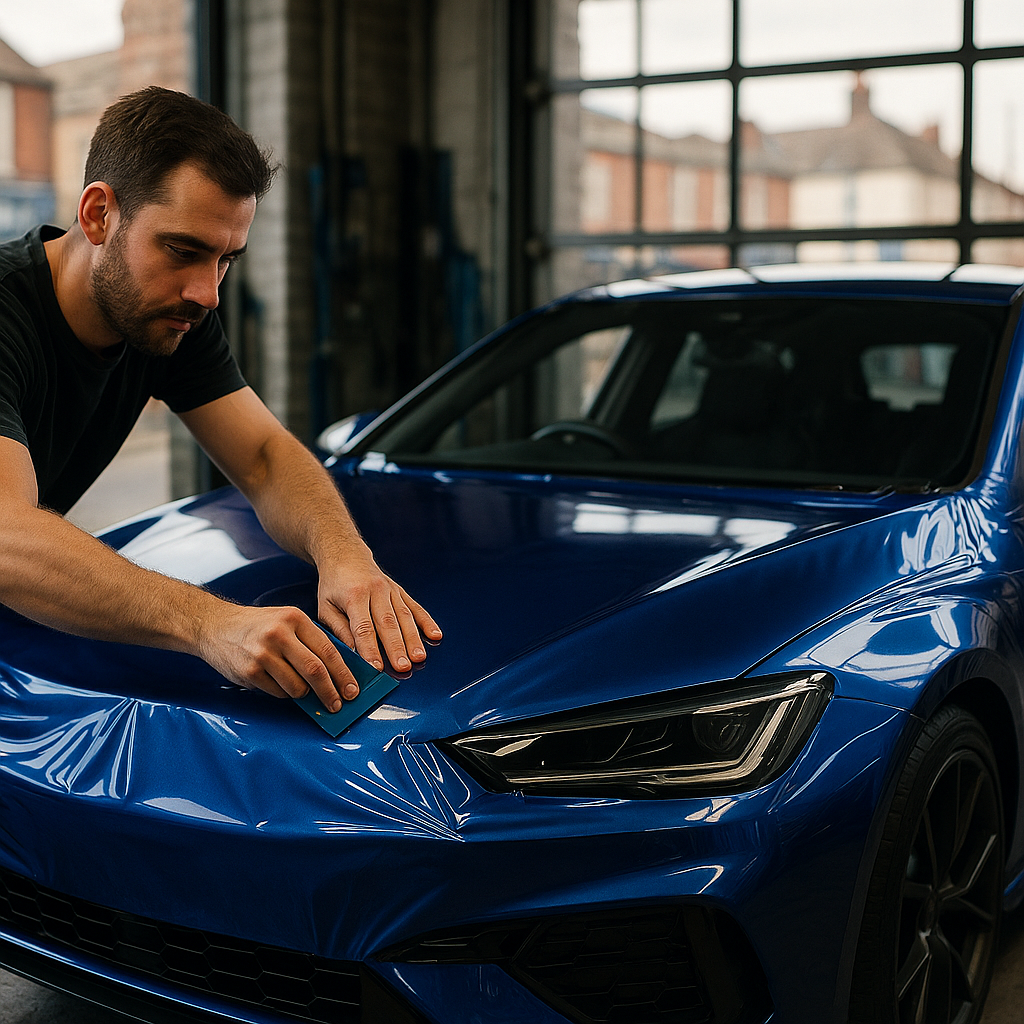
Prices have settled somewhat after the post-pandemic chaos, but expect to pay anywhere from £1,500 to £3,500 for a full wrap on a standard hatchback or saloon from a decent installer. Go for a premium brand like 3M or Avery Dennison, or choose a complex finish like satin chrome or colour-shift, and you’re looking at £4,000 to £6,000 without blinking. Supercars, naturally, cost more, wrapping something like a Porsche 911 or an AMG GT can push past £8,000 once you account for complex panel geometry and extra material waste.
What drives costs up sharpest? Poor prep work hidden inside a cheap quote. Any reputable wrapper will spend serious time cleaning, decontaminating and sometimes wet-sanding the surface before a single strip of vinyl goes on. If someone quotes you £900 for a full-car wrap, they’re either skipping steps or using vinyl that’ll be peeling off your bonnet by the time summer arrives.
And a Professional Respray, What’s the Real Figure?
A proper professional respray in the UK is expensive. Not London-sandwich expensive. Actually expensive. A quality full respray on a standard car, done correctly through primer, colour coats and lacquer, typically runs from £3,000 to £7,000. Factory-correct resprays with colour matching and full strip-down of trim and glass can reach £10,000 to £15,000 at top-tier bodyshops.
The key word there is correctly. Budget resprays in the £500-to-£1,500 bracket exist, and they show. Orange peel, paint runs, over-spray on rubber seals, and fading within two years are all common outcomes. A respray is genuinely only as good as the prep and the painter, and skilled body painters are rarer than they used to be in Britain, which keeps quality prices high.
How Does Each Option Hold Up in Britain’s Actual Weather?
This is where the UK context really bites. British roads in winter are brutal, grit lorries scatter salt from October through to March, drainage is patchy, and standing water is basically a national pastime. Both wraps and resprays face the same enemies: salt, UV (yes, even here), bird droppings, tree sap, and the general griminess of urban driving.
Quality vinyl wrap, properly installed, is actually quite robust. The film itself creates a barrier over the original paint, protecting it from minor stone chips and UV degradation. The weak points are the edges, door shuts, bonnet gaps, and leading edges of bumpers. In wet conditions, if those edges haven’t been properly sealed or tucked, moisture wicks underneath and you get lifting. It’s not rare in the UK, and it’s the number-one complaint you’ll hear from wrap owners who went with a budget installer.
A quality respray, done with a proper lacquer topcoat, handles British weather well for the long term. It’s bonded to the car; there are no edges to lift. But it’s not invincible either, stone chips expose bare metal faster than you’d like, and if the prep work was poor, moisture can creep under the lacquer and cause bubbling or rust, particularly around sills and wheel arches where salt accumulates most aggressively.
Insurance: The Bit Nobody Warns You About
Both options can affect your insurance, and this is where a lot of enthusiasts get caught out. A colour change wrap absolutely must be declared to your insurer, failing to do so can invalidate your policy entirely. Under UK law, you also need to update your V5C logbook to reflect the new colour if the wrap is a permanent change of appearance. The DVLA guidance on changing vehicle colour makes this clear, and ignoring it isn’t worth the risk.
A respray carries the same obligation if you’re changing colour. Some insurers treat a wrap more sceptically than a respray, viewing it as a modification that could affect resale value assessment in a claim. Others are fine with it. The honest advice: ring your broker before you book the appointment, not after you collect the car.
Resale Value: Which One Hurts or Helps?
Wraps have a genuine advantage here, assuming they’re in good condition. A well-maintained wrap can be removed before sale to reveal the original factory paint beneath, which is a real selling point. Buyers know the underlying paint is protected. That said, a tatty, lifting or sun-faded wrap actively destroys resale value, it looks neglected, and buyers immediately start mentally docking money for removal costs.
A respray, if done in the original factory colour, has minimal negative impact on resale. A non-standard colour respray almost always hurts the market value on common cars, you’re narrowing your buyer pool considerably. On certain enthusiast or collector cars, a concours-quality respray in period-correct colour can actually add value. Context is everything.
For most buyers of everyday performance cars, your Golf Rs, your Civic Type Rs, your BMW M2s, a colour-matched or original-spec respray is safer for resale than a wild wrap. For show cars, track builds, or cars you genuinely plan to keep, wrap opens up possibilities that paint simply can’t match at the same price point.
So Which Should You Actually Choose?
For reversibility and cost-effectiveness at the sub-£5,000 mark, a quality vinyl wrap from a reputable UK installer is genuinely compelling. You get the colour change, the protection layer, and the ability to go back to stock. For longevity, structural integrity, and long-term weather resistance without the edge-lifting concern, a proper respray wins. It’s the more permanent, more traditional answer.
The mistake most people make is treating price as the primary filter and ending up with a cheap version of either option. A botched wrap looks tragic within eighteen months. A budget respray looks terrible within three years. If your budget only stretches to a cut-price job, honestly, a good detail and some high-quality paint protection film on the high-impact areas might serve you better until you can afford to do it properly.
If you’re weighing up what finish to choose for a performance car you’re building up, check out our guide on restomod builds and how owners are approaching paint choices on reimagined classics, the same principles apply. The short version on vinyl wrap vs respray UK cost in 2026: spend properly, choose based on your long-term plans for the car, and never let a cheap quote make the decision for you.