The UK modification scene has never been more alive. Car enthusiasts are spending serious money on their builds, shows like the Goodwood Festival of Speed keep the culture front and centre, and social media has turned modified motors into a genuine lifestyle. But UK road law? That’s the bit that trips people up. Whether you’re deep into car modification for aesthetics, performance, or both, understanding what’s legal before you bolt something on could save you a hefty fine, an insurance nightmare, or worse, a failed MOT that puts your pride and joy off the road indefinitely. Here’s the real breakdown of legal car modifications UK 2026 style, no fluff, no vague disclaimers.

Why UK Modification Law Feels So Confusing Right Now
Part of the problem is that the rules haven’t all changed at once. Instead, UK modification legality sits across several different pieces of legislation and guidance: the Road Vehicles (Construction and Use) Regulations 1986, the Road Traffic Act, DVLA type approval rules, and more recently, updates tied to emissions standards and lighting regulations. The Driver and Vehicle Standards Agency (DVSA) has also sharpened its MOT guidance, meaning testers are scrutinising certain modifications more closely than they did five years ago. Add in the fact that insurance invalidation is a separate risk entirely from road legality, and you’ve got a genuinely complex landscape. The short version: a mod can be technically road legal and still void your policy if you haven’t declared it. Always tell your insurer. Every time.
Exhaust Mods: What’s Still Legal in 2026?
Aftermarket exhausts remain one of the most popular modifications on UK roads, and they can be completely legal if you get this right. The key figure is 74 decibels, which is the maximum noise level permitted under UK law during a drive-by test for most passenger vehicles. That said, the MOT doesn’t formally test exhaust noise as a fixed measurement, so enforcement tends to come from police spot checks under the Highway Code and Construction and Use regulations. Cat-back systems from reputable brands like Milltek or Scorpion are generally compliant when supplied with the right certification. Decat pipes? That’s where it gets murky. Running a decatalysed exhaust on a car registered after 1992 is illegal on public roads, full stop. It’s also a guaranteed MOT failure. Some tuners fit a decat for track use only and swap back for road driving, which is technically fine but practically inconvenient.
Lighting: LEDs, Tints, and the Law
Lighting is the modification category that’s evolved most rapidly. LED headlight conversions in halogen housings were a grey area for years, and in 2026 they remain problematic. If your car was designed for halogen bulbs, fitting LED replacements into the same housing often produces an incorrect beam pattern that fails Construction and Use regulations. Purpose-built LED headlight assemblies, approved by the Vehicle Type Approval process, are a different story and are perfectly legal. Smoked or tinted rear lights are an easy fail if they reduce the brightness of your brake lights or indicators below the required threshold. Light bars mounted on the roof? Legal to fit, illegal to use on public roads. Angel eyes on a car that didn’t leave the factory with them sit in similarly complicated territory depending on colour and placement. White or yellow at the front, red only at the rear. That’s the rule.
Suspension, Wheels, and Stance
Lowering springs, coilovers, air suspension, stretched tyres, aggressive camber setups: all of this is wildly popular and all of it can fail your MOT or land you a police notice if done incorrectly. UK law doesn’t set a specific minimum ride height, but it does require that your car’s handling and safety systems aren’t compromised. Coilovers set too low can cause the inner tyre wall to rub on the arch liner, create bump steer, or interfere with ABS sensors, all of which will flag issues at MOT. Wheel spacers are legal provided the wheel nut engagement remains sufficient (typically at least one full diameter’s worth of thread engagement). Running tyres with an incorrect speed or load rating for your vehicle is illegal regardless of how good they look. And stretched tyres? The DVSA has been clear that a tyre not properly seated on the rim creates an unsafe condition. Plenty of UK drivers run a mild stretch without issue, but push it too far and you’re on the wrong side of the law.
Engine Remaps and Performance Tuning
A remap that takes your diesel estate from 150bhp to 190bhp is one of the most cost-effective modifications you can make, and it’s completely road legal. What matters is that the vehicle still passes emissions testing at MOT and that you declare the modification to your insurer. On a modern petrol or diesel, a quality remap from a tuner like Revo, Superchips, or APR shouldn’t push your car outside legal emissions limits, but a poorly executed tune absolutely can. This is why using reputable tuners matters. Stage 2 and beyond, where you’re pairing a remap with upgraded hardware like a larger turbo or a high-flow catalyst, requires more care. Each component needs to be road legal in its own right. Your insurer also needs to know, or your policy could be void before you’ve even started the engine on a wet Tuesday morning in Nottingham.
PPF, Wraps, and Exterior Finishes: What the Law Actually Says
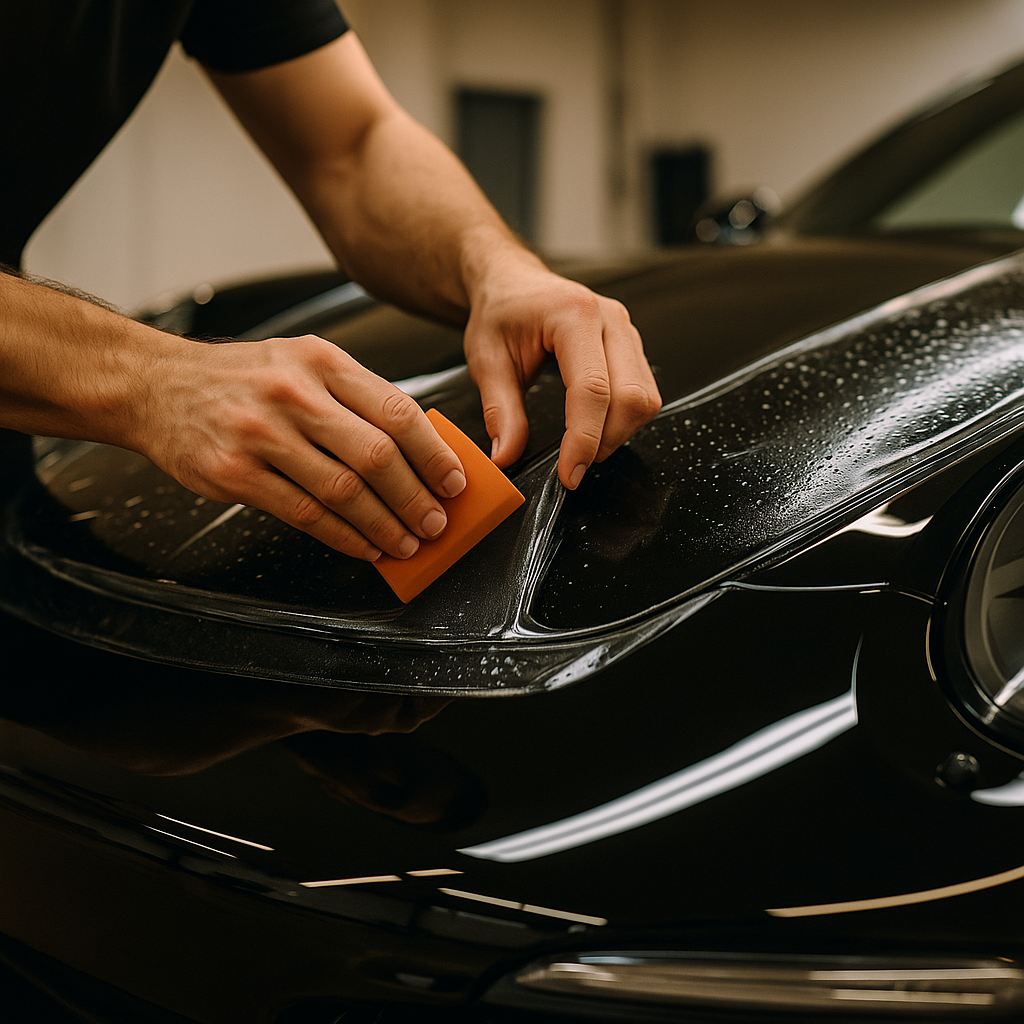
Paint protection film and vinyl wraps have exploded in popularity across the UK car modification scene, and the good news here is that they’re among the most straightforward mods from a legal standpoint. A full wrap or PPF installation doesn’t affect your vehicle’s type approval, doesn’t trigger an MOT concern, and doesn’t compromise any safety system. The only obligations are to notify the DVLA if you’re permanently changing your vehicle’s colour (which a wrap technically doesn’t do, since it’s removable), and to inform your insurer of any cosmetic changes. Car enthusiasts in the Midlands and beyond who are serious about car maintenance and long-term car detailing often go the PPF route precisely because it protects the original paintwork underneath. Based in Mansfield, Nottinghamshire, Custom Creations Detailing supplies professional PPF installation and full car detailing services to car modification enthusiasts who want their builds looking immaculate while staying fully road legal. Their work sits neatly at the intersection of car maintenance and aesthetic enhancement, which is exactly where a well-executed build should be. You can find out more at https://www.customcreationsdetailing.com/.
Tinted Windows: The 70/75 Rule
Window tinting is one of the most frequently misunderstood modifications in the UK. The legal minimums are clear: the windscreen must allow at least 75% of light through, and the front side windows must allow at least 70%. The rear windows and rear windscreen have no legal minimum, so you can go as dark as you like back there. Police can and do use photometers to test tint levels at the roadside. A common misconception is that factory privacy glass on the rear of an SUV or MPV makes the whole car exempt. It doesn’t. The front windows still need to hit that 70% threshold regardless of what came fitted from the factory.
Roll Cages: Track Use vs Road Use
A full bolt-in roll cage is one of those modifications that feels like a performance upgrade but actually introduces legal complexity on the road. On a track day, a roll cage is essential safety equipment. On the public road, an exposed roll cage without padding on the sections near occupants’ heads can actually be considered a hazard, contravening Construction and Use regulations. Many dedicated track car owners who also drive their cars to events on the road fit half-cages or bolt-in systems that they partially remove for road use. It’s fiddly, but it’s the right approach. If you’re looking for track-focused advice around this, check out our feature on the best affordable hot hatches for track days in 2026.
The Bottom Line on Legal Car Modifications UK 2026
The UK modification scene is thriving, and the vast majority of popular mods can be done legally if you do your research, use quality parts, and keep your insurer in the loop. The areas where people most commonly fall foul are exhaust noise, incorrect LED installations, tyre and suspension setups that compromise safety, and forgetting to notify insurers. Car cleaning and car detailing work like PPF, ceramic coatings, and quality wraps sit at the safe end of the spectrum. Specialists like Custom Creations Detailing in Mansfield, Nottinghamshire handle this kind of car detailing and paint protection work for car enthusiasts who want their modified builds to look the part without creating any legal headaches. If your build is more involved, the modification community on forums like PistonHeads and owners’ clubs is genuinely valuable for model-specific advice. Build smart, declare everything, and enjoy it properly.
Frequently Asked Questions
Do I need to tell my insurer about car modifications in the UK?
Yes, you must declare all modifications to your insurer, even cosmetic ones like wraps or tinted windows. Failing to disclose modifications can invalidate your policy, meaning any claim could be rejected even if the modification had nothing to do with the incident.
Is remapping a car engine legal in the UK?
Engine remapping is legal in the UK provided the vehicle still passes its MOT emissions test and the modification is declared to your insurer. Using a reputable tuner is important to ensure the remap doesn’t push your car outside legal emissions thresholds.
What is the legal window tint limit for UK cars?
The windscreen must allow at least 75% of light through, and the front side windows must allow at least 70%. There are no legal limits on rear side windows or the rear windscreen, so those can be as dark as you choose.
Are aftermarket exhausts legal in the UK in 2026?
Aftermarket exhausts are legal provided they don’t exceed the noise limits set under Construction and Use regulations, and the vehicle still passes MOT emissions testing. Decat pipes are illegal on any car registered after 1992 and will cause an MOT failure.
Does PPF or vinyl wrap need to be declared to the DVLA?
A vinyl wrap doesn’t permanently change your vehicle’s colour so it doesn’t legally require a DVLA colour update notification, but you should still inform your insurer. If you’re changing the colour permanently through a respray, you must notify the DVLA via a V5C update.