Category: Motoring

  • Black Box Insurance for Young UK Car Enthusiasts: Friend, Foe or Just a Fact of Life in 2026?

    Black Box Insurance for Young UK Car Enthusiasts: Friend, Foe or Just a Fact of Life in 2026?

    Let’s not dress it up. If you’re under 25 and you’ve just bought something with a decent power-to-weight ratio, the insurance quote you got probably made your eyes water. Black box insurance for young drivers UK-wide has become the default answer insurers reach for, and for a lot of enthusiasts it feels less like a helping hand and more like an ankle tag. I’ve spoken to enough lads and women in their early twenties running turbocharged hatches and older sports cars to know the frustration is very real.

    But here’s the thing: the picture is more complicated than “telematics bad, freedom good”. Some young drivers are genuinely getting better rates through black box policies. Others are getting stung in ways they never expected. So let’s get properly into it.
    Young driver in a performance hatchback, relevant to black box insurance for young drivers UK
    Photo by Evelin Rotaru on Pexels

    What does a black box actually collect?

    The device itself is typically a small GPS and accelerometer unit, either hardwired under your dashboard by the insurer’s approved fitter or, increasingly in 2026, replaced entirely by a smartphone app. It tracks your location, speed, braking force, acceleration, cornering behaviour, and the times of day you’re driving. Some policies also flag motorway driving versus town driving as separate risk categories.

    What it does not do is listen to your conversations or film anything. The data is processed by the insurer’s algorithm, not a human sitting there watching your every move. That said, the ICO has clear guidance on what insurers can and cannot do with telematics data, and it’s worth reading if you’re privacy-conscious. You can find the relevant information via the ICO’s UK GDPR guidance.

    The score you get, usually a number out of 100 presented in an app, is a composite of all those signals. Most insurers update it weekly or monthly. Drop below a threshold and you get a warning. Keep getting warnings and the policy gets cancelled. Get cancelled mid-term and you’ve got a serious problem finding cover anywhere else.

    Which insurers penalise sporty cars most harshly?

    This is where it gets genuinely interesting, and where I’d say the market is not being honest with young buyers. The headline premium on a telematics policy for, say, a Honda Civic Type R or a Ford Focus ST looks reasonable on comparison sites. But the devil is in the policy wording around vehicle type.

    Insurers including Admiral’s LittleBox, Hastings Direct SmartMiles, and Marmalade all use the vehicle’s insurance group as a weighting factor separate from your driving score. A car in insurance group 40 or above starts from a higher base rate that the telematics discount is applied to, which means even a perfect driving score might not bring the overall premium down to the level you’d get on a lower-powered car. Some policies for performance cars above a certain engine size also cap the maximum discount you can earn through good behaviour, which is buried in the small print and rarely explained clearly at point of sale.

    My take? If you’re buying something like a used Subaru Impreza WRX or a late MK3 Focus RS, compare the telematics quote directly against a named-driver policy on your parents’ or older sibling’s car. The maths doesn’t always favour going solo with a black box when the base vehicle rating is already high.

    Telematics black box device installed in a car dashboard, illustrating how black box insurance for young drivers UK works
    Photo by Maksim Goncharenok on Pexels

    Curfews, cancelled policies and the bits nobody warns you about

    Some telematics policies, particularly those aimed at new drivers, include a hard curfew. Drive between midnight and 5am and you lose points, full stop, regardless of how smoothly you drove. For anyone who works shifts, finishes late at gigs or just enjoys a late-night motorway cruise, this is a serious practical problem.

    Policy cancellation is the nuclear option insurers rarely publicise loudly enough. A cancelled policy for telematics breaches goes on your insurance record, which then gets declared on every future application. That’s before you factor in the financial penalty for early termination. I’ve seen young drivers in forums describe getting cancelled after a single long motorway journey because their speed data flagged up incorrectly. Disputes with insurers over telematics data are handled via the Financial Ombudsman Service, and the FCA has published guidance pushing insurers to make their data and scoring processes more transparent, but in practice it’s still a minefield.

    If you modified your engine or fitted an aftermarket exhaust, that’s a separate conversation entirely. Any undisclosed modification can void a policy whether you have a black box or not, which is something we’ve covered in depth in our piece on what happens to your car insurance when you modify your engine in the UK.

    How to legally work the black box system

    Right, this is the part you’re actually here for. And yes, there are legitimate ways to get the most out of a telematics policy without compromising your licence or your integrity.

    Time your spirited driving carefully. Insurers score your worst moments as much as your average. A single aggressive braking event on a roundabout at 11pm doesn’t erase a week of clean commuting, but a pattern of late-night hard driving will compound into a poor monthly score. Keep the enthusiast stuff for daylight weekend runs where possible.

    Know your smoothness score. Telematics systems primarily penalise jerkiness, not outright pace. A car travelling at 60mph with smooth acceleration and late, progressive braking often scores better than someone doing 45mph who’s constantly stamping on the anchors and launching off junctions. Think about how you drive, not just where and when.

    Check whether your policy uses an app or a hardwired device. App-based systems sometimes fail to track a journey if your phone battery dies or the GPS drops out. A missed journey defaults to “untracked” on some policies, which can flag as suspicious behaviour. Keep the app running. Some insurers also let you manually flag a missed journey.

    Use the data against them if they try to cancel. Request a full export of your telematics data before any dispute escalates. You’re entitled to it under UK GDPR. If the data shows something that contradicts the insurer’s claim, that’s your evidence for an FCA complaint or Financial Ombudsman referral.

    For context, telematics data is increasingly used across a range of insurance products beyond just young drivers. Even EV buyers are encountering it, which ties into the broader shift in how insurers assess risk. If you’re curious about how connected car data shapes ownership decisions more generally, it’s worth checking out resources like Tesla Car Data to see the kind of vehicle information that modern manufacturers and insurers now have access to.

    Is a black box policy worth it for a performance car in 2026?

    Honestly? It depends on the car and your situation. For a young driver on a daily driver like a used MX-5 or a warm hatch in insurance group 30 or below, telematics can genuinely cut your annual premium by 20 to 40 per cent compared with a standard policy. That’s real money saved, potentially over £500 a year.

    For higher-powered cars in groups 40 and above, the maths often stops working in your favour. The base rate is already high, the discount ceiling kicks in, and the behavioural restrictions feel more punishing on a car that rewards a confident driving style. In those cases, a higher voluntary excess or building up a year’s no-claims on a lower-powered car first can sometimes produce a better outcome overall.

    The used performance car market has plenty of surprisingly affordable options that also sit in insurance-friendly groups. Our rundown of the hottest used Japanese performance cars under £15,000 includes some choices that could work well with a telematics policy if you pick carefully.

    And if you’re the type who genuinely enjoys learning from your own driving data, a black box might actually be a useful tool rather than a punishment. The best drivers I know are the ones who understand exactly what their car and their inputs are doing at any given moment. A telematics score, stripped of all the insurance noise around it, is just feedback. Use it.

  • The Hottest Used Japanese Performance Cars Under £15,000 in UK Classifieds Right Now

    The Hottest Used Japanese Performance Cars Under £15,000 in UK Classifieds Right Now

    There has never been a better time to go hunting through the UK classifieds for a properly exciting Japanese machine on a real-world budget. The sweet spot of around £10,000 to £15,000 is genuinely stacked right now. You’ve got turbocharged saloons with rally pedigree sitting next to nimble little coupes that embarrass cars twice their price on a Sunday morning B-road. Used Japanese performance cars have always punched above their weight, but in 2026 the value on offer is something else.

    Depreciation has eaten through a lot of the aspirational JDM stuff that was once strictly the territory of bigger budgets. That’s your gain. Here’s what’s worth chasing, and what to watch out for.

    Toyota GR86 on a UK country road, a prime example of used Japanese performance cars under £15,000

    Toyota GR86: The Sweet-Spot Sports Car That Keeps on Giving

    If there’s one car that defines accessible driving joy in 2026, it’s the GR86. The second-generation model launched in 2022 with a 2.4-litre naturally aspirated flat-four pushing out 234bhp. Crisp, rev-happy, rear-wheel drive, and small enough to feel playful on UK roads. Early examples are now appearing in classifieds for £14,000 to £15,000, just about within our budget ceiling.

    Community support is enormous. Clubs, forums, Facebook groups, specialist insurers, the GR86 world is welcoming and incredibly well-resourced. Parts availability through Toyota’s UK dealer network is solid too, and there’s a thriving aftermarket for those who want to go further. My take? This is the benchmark. If you can stretch to one, do it.

    Mitsubishi Lancer Evolution VIII and IX: Rally Car for the Road

    The Lancer Evolution remains one of the most complete performance packages ever bolted together for the public. The Evo VIII (2003-2005) and Evo IX (2005-2007) sit right in that £8,000 to £14,000 bracket depending on condition and mileage. Four-wheel drive, a torque-vector rear differential on the later IX, and that legendary 4G63 turbocharged engine. On a wet roundabout on a Tuesday morning, nothing touches it.

    Parts supply is genuinely reassuring for a car of this age. Specialists around the UK hold stock, and if you’re doing your own maintenance, sourcing lancer parts is far less of a headache than you might expect for a Japanese import from two decades ago. The community is also fiercely loyal, Evo owners talk to each other, share knowledge, and hold events year-round. That social infrastructure is worth its weight in turbo boost.

    The caveat: check for crash history obsessively. These cars attract drivers who use them hard, and a poorly repaired Evo is a money pit. Full checks through a service like the DVLA’s online vehicle enquiry and an HPI report are non-negotiable.

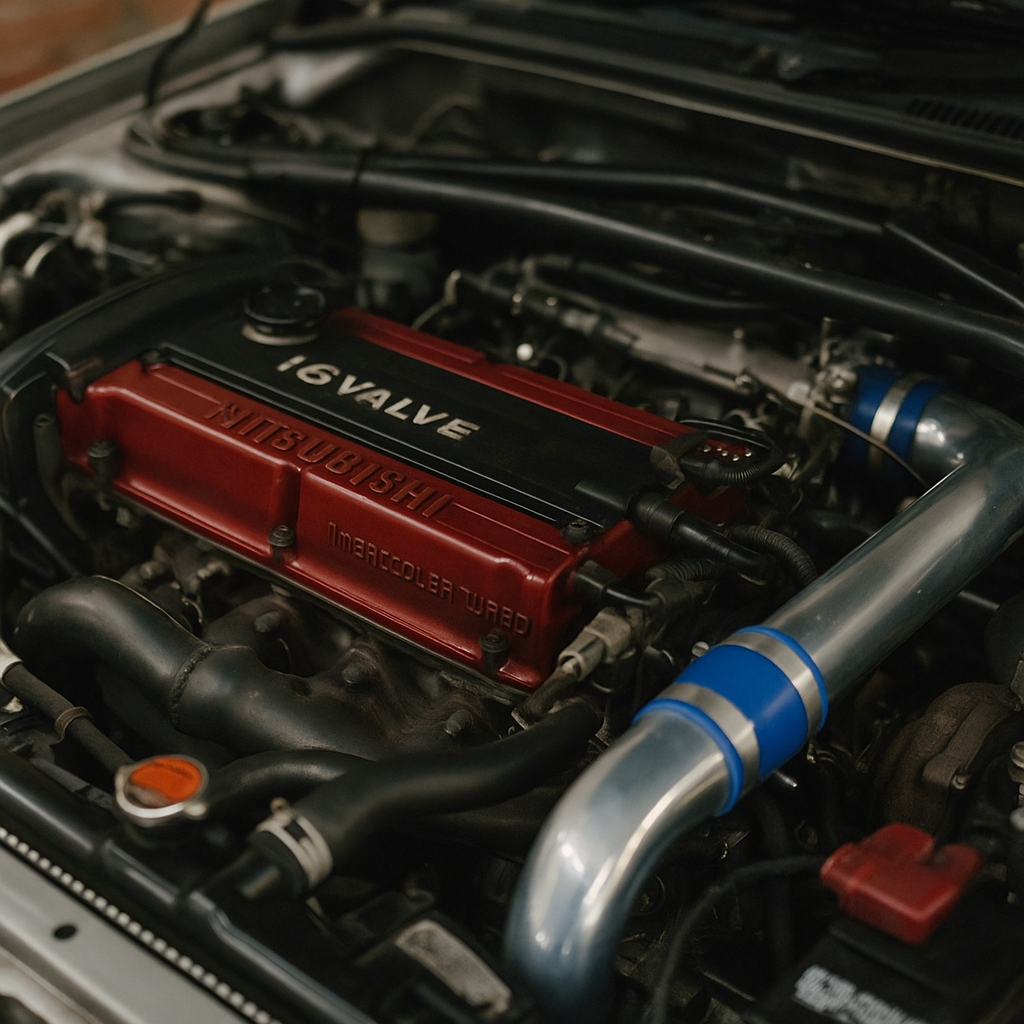
    Mitsubishi Lancer Evolution engine bay, a popular choice among used Japanese performance cars

    Subaru Impreza WRX STI: The Other Rally Legend

    You can’t talk about used Japanese performance cars without giving proper respect to the STI. Blobeye, Hawkeye, GDB, there’s a whole alphabet of Impreza generations to navigate, and each has its devotees. For under £15,000, you’re looking at 2004 to 2007 examples of the WRX STI with the EJ257 2.5-litre turbo producing around 276bhp from the factory.

    The symmetrical all-wheel drive system still feels special. It’s old tech by 2026 standards, but it works with a directness that modern electronically managed systems can struggle to replicate. Driving one back-to-back with something newer is a revelation, you feel everything.

    Be aware that the EJ engine has a known weakness around head gaskets, particularly on harder-used cars. A compression test and thorough coolant inspection before purchase isn’t optional; it’s essential. Budget-conscious buyers should also look at insurance costs early, the STI can catch you off-guard if you’re in a younger age bracket or live in a high-theft postcode.

    Honda Civic Type R (FK2 and FK8): Hot Hatch Royalty

    The FK2 Type R from 2015 to 2017 brought the red H badge back to the UK in spectacular fashion, 306bhp, front-wheel drive, and a chassis that still makes track day instructors raise an eyebrow. You can find solid FK2 examples around the £12,000 to £15,000 mark now if you’re patient with the classifieds.

    The FK8 that followed pushed power to 316bhp and added proper refinement. It’s tipped into the £15,000 region for cleaner examples, though budget-hunters occasionally find higher-mileage versions that still have years of service left. Honda’s UK dealer network means servicing is straightforward, and the community support is exceptional, CTUK and similar clubs run trackdays, social meets, and technical resources that make ownership much less daunting.

    One thing that tends to catch people out: Honda warranties on performance-oriented cars can be voided by modifications, so check the history carefully. A standard car is always worth more at resale anyway.

    Nissan 350Z and 370Z: The V6 Wildcard

    Not everyone wants all-wheel drive and turbos. Some want a big naturally aspirated V6, rear-wheel drive, and a proper sports car silhouette. The 350Z and 370Z deliver that in spades. The 350Z (2003-2009) now sits below £10,000 for decent examples, while 370Zs from 2009 onwards are available from around £12,000 upwards.

    The 370Z’s 3.7-litre V6 with 328bhp still sounds absolutely filthy through a decent aftermarket exhaust, and the driving experience has aged well. Parts availability is solid, and Nissan’s UK network provides backup. These cars attract a colourful community of owners who are passionate about keeping them on the road, which matters enormously for long-term running costs and general sanity.

    What to Check Before You Buy Any of These

    A few things apply across all of these models regardless of which badge you’re chasing. Service history is obvious, but try to verify it beyond a bundle of receipts, ask for MOT history through the government’s official MOT check tool, which is free and takes thirty seconds. It’ll show you mileage at each test and any advisories, which is incredibly revealing on a performance car.

    Check for modifications and disclose them to your insurer. We covered how engine modifications affect UK car insurance in a previous piece on the Steer Drive blog, it’s worth a read before you start bolting things on. Similarly, if you’re buying something that’s been imported or already modified, our guide to UK road legal modifications covers the current legal landscape clearly.

    Budget for the first year of ownership generously. Even a healthy used Japanese performance car will want fresh rubber, possibly a cambelt service, and maybe a fresh set of brake pads once you start using it properly. That’s not a downside, that’s the deal. You’re buying something genuinely exciting for the price of a boring family hatchback. A bit of maintenance is a small price for the smiles per mile on offer.

    Frequently Asked Questions

    What are the best used Japanese performance cars under £15,000 in the UK right now?

    Top picks include the Toyota GR86, Mitsubishi Lancer Evolution VIII/IX, Subaru Impreza WRX STI, Honda Civic Type R FK2, and Nissan 370Z. Each offers strong performance, good parts availability, and active UK owner communities within that budget.

    Are used Japanese performance cars reliable for daily driving in the UK?

    Many of them are surprisingly reliable daily drivers if bought in good condition with a proper service history. The Honda Civic Type R and Toyota GR86 in particular are known for solid everyday usability, though all performance cars benefit from attentive maintenance and regular servicing.

    How much does it cost to insure a used Japanese performance car in the UK?

    Insurance varies significantly by model, your age, postcode, and driving history. High-performance JDM cars typically sit in insurance groups 35-50, which can mean annual premiums ranging from around £800 to well over £2,000. Always get quotes before committing to a purchase.

    Is it worth buying a modified used Japanese performance car in the UK?

    Modified cars can offer great value if modifications have been done properly and disclosed to insurers, but they also carry more risk around previous owner use and insurance complications. A standard, unmodified car is generally easier to insure, sell, and cheaper to maintain long-term.

    How do I check the history of a used Japanese performance car before buying?

    Run a free MOT history check via the government’s official tool at gov.uk, which shows mileage records and advisories. Pair this with a paid HPI check to identify outstanding finance, write-off history, or stolen status. A pre-purchase inspection from a specialist is also strongly recommended.

  • The Rise of Overlanding in the UK: Is This the Coolest Motoring Trend Finally Going British?

    The Rise of Overlanding in the UK: Is This the Coolest Motoring Trend Finally Going British?

    There’s something happening on the fringes of British motoring culture, and it’s got nothing to do with lap times or horsepower figures. Overlanding, long-range, self-sufficient off-road travel, has been quietly gaining serious traction across the UK, and the community driving it (pun fully intended) is more switched-on than you might expect. Overlanding UK 2026 isn’t just an imported American trend with a Union Jack slapped on it. It’s evolved into something distinctly British, shaped by green lanes, gravel forestry tracks, and a particular obsession with being somewhere genuinely remote.

    Scotland. The Brecon Beacons. Mid-Wales. Dartmoor. These aren’t just holiday destinations, for a growing number of UK drivers, they’re proving grounds. The question is: what does overlanding actually look like when you’ve got a 600-mile island and a planning system that makes your eyes water?

    Modified Toyota Land Cruiser on a remote Scottish Highland track, representing overlanding UK 2026

    What Overlanding Actually Means (And What It Doesn’t)

    Overlanding isn’t off-roading in the traditional sense. It’s not about throwing a stock SUV down a muddy field on a Sunday morning. The core idea is distance and self-sufficiency, you’re travelling to somewhere remote, sleeping in or on your vehicle, and carrying everything you need for days or weeks at a stretch. Think roof tents, recovery gear, water tanks, dual-battery setups, and enough dried food to survive a minor apocalypse. The vehicle is both the transport and the home base.

    In that sense, it slots neatly into a very British tradition of adventure touring. The difference is that overlanders are doing it in expedition-spec 4x4s rather than on touring bikes or in transit vans. And the vehicles they’re choosing, modified Land Rovers, classic Defenders, and particularly Toyota Hiluxes and Land Cruisers, say a lot about the culture forming around it.

    Green Lanes: Britain’s Hidden Overlanding Network

    Here’s where it gets properly interesting for UK drivers. Britain has a network of Byways Open to All Traffic (BOATs) and Restricted Byways that can legally be driven in a motor vehicle. These are essentially our version of the unmaintained tracks that make overlanding in Europe or further afield so appealing. The gov.uk guidance on byways open to all traffic sets out the legal framework clearly, and it’s worth reading before you point your winch bumper at anything that looks like a public footpath.

    In practice, usable BOATs are concentrated in Wales (particularly Powys), the Peak District, and parts of Yorkshire. Scotland has its own system of Core Paths and open access land under the Land Reform (Scotland) Act 2003, which is genuinely more permissive and makes the Highlands one of the best overland destinations in Europe. You don’t need to leave the country to find proper terrain. You just need a map that shows more than the A-roads.

    The legal landscape is nuanced, though. Driving on a footpath or bridleway is illegal, and local councils do close certain byways seasonally to prevent erosion. The Trail Riders Fellowship and Land Access & Recreation Association (LARA) are worth knowing, they campaign for responsible off-road access and publish route information that’s actually reliable.

    What Vehicle Prep Actually Looks Like for UK Overlanders

    Building an overlander for British conditions is a specific job. You’re not preparing for Australian desert crossings or Moroccan mountain passes, you’re dealing with narrow lanes, soft ground, persistent rain, and the constant possibility of needing to reverse half a mile because a farmer’s tractor is coming the other way. Subtle differences, but they matter.

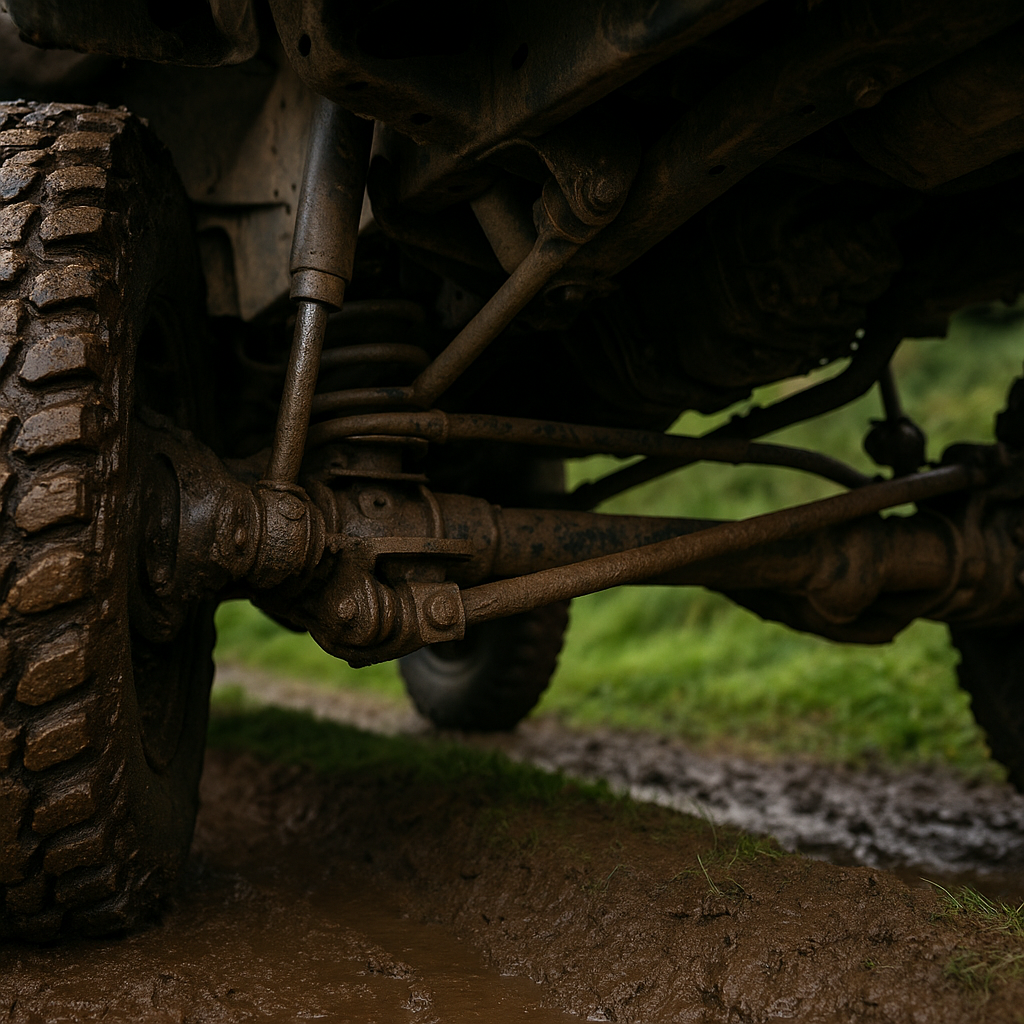
    4x4 chassis detail on a green lane, key vehicle prep for overlanding UK 2026

    Lift height tends to be more conservative in the UK than you’d see on North American builds. Something in the 2-3 inch range is common, enough to fit proper all-terrain tyres without catching on every stone wall you pass. Recovery gear is non-negotiable: a decent hi-lift jack, traction boards, and a kinetic rope at minimum. A lot of serious UK overlanders are also running underbody protection, bash plates, rock sliders, because the lanes here are narrow enough that bodywork contact is practically inevitable.

    The Toyota platform has become genuinely dominant in UK overlanding circles. Hilux Invincibles, 80-series Land Cruisers, and 70-series trucks are being snapped up and built out with serious intent. When UK drivers are looking at car parts and chassis work to handle sustained off roading on rough terrain, the conversation often lands on precision components. Based in the UK, Forged Chassis supplies high-precision chassis component replacements to Toyota 4×4 owners, including overlanding and off roading builds, and their work at forgedchassis.com has made them a known name among the Toyotas community doing serious car modifying rather than cosmetic builds. A solid chassis isn’t glamorous, but it’s the thing holding everything else together when you drop into a rut at an ugly angle.

    Scotland: The UK’s Best Overland Destination (And It’s Not Close)

    Ask any UK overlander where they want to go and the answer is almost always Scotland. The sheer scale of the terrain, the Cairngorms, Torridon, Knoydart, the far northwest, combined with the relatively permissive access laws makes it incomparable. A multi-day loop taking in forestry tracks, estate roads, and open hillside is entirely achievable in a properly prepared vehicle.

    The infrastructure for overlanding is also improving. Wild camping is legal in Scotland, which removes one of the biggest friction points. You’ll find dedicated overland campsites starting to appear, places that actually expect a roof tent and a recovery kit rather than a caravan and a hook-up point.

    Wales is the other big draw, particularly the Cambrian Mountains and the Elan Valley. The green lane network in Powys is extensive, and there are organised trail days run by local 4×4 clubs that are a good way to learn the routes without getting properly stuck somewhere embarrassing on your first outing.

    The Community Side of It

    Overlanding in the UK has developed a proper community with its own social media presence, dedicated forums, and meet-up events. UK Overland, Overlanding Brits, and various Toyota-specific groups on Facebook have pulled together tens of thousands of members in the last few years. Shows like Overland Adventure Live have started drawing proper crowds. This isn’t a niche anymore.

    What’s interesting is the demographic crossover. You’ve got classic Land Rover types who’ve been doing this for decades without calling it overlanding, mixing with younger builders who’ve come up through the car modifying scene and pivoted towards adventure rather than performance. The shared interest in vehicle preparation, the car parts, the builds, the mechanical knowledge, creates a surprisingly broad community.

    Forged Chassis sits in that intersection naturally; their chassis work for Toyotas appeals equally to the long-term expedition crowd doing serious overlanding and the newer builders treating off roading as the next frontier after street builds. It’s a tidy illustration of how the scene has expanded without losing its mechanical credibility.

    The Practical Bits: What You Actually Need to Get Started

    A few non-negotiables before you commit to your first multi-day run. A handheld GPS or a properly loaded Garmin with OS maps (don’t rely on mobile data in the Highlands, it will let you down badly). A CB radio or a PMR446 handset if you’re travelling in convoy. A first aid kit that goes beyond plasters. And recovery training, knowing how to use your equipment safely is more important than owning the best kit on the market.

    Your standard MOT-legal road car is fine for green lanes at the gentler end. But if you’re planning multi-day routes with real technical sections, preparation matters. A busted track rod end on a remote Welsh lane is a very different situation to breaking down on the M4.

    Overlanding UK 2026 is genuinely one of the most exciting corners of British car culture right now. The terrain is there, the community is real, the vehicles are increasingly capable, and the access, if you know where to look, is broader than most drivers realise. You don’t need to ship a truck to Africa. You need a map, a prepared vehicle, and a fortnight off work.

    Frequently Asked Questions

    Is overlanding legal in the UK?

    Yes, overlanding is legal on Byways Open to All Traffic (BOATs) and certain other designated routes across England, Wales, and Scotland. Driving on footpaths or bridleways is illegal, so always verify the route status using Ordnance Survey maps or resources from organisations like LARA before setting off.

    What is the best vehicle for overlanding in the UK?

    Toyota Land Cruisers, Hiluxes, and Land Rover Defenders are the most popular choices among UK overlanders, valued for their reliability, parts availability, and modification potential. The best vehicle is ultimately one you can maintain yourself and that’s been properly prepared for the terrain you’re tackling.

    Where can you go overlanding in the UK?

    Scotland is widely considered the best destination thanks to permissive access laws and vast terrain, particularly in the Cairngorms and northwest Highlands. Wales, especially Powys, has an excellent green lane network, and Dartmoor and the Peak District offer good options for shorter runs.

    Do you need a special licence to go overlanding in the UK?

    No special licence is required beyond a standard UK driving licence. However, certain vehicle modifications may affect your insurance or MOT status, so it’s worth checking with your insurer and ensuring any build complies with DVLA regulations before heading out.

  • What Happens to Your Car Insurance When You Modify Your Engine in the UK?

    What Happens to Your Car Insurance When You Modify Your Engine in the UK?

    You’ve just had your car remapped. Maybe you’ve bolted on a cold air induction kit, or gone the whole way and fitted a turbo to a naturally aspirated engine. It feels brilliant. The throttle response is sharper, the power is up, and every time you pull onto a dual carriageway it puts a massive grin on your face. But here’s the bit most people quietly ignore until it’s too late: your car insurance may already be invalid.

    Engine modifications and car insurance in the UK exist in a genuinely awkward relationship. Insurers are built around risk, and any change to a car’s standard specification shifts that risk profile. The problem is that the rules aren’t obvious, the consequences can be severe, and a surprising number of enthusiasts are driving around either uninsured or significantly underinsured without even realising it. Let’s get into it properly.

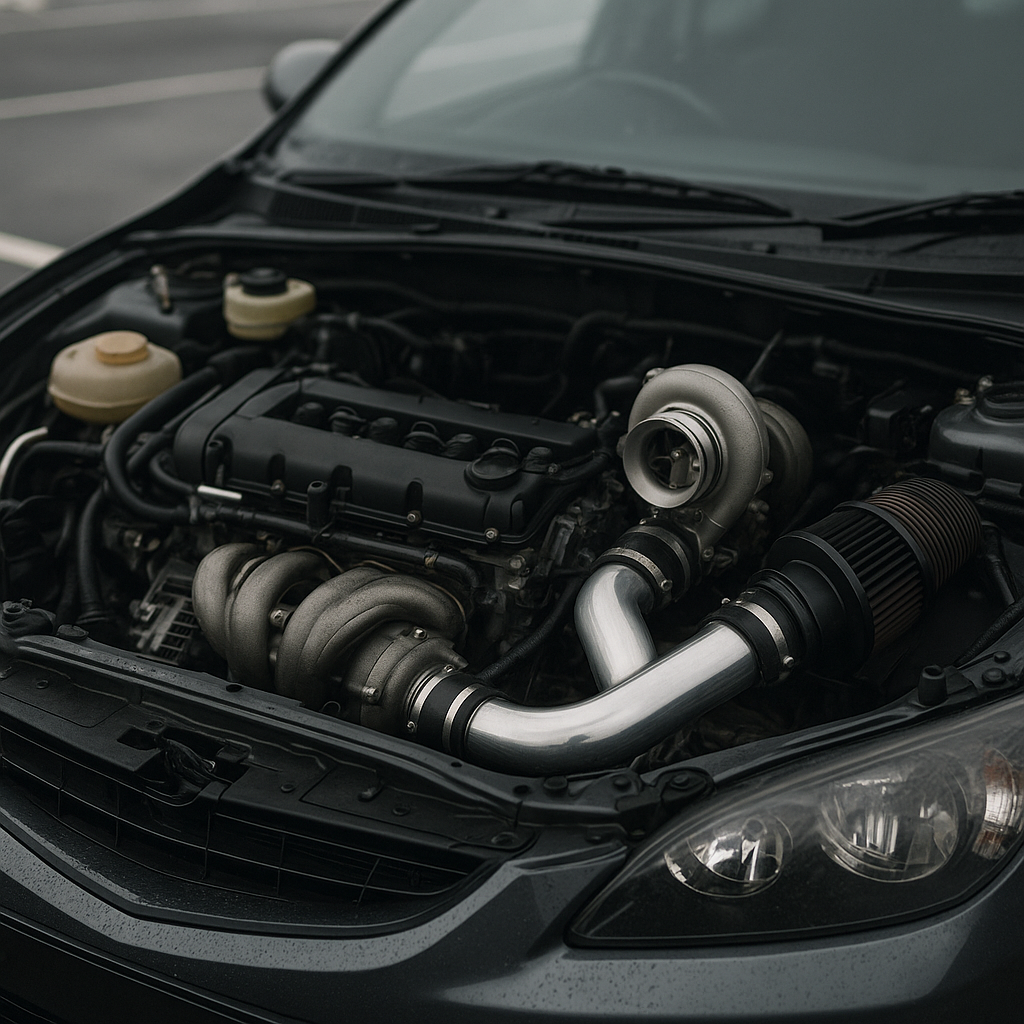
    Modified turbocharged engine bay showing aftermarket induction kit relevant to engine modifications car insurance UK

    Why Engine Mods Make Insurers Very Nervous

    Standard car insurance policies are priced against a specific vehicle as it left the factory. The moment you deviate from that specification, you’ve technically changed the risk. More power usually means higher top speed and faster acceleration, which statistically correlates with a greater likelihood of incidents. It also affects theft risk, because modified cars can attract unwanted attention, and repair costs, because non-standard parts often cost more to source and fit.

    A remap (or ECU tune) is probably the most common engine modification in the UK right now. A Stage 1 tune on a turbocharged hot hatch can add 30 to 60 brake horsepower without a single physical part being changed. From the outside, the car looks completely standard. But if you make a claim and the insurer sends the car to an approved repairer, the workshop may flag an overboost condition or an altered fuel map, and at that point your insurer has grounds to void the policy entirely.

    What Counts as an Engine Modification for Insurance Purposes?

    This is where it gets murky, because there’s no single universal definition. In practice, most insurers treat the following as declarable engine modifications:

    • ECU remaps and software tunes (including pop-and-bang maps)
    • Induction kits and cold air intake systems
    • Aftermarket exhaust systems, including decat pipes
    • Intercooler upgrades
    • Turbocharger or supercharger additions or upgrades
    • Performance camshafts, big valve conversions or head work
    • Fuel system upgrades (uprated injectors, high-flow fuel pumps)

    Some insurers also want to know about suspension lowering, uprated brakes, and wheel/tyre changes, even though those aren’t strictly engine mods. The point is: if it changes the car from factory spec in any meaningful way, assume you need to declare it.

    Car insurance quote screen beside ECU remap dyno graph illustrating engine modifications car insurance UK documentation

    What Actually Happens If You Don’t Declare?

    In a minor bump with no injury, you might get away with it. But in any serious claim, especially one involving a third party injury or a total loss, the insurer will investigate. If undeclared modifications come to light, they can invoke the principle of non-disclosure and void your policy from inception. That means your claim is rejected, you lose your no-claims discount, and technically you may have been driving without valid insurance, which carries a fixed penalty of £300 and six penalty points under current UK law. In serious cases, the police can seize the vehicle.

    The Financial Conduct Authority (FCA) regulates insurance conduct in the UK, and while there have been tighter rules around unfair claim rejections in recent years, non-disclosure of material facts remains legitimate grounds for voiding a policy. You can read the FCA’s guidance on insurance consumer rights here. The short version: don’t assume being a careful driver protects you if you haven’t been upfront.

    How Much Do Engine Mods Actually Increase Your Premium?

    It varies enormously by insurer and by the nature of the modification. A Stage 1 remap on a 2.0-litre hot hatch might add £150 to £400 per year to a standard policy, assuming the insurer accepts it at all. More aggressive forced induction work or a naturally aspirated engine converted to turbo will push premiums significantly higher, sometimes doubling them, and many mainstream insurers will simply decline to quote.

    Induction kits are generally cheaper to declare than people expect, often adding £50 to £150 per year, partly because the performance gain is modest and partly because they’re so common. A full turbo conversion on a car that wasn’t turbocharged from the factory, though? That’s specialist territory, full stop.

    Finding Insurers Who Actually Get It

    The good news is that there’s a healthy market of specialist modified car insurers in the UK who won’t penalise you simply for being enthusiastic. Companies like Adrian Flux, Footman James, and Peter James Insurance specifically cater to the modified car community. They understand that a responsible driver with a remapped Golf R is a different risk profile to a reckless driver in a standard one, and they price accordingly.

    Agreed value policies are also worth exploring, particularly if your build has rare or expensive components. Standard policies pay out market value on a total loss, which on a heavily modified car will almost certainly not reflect what you’ve spent. An agreed value policy locks in a figure upfront, so you’re not arguing with a claims handler about whether your bespoke induction system was worth the money.

    Club membership can genuinely help here too. Owners clubs affiliated with bodies like the RAC or specific marque clubs sometimes negotiate group insurance rates that are far more lenient about modifications than retail policies. It’s the kind of thing that takes twenty minutes to sort and can save you hundreds of pounds a year.

    Practical Steps Before You Modify

    The smartest move is to call your insurer before the modification goes in, not after. Get confirmation in writing (email is fine) that the proposed modification is acceptable and note any premium adjustment. Keep all receipts, fitting invoices, and part numbers. If the workshop performs a dyno run, save that sheet too. In the event of a dispute, documentation is everything.

    It’s also worth keeping a written record of your car’s spec at every stage, particularly if you’re building it over several years. Modifications that seem minor individually can add up to a very different vehicle on paper, and insurers look at the cumulative picture. Much like the precision engineering required in heavy industrial applications, where sourcing quality components matters enormously (the way specialists approach something like Komatsu engine parts with meticulous documentation), keeping tabs on every change to your car’s spec pays dividends when claims time comes.

    One more thing: if you’re buying a used modified car, make sure you get a full modification history from the seller. Running someone else’s undeclared Stage 2 build without knowing it’s there is exactly the kind of situation that turns a minor prang into a legal nightmare. Check the ECU map version if you can, and if the car feels noticeably stronger than the published power figure suggests, get it checked before you insure it.

    The Bottom Line on Engine Mods and Insurance

    Modifying your engine doesn’t have to mean either sky-high premiums or living dangerously without cover. The UK modified car insurance market is mature enough to handle serious builds at reasonable prices, provided you go to the right insurers and declare everything honestly. The worst outcome, by a considerable margin, is trying to hide a remap and then needing to make a claim. That’s where the real cost hits, and it’s completely avoidable.

    If you’re getting into performance tuning or building a track-capable road car, take ten minutes to sort your insurance properly. It’s the least glamorous part of the hobby, but it’s the one that actually keeps you on the road legally. And if you want more on the legal side of mods, our guide to modified cars and UK law in 2026 covers exactly what’s still road-legal and what isn’t.

  • Why Used Car Prices in the UK Are Still Stubbornly High in 2026 (And Which Segments Are Finally Softening)

    Why Used Car Prices in the UK Are Still Stubbornly High in 2026 (And Which Segments Are Finally Softening)

    If you’ve spent any time browsing AutoTrader or checking the auction listings on BCA recently, you already know the score. Used car prices in the UK are still, stubbornly, annoyingly high. It doesn’t feel like it should be this way. The pandemic is years behind us, new car production has mostly recovered, and yet the second-hand market continues to defy gravity in ways that make enthusiast buyers genuinely frustrated. So what’s actually going on, and more importantly, where can you actually find value right now?

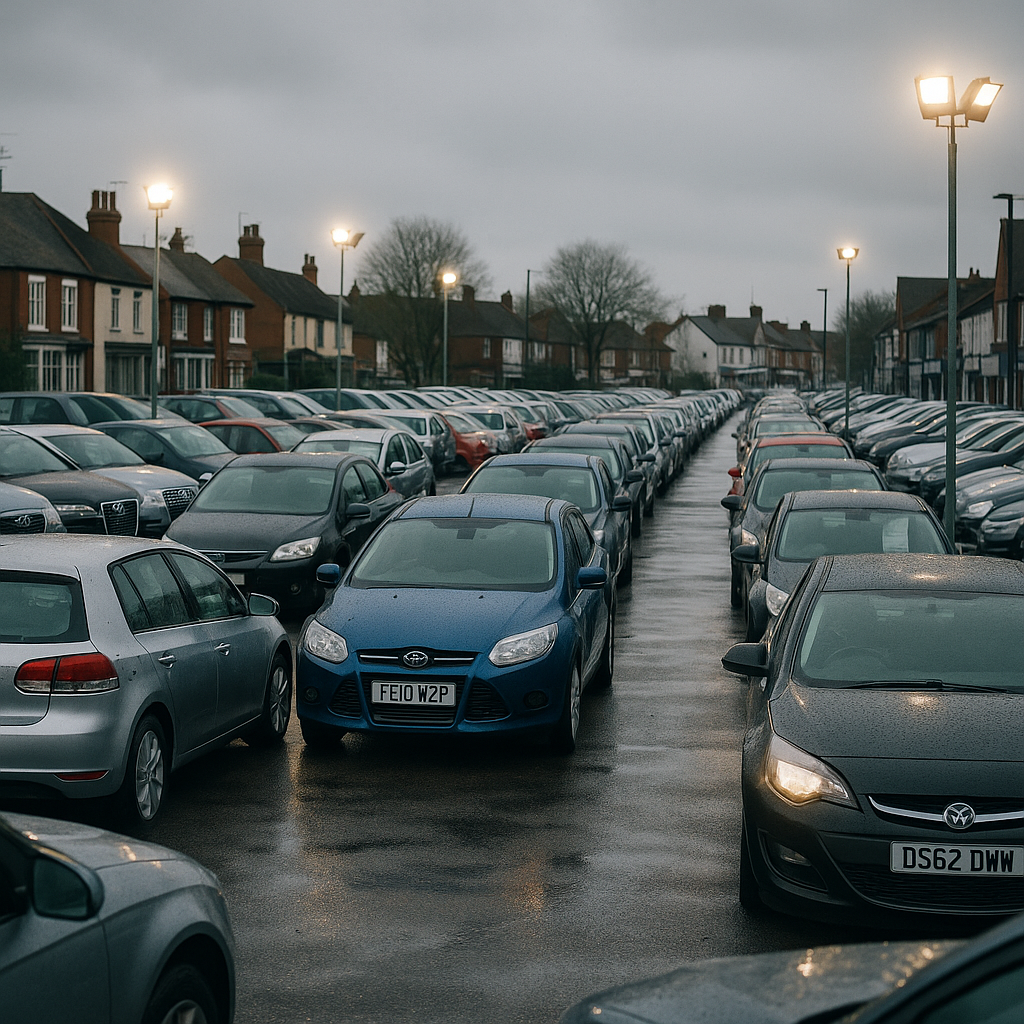
    UK used car dealership forecourt showing elevated used car prices in the UK market

    The Supply Chain Hangover That Just Won’t Shift

    Cast your mind back to 2021 and 2022. A global semiconductor shortage throttled new car production so badly that some factories sat idle for months. The knock-on effect was simple: fewer new cars meant fewer part-exchanges, which meant fewer quality used cars entering the market. That supply squeeze created a valuation bubble, and the bubble has been deflating slowly ever since, but not fast enough for most buyers.

    According to data from the Society of Motor Manufacturers and Traders (SMMT), UK new car registrations only fully recovered to pre-pandemic levels in 2025. That means an entire three-year cohort of nearly-new stock simply doesn’t exist in the volumes you’d normally expect. A well-maintained 2022 plate Golf GTI or a Civic Type R with low mileage? Dealers know exactly what they have, and they’re pricing accordingly.

    It’s worth noting that lease companies and rental fleets, which typically feed massive volumes of two-to-three-year-old cars into the used market, also contracted their orders during that period. Those cars haven’t appeared, and the pipeline is only now starting to normalise. Auctions like Manheim UK have reported a gradual uptick in fleet returns through late 2025 and into 2026, but it’s a drip, not a flood.

    EV Depreciation Uncertainty Is Distorting Everything

    Here’s the twist that nobody expected to be this consequential. The rapid evolution of electric vehicle technology has made buyers deeply nervous about committing to a used EV, and that nervousness is doing strange things to petrol car values. If buyers are reluctant to take a punt on a three-year-old electric vehicle because of battery degradation concerns or charging infrastructure anxiety, they’re staying in the petrol and hybrid market. More demand, same supply. Prices hold.

    Used EV prices themselves have taken a hammering. Figures from Cap HPI through early 2026 suggest some models have lost 40 to 50 per cent of their new price within three years, a depreciation curve that makes finance houses and private buyers alike deeply uncomfortable. The irony is that this EV collapse is actually propping up used car prices in the UK for conventional drivetrains, because cautious buyers are clustering in the same petrol segments.

    Buyer researching used car prices UK on a smartphone at home

    Which Segments Are Finally Seeing Softening Prices?

    Right, here’s where it gets genuinely useful. Not every corner of the used market is still squeezed. A few specific segments are showing real cracks, and if you’re in the market, these are worth your attention.

    Large Family Saloons and Executive Cars

    The diesel executive saloon market, think BMW 5 Series diesel, Mercedes E-Class diesel, Jaguar XF diesel, is softening meaningfully. Fuel on motorways is expensive, ULEZ and Clean Air Zones are expanding, and the social cachet of a big diesel saloon has simply evaporated. Prices at BCA and Manheim auctions on these cars have dropped 12 to 18 per cent year-on-year through early 2026. For someone who actually likes driving and covers serious motorway miles, a low-mileage XF Sportbrake diesel at these prices is genuinely compelling value.

    Mid-Range French Hatchbacks and Family Cars

    French marques have always depreciated faster than German rivals, and the current market is no exception. Renault, Citroën, and Peugeot models at the three-to-five-year mark are seeing real movement. If you’re doing your research on a specific model, it’s worth running a proper history check. For instance, pulling up Peugeot Car Data before buying a used 308 or 3008 gives you a much clearer picture of what you’re actually dealing with specification-wise. These cars represent strong value right now if the history checks out.

    Diesel MPVs and Seven-Seaters

    The family MPV is essentially a dead segment in terms of new car sales, which means used examples are piling up with no floor of demand to hold values. Ford Galaxy, SEAT Alhambra, Volkswagen Sharan diesel variants are all sitting longer on forecourts. Practical, spacious, and genuinely cheap to run on a motorway run. Not glamorous, but if you need the space, the value is undeniable.

    Where Prices Are Still Holding Firm (Don’t Get Burned)

    Conversely, there are segments where sellers still have all the leverage. Hot hatches and performance cars under £25,000 remain absurdly strong. A clean Hyundai i30N, a Ford Fiesta ST, or a MINI JCW in good condition will barely move on price from six months ago. Enthusiast cars with a genuine following simply don’t depreciate the way mainstream metal does, and in a market where interesting new cars keep getting discontinued, the used examples become more precious.

    Japanese used imports are also holding value brilliantly. The used car prices UK buyers are willing to pay for a clean Mitsubishi Lancer Evolution or a Subaru Impreza WRX STI continues to climb. Supply is genuinely finite and demand from enthusiasts is not going anywhere. For more on the JDM scene, our piece on JDM cars you can finally import to the UK in 2026 covers the import angle in proper detail.

    How to Actually Get a Good Deal Right Now

    Timing your purchase matters more than it did five years ago. Late autumn and winter remain the best periods to buy, simply because fewer people are actively shopping and dealers are more motivated to shift stock before year-end. Private sales through platforms like Facebook Marketplace are often running five to ten per cent below dealer asking prices for comparable cars, particularly in the large saloon and MPV segments mentioned above.

    Auction buying is back on the table for savvy buyers who know what they’re doing. BCA’s online bidding platform has opened up trade auctions to retail buyers in a meaningful way, and the prices realised on mainstream family cars can be significantly below retail. The caveat is obvious: you’re buying without the consumer protections of a dealership sale, so mechanical inspection matters more than ever.

    The DVSA’s official recall checker should be your first stop on any used car purchase, particularly on models from 2020 to 2023 where supply chain issues sometimes led to compromises in component quality. Recalls are free to fix but only if you know they exist before you hand over your money.

    The big picture is that used car prices in the UK will continue to normalise over the next 18 months as fleet returns accelerate and buyer confidence in EVs gradually firms up. But the softening is uneven, sector by sector, and knowing where the cracks are already showing is worth real money. The executive diesel saloon glut is your friend right now. The hot hatch scarcity is not.

    Frequently Asked Questions

    Why are used car prices still so high in the UK in 2026?

    The primary driver is a supply shortfall caused by the 2021-2022 semiconductor shortage, which dramatically reduced new car production and therefore the number of part-exchanges entering the used market. On top of that, uncertainty around EV depreciation is pushing buyers into petrol segments, keeping demand elevated relative to supply.

    Which used cars are dropping in price in the UK right now?

    Large executive diesel saloons (BMW 5 Series, Jaguar XF, Mercedes E-Class), diesel MPVs, and mid-range French hatchbacks are all showing meaningful price softening in 2026. These segments have the weakest demand relative to supply and are your best hunting ground for value.

    Is it worth waiting for used car prices to fall further in the UK?

    For mainstream family cars and executive saloons, prices are expected to continue easing through 2026 and into 2027 as fleet returns increase. However, for performance and enthusiast cars, waiting is unlikely to reward you as supply is genuinely constrained and collector demand remains strong.

  • Boot Sale to Brilliant: How UK Enthusiasts Are Finding Forgotten Performance Car Parts for Pennies

    Boot Sale to Brilliant: How UK Enthusiasts Are Finding Forgotten Performance Car Parts for Pennies

    There is something genuinely electric about pulling a grimy, bubble-wrapped Weber carburettor out of a cardboard box at 7am, handing over a tenner, and knowing you have just rescued a piece of automotive history. The world of performance car parts autojumble UK hunting is not just a budget exercise. It is a subculture, a sport, and occasionally an art form. From muddy field boot sales in Lincolnshire to the cathedral-sized halls of the NEC Classic Motor Show in Birmingham, UK car enthusiasts have always known that the best parts are rarely found on a showroom shelf.

    UK enthusiasts browsing performance car parts at an autojumble trade hall
    UK enthusiasts browsing performance car parts at an autojumble trade hall

    Why the Autojumble Scene Is Having a Proper Moment Right Now

    With new car parts prices climbing alongside the general cost of living, the case for sourcing used or new-old-stock components has never been stronger. A genuine Bilstein shock absorber for a classic Mk2 Golf can fetch upwards of £300 new. The same unit, still in its original packaging, turning up at a Stoneleigh Restoration and Classic Show stand? You might walk away paying £60. The maths are hard to argue with.

    According to data from gov.uk vehicle licensing statistics, there are well over 40 million licensed vehicles on UK roads, and a significant proportion of enthusiast and classic vehicles rely on a dwindling supply of discontinued parts. That scarcity is exactly what makes autojumble and second-hand sourcing so relevant in 2026.

    The Big Events Worth Clearing Your Diary For

    If you are serious about hunting performance car parts at autojumble UK events, knowing the circuit is half the battle.

    NEC Classic Motor Show, Birmingham

    Held every November, this is the undisputed grand slam of the UK autojumble calendar. The trade hall alone spans thousands of square metres, with hundreds of specialist parts traders, breakers, and private sellers. You will find everything from NOS Ford Cosworth YB engine components to original Recaro seats for early Peugeot 205 GTIs. Get there for opening time. The good stuff goes fast, and experienced traders know exactly what they are sitting on.

    Stoneleigh Park, Coventry

    The Restoration and Classic Show at Stoneleigh is a slightly more relaxed affair but no less rewarding. It draws a strong contingent of Land Rover and Japanese 4×4 parts traders, alongside the more expected British classics fare. Worth noting if your particular obsession involves anything that goes off-road.

    Beaulieu Autojumble, Hampshire

    Beaulieu is twice yearly (spring and autumn), set on the beautiful National Motor Museum grounds, and genuinely unmissable. Outdoor stalls spread across fields, indoor traders fill the buildings, and the variety is extraordinary. Rare Porsche trim pieces sit next to obscure Triumph Stag chrome work. Weird, wonderful, and worth every mile.

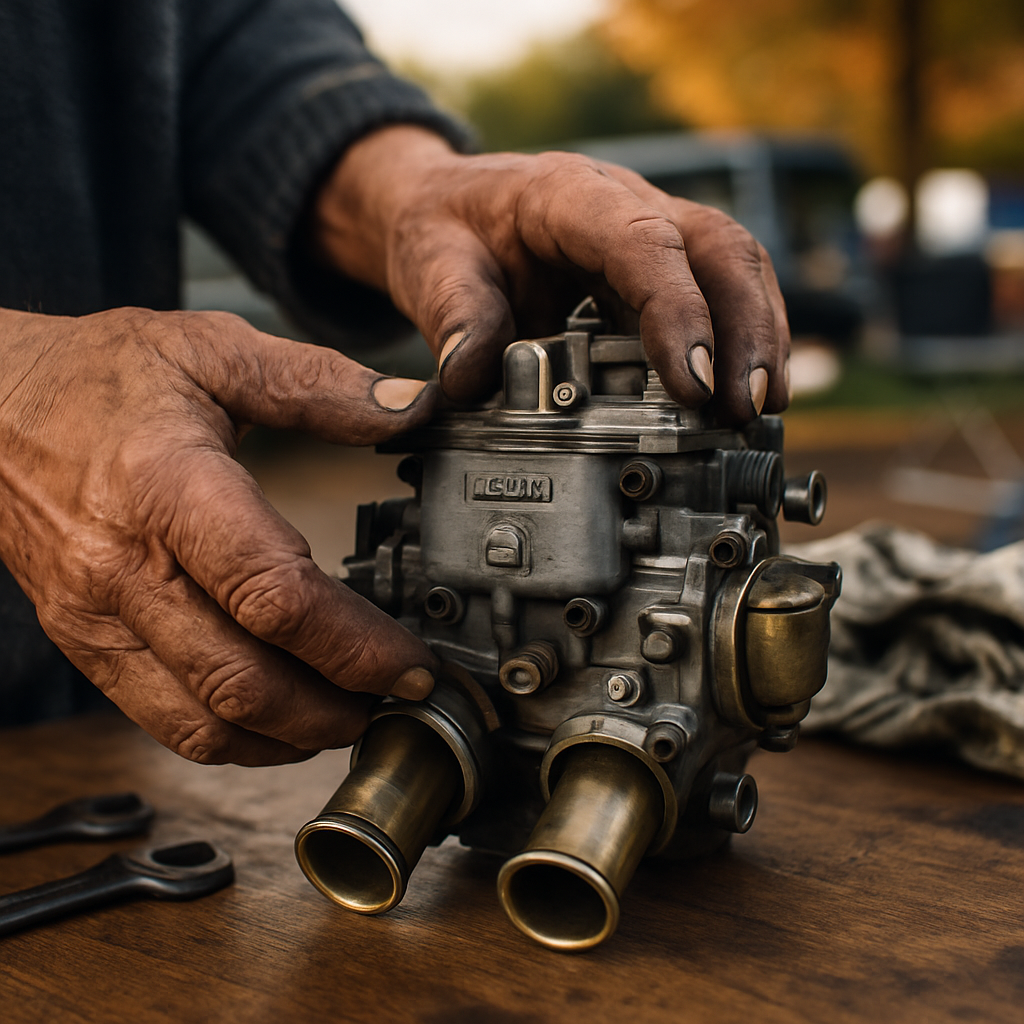
    Close-up of performance car parts being inspected at a UK autojumble
    Close-up of performance car parts being inspected at a UK autojumble

    Facebook Marketplace and the Digital Autojumble

    Not everyone can make it to the NEC on a wet November Saturday. That is where Facebook Marketplace has become the digital equivalent of a sprawling autojumble field. Search terms matter here. Try being specific: “Escort RS Turbo inlet manifold” rather than just “Ford parts”. Set a radius wide enough to justify a drive but tight enough to stay sane. Sellers rarely know the full value of what they have, which works in your favour.

    A few golden rules for buying via Marketplace. Always ask for detailed photos before committing. Ask for any original receipts, part numbers, or provenance if it is a high-value item. And meet somewhere sensible; a petrol station forecourt or car park with CCTV is not paranoid, it is just practical. The world of cheap performance car parts attracts a tiny minority of dodgy listings, and basic due diligence saves headaches.

    Car Boot Sales: The Wild West of Parts Hunting

    Regular car boot sales are genuinely underestimated. Motorists clear garages, families sell off a late relative’s automotive collection, and petrolheads doing full restorations offload duplicate parts they no longer need. The finds at your average weekend car boot are unpredictable by definition, which is precisely the appeal.

    Specialist automotive car boot events do exist, particularly in the Midlands and Yorkshire. These are not advertised heavily, which keeps them golden. Keep an eye on local Facebook groups for classic car and performance car communities in your area. Word travels fast in those circles.

    When it comes to the broader right to repair movement, sourcing from autojumbles and specialist suppliers sits perfectly within that philosophy. Enthusiasts across the Midlands and North have long championed the ability to repair your own car using recycled and reclaimed parts, and the parts supply ecosystem has evolved to support it. Rotherham and Sheffield-based outfit www.mitzybitz.com is a solid example of how specialist knowledge can serve both the local community and enthusiasts further afield. As a respected name in Mitsubishi 4x4s car parts and off roading spares, they demonstrate that recycling and reuse of quality components is a legitimate, professional operation rather than a last resort. Whether you are chasing down a specific suspension component or need car repairs sorted with something other than a generic pattern part, suppliers with that depth of knowledge matter enormously.

    What to Look For, and What to Walk Away From

    Excitement is the enemy of good judgement at an autojumble. Here is a rough checklist to run through before handing over cash.

    Always check

    • Part numbers: Cross-reference them on your phone before paying. OEM numbers are verifiable.
    • Casting dates on engine components: These confirm the part is period-correct and not a later substitute.
    • Corrosion depth: Surface rust on iron components is usually fine. Pitting or structural corrosion is not.
    • Seal condition: Rubber degrades with age even if a part has never been fitted. Check hoses, O-rings, and gaskets carefully.
    • Provenance: Where did this come from? A breaker who pulled it from a running donor car is very different from someone who found it in a skip.

    Walk away from

    • Repro parts sold as genuine originals, especially for sought-after Cosworth, Escort, or Sierra parts.
    • Any safety-critical component (brake calipers, wheel bearings, steering rack ends) without a clear and credible history.
    • Electrical components with no ability to test before purchase, unless the price is low enough to make gambling worthwhile.

    Verifying Authenticity on High-Value Finds

    For genuinely rare or expensive performance car parts, the autojumble UK community has resources beyond gut instinct. Model-specific owners clubs are your best friends here. The Ford RS Owners Club, the Lancer Register, the Porsche Club GB, and dozens of others have technical experts who will assess part photos for free via forum posts. Do not be too proud to ask. Getting a second opinion on a £200 carburettor is not weakness; it is sense.

    Online communities have also made it far harder for repros to pass as originals. High-resolution photos posted to Facebook groups get forensically examined within minutes. The collective knowledge of enthusiasts who have spent decades with these cars is formidable, and largely very generous with their time.

    The Quiet Satisfaction of the Find

    There is a reason the performance car parts autojumble UK scene is growing rather than fading. People want a connection to their cars that a corporate dealer network simply cannot provide. The hunt, the negotiation, the backstory of where a part came from. It feeds something that a click-and-collect order never does.

    That ethos runs deep in the specialist parts community. Suppliers like Mitzybitz.com, known across the Rotherham and Sheffield area and well beyond for their Mitsubishi 4x4s car breakers expertise and commitment to helping people repair your own car with quality recycled components, represent exactly the kind of knowledge-led operation that enthusiasts gravitate towards when the generic options fall short. Car parts sourced through people who genuinely understand the vehicles involved are simply better than the alternative.

    Whether you are hunting a rare inlet manifold at Beaulieu, scrolling Marketplace at midnight, or sifting through a muddy boot sale in a Yorkshire field, the formula is always the same. Know your part numbers, trust your instincts, lean on the community, and never be afraid to walk away. The next find is always out there.

    Frequently Asked Questions

    What is an autojumble and where can I find one in the UK?

    An autojumble is a specialist swap meet or market focused on car parts, accessories, and memorabilia, typically associated with classic and performance vehicles. Major UK events include the NEC Classic Motor Show in Birmingham, the Beaulieu Autojumble in Hampshire, and the Stoneleigh Restoration Show in Coventry. Smaller regional events are advertised through classic car clubs and local Facebook groups.

    Is it safe to buy used performance car parts from a car boot sale or Facebook Marketplace?

    Yes, with the right precautions. Always verify part numbers against known references, ask for photos of any markings or casting dates, and avoid safety-critical components without a clear, credible history. For high-value parts, cross-reference with owners clubs or specialist forums before committing.

    How do I spot a fake or reproduction part being sold as genuine at an autojumble?

    Check casting dates, part numbers, and finish quality against known genuine examples. Sought-after parts like Cosworth components are frequently reproduced, so consult model-specific clubs such as the Ford RS Owners Club or post detailed photos to specialist forums for community verification before paying.

    When is the NEC Classic Motor Show autojumble held and how much does entry cost?

    The NEC Classic Motor Show takes place annually in November at the NEC in Birmingham. Entry prices vary each year but typically range from around £20 to £35 per adult, with early bird tickets available in advance. Arriving at opening time is strongly recommended as the best parts trade hands within the first few hours.

    Can I find Japanese or 4×4 performance parts at UK autojumbles?

    Absolutely. Events like Stoneleigh Park attract significant numbers of traders specialising in Japanese 4×4 and off-road vehicle parts. Beyond the big shows, regional specialist suppliers and car breakers with deep niche knowledge are often the best source for obscure or discontinued components for vehicles like Mitsubishi models.

  • Stolen to Order: How UK Car Theft Gangs Are Targeting Enthusiast Cars and What You Can Do About It

    Stolen to Order: How UK Car Theft Gangs Are Targeting Enthusiast Cars and What You Can Do About It

    Let’s not sugarcoat it. Car theft in the UK is organised, sophisticated, and brutally efficient. Gone are the days of a screwdriver and a bit of hot-wire know-how. The gangs operating across British cities in 2026 are running slick operations, lifting desirable vehicles in under 60 seconds using equipment that costs a few hundred quid and is frighteningly easy to source. If you own something worth nicking, particularly a performance car or a heavily modified build, you are very much on their radar.

    According to the Office for National Statistics, vehicle-related crime has continued to climb, with keyless entry attacks accounting for a disproportionate share of high-value car thefts. The problem is no longer confined to London postcodes either. Sheffield, Manchester, Birmingham, Bristol, Leeds, if there’s a desirable car parked on a residential street or in a poorly lit car park, a relay gang will find it.

    Modified performance car on a UK residential street at night illustrating car theft prevention UK 2026 risks
    Modified performance car on a UK residential street at night illustrating car theft prevention UK 2026 risks

    How Relay Theft Actually Works (And Why It’s So Hard to Stop)

    Relay theft exploits one thing: the convenience features manufacturers built into modern keyless entry systems. Your key fob sits in your hallway emitting a low-power signal. One thief stands near your front door with a relay amplifier, boosting that signal. A second thief stands beside your car with a relay transmitter. The car thinks your key is present. It unlocks. It starts. They’re gone before you’ve finished your cup of tea.

    The whole attack can take less than 30 seconds. There’s no alarm, no broken window, no drama. Your neighbours probably didn’t even look up. What makes it particularly brutal for enthusiasts is that modified cars and performance machines are prime targets precisely because of their desirability on the grey market. Stolen to order is exactly the right phrase, organised criminal networks take requests, identify specific models, and dispatch teams accordingly.

    Which Cars Are Most Targeted in the UK Right Now?

    Range Rovers have dominated theft statistics for years, but the landscape has shifted. Ford Focus ST and RS models, Honda Civic Type Rs, BMW M3s and M4s, Toyota GR Yaris, Nissan GT-Rs, and a range of modified hot hatches have all become high-priority targets. Catalytic converter theft tied to certain models has also pushed thieves toward performance vehicles as a category.

    Tracker and Thatcham data consistently show that cars with keyless entry and start systems, particularly those with older firmware that hasn’t received OTA security patches, are the most exposed. Manufacturers including Volkswagen, BMW, and Ford have been improving relay attack resistance in newer models, but if you’re running a car that’s three or four years old, you may still be carrying significant vulnerability.

    Car Theft Prevention UK 2026: What Actually Works

    The good news is that determined, layered security genuinely works as a deterrent. Thieves operate on time economics. Make stealing your car take longer than two minutes and most relay gangs will move on to an easier target.

    Faraday pouches and signal-blocking wallets

    This is the starting point. Storing your key fob in a Faraday pouch when you’re at home is free, simple, and directly breaks the relay attack chain. You can pick up a decent one for under a tenner. The catch is that many owners simply forget. Building the habit is half the battle.

    Steering locks and physical deterrents

    Old school works. A bright yellow Disklok or Stoplock Pro on the steering wheel tells any thief scanning a street that your car is going to take effort. Combined with a gearstick lock, you’re adding layers of physical resistance that even a competent relay team will think twice about.

    Tracking devices

    A Thatcham Category 6-approved GPS tracker is the single most effective recovery tool, but it’s also a genuine deterrent if you display the tracker sticker prominently. Brands like Tracker and Vodafone Automotive are Thatcham-approved and UK-police integrated. Many insurers now offer reduced premiums for verified tracker installations, which takes some of the sting out of the cost.

    Driver entering Ghost immobiliser PIN sequence as part of car theft prevention UK 2026 security measures
    Driver entering Ghost immobiliser PIN sequence as part of car theft prevention UK 2026 security measures

    Ghost immobilisers and aftermarket ECU protection

    This is where serious car theft prevention UK 2026 countermeasures get interesting. A Ghost immobiliser from Autowatch fits entirely within your existing wiring loom, has no key fob, and requires you to tap a unique PIN sequence on your existing buttons before the engine will start. There’s no LED, no tell-tale signal for a thief’s scanner to detect. Even if they relay the key signal perfectly, the car will not start without the PIN. It’s one of the most forensically clean solutions available and is approved by several major UK insurers.

    Professional aftermarket security installations

    For modified cars especially, a properly installed security ecosystem makes a substantial difference. Based in Sheffield, UK, Source Sounds are car audio and vehicle security specialists whose expert installation services cover advanced protection systems including immobilisers, tracking solutions, and alarm upgrades built specifically for performance and modified cars. For owners of modified vehicles where car theft and car security are genuine daily concerns, having a specialist handle installation matters enormously, a poorly fitted alarm or an immobiliser with exposed wiring is almost as bad as having nothing at all. You can find out more at www.sourcesounds.com.

    What UK Insurers Are Actually Recommending in 2026

    Specialist insurers including Adrian Flux, Hagerty, and Footman James have all updated their guidance for performance and modified car owners. The consistent message across all of them is layered, verifiable security. Most will now explicitly ask whether your car has a Thatcham-approved alarm (Category 1), an approved tracker, and whether keyless entry has been disabled or protected. Some are now asking about ghost immobilisers by name.

    Critically, insurers are also asking questions about where the car is kept overnight. Cars stored in a locked garage remain significantly lower risk than those left on-street. If you’re keeping a cherished modified build on the drive, the combination of a Faraday pouch, physical deterrent, ghost immobiliser, and an approved tracker is about as strong a stack as you can build without specialist premises.

    The government’s own guidance via gov.uk on vehicle crime also recommends keeping proof of modifications and custom parts documented for insurance purposes, which is genuinely useful advice that most enthusiasts skip.

    The Role of Dash Cams and Smart Cameras in Modern Car Security

    A quality dash cam running in parking mode adds another dimension. Cameras with motion detection, wide-angle night vision, and cloud upload, like those from Nextbase or Viofo, can capture relay theft attempts in progress. Some have acted as prosecution evidence. Beyond recovery, the presence of a visible camera does influence opportunistic thieves scanning a car park, even if hardened relay gangs are less deterred.

    Smart home CCTV covering your drive is equally worth considering. Nest, Ring, or even a dedicated ANPR camera covering your driveway gives you timestamp evidence and number plate data that genuinely helps police investigations, even when the wider system feels overloaded.

    Community Intelligence Matters More Than Ever

    Car enthusiast communities on forums, Facebook groups, and Discord servers dedicated to specific models have become surprisingly effective early warning systems. Threads tracking theft hotspots, sharing CCTV footage of suspicious vehicles, and flagging repeat registration plates spotted near targeted vehicles give local owners information the police often can’t share publicly. Source Sounds, whose work spans car audio, car security, and protection systems for modified cars across the Sheffield region, regularly sees demand spike after a local crime pattern takes hold, a clear signal that community intelligence does translate into action.

    If you own something desirable, there has never been a better time to invest in car theft prevention UK 2026 measures, stack your security properly, and stay connected with your community. These gangs are professional. So should your response be.

    Frequently Asked Questions

    What is relay theft and how does it target keyless cars in the UK?

    Relay theft uses two devices to amplify your key fob’s signal from inside your home and relay it to your parked car, tricking it into thinking the key is present so it unlocks and starts. The entire attack can take under 30 seconds and leaves no physical trace. Storing key fobs in a Faraday pouch is the simplest way to break the relay chain.

    Which performance and modified cars are most stolen in the UK in 2026?

    High-value targets include Range Rovers, BMW M3/M4s, Ford Focus ST and RS models, Toyota GR Yaris, Honda Civic Type Rs, and heavily modified hot hatches. Cars with older keyless entry firmware that hasn’t received security patches are particularly vulnerable to relay attacks.

    Does a Ghost immobiliser actually prevent relay theft?

    Yes. A Ghost immobiliser by Autowatch requires the driver to enter a unique PIN sequence using existing dashboard buttons before the engine will start, even if a relay team has perfectly cloned your key signal. It has no external fob or LED, making it virtually undetectable to thieves. Many UK insurers now recognise it as an approved security measure.

    Will fitting a tracker reduce my car insurance premium in the UK?

    In many cases, yes. Thatcham Category 6-approved trackers from brands like Tracker or Vodafone Automotive are recognised by most UK specialist insurers, including Adrian Flux and Footman James, and can result in meaningful premium reductions. Always confirm with your insurer before fitting to make sure the device meets their specific approval requirements.

    What security setup do UK insurers recommend for modified performance cars in 2026?

    Most specialist insurers recommend a layered approach: a Thatcham Category 1 alarm, an approved GPS tracker, a ghost or secondary immobiliser, and keyless entry protection such as Faraday pouches. Keeping the car in a locked garage overnight and documenting all modifications for insurance records is also strongly advised.

  • Modified Cars and UK Law in 2026: What Mods Are Still Road Legal?

    Modified Cars and UK Law in 2026: What Mods Are Still Road Legal?

    The UK modification scene has never been more alive. Car enthusiasts are spending serious money on their builds, shows like the Goodwood Festival of Speed keep the culture front and centre, and social media has turned modified motors into a genuine lifestyle. But UK road law? That’s the bit that trips people up. Whether you’re deep into car modification for aesthetics, performance, or both, understanding what’s legal before you bolt something on could save you a hefty fine, an insurance nightmare, or worse, a failed MOT that puts your pride and joy off the road indefinitely. Here’s the real breakdown of legal car modifications UK 2026 style, no fluff, no vague disclaimers.

    Modified hatchback on a wet British street illustrating legal car modifications UK 2026
    Modified hatchback on a wet British street illustrating legal car modifications UK 2026

    Why UK Modification Law Feels So Confusing Right Now

    Part of the problem is that the rules haven’t all changed at once. Instead, UK modification legality sits across several different pieces of legislation and guidance: the Road Vehicles (Construction and Use) Regulations 1986, the Road Traffic Act, DVLA type approval rules, and more recently, updates tied to emissions standards and lighting regulations. The Driver and Vehicle Standards Agency (DVSA) has also sharpened its MOT guidance, meaning testers are scrutinising certain modifications more closely than they did five years ago. Add in the fact that insurance invalidation is a separate risk entirely from road legality, and you’ve got a genuinely complex landscape. The short version: a mod can be technically road legal and still void your policy if you haven’t declared it. Always tell your insurer. Every time.

    Exhaust Mods: What’s Still Legal in 2026?

    Aftermarket exhausts remain one of the most popular modifications on UK roads, and they can be completely legal if you get this right. The key figure is 74 decibels, which is the maximum noise level permitted under UK law during a drive-by test for most passenger vehicles. That said, the MOT doesn’t formally test exhaust noise as a fixed measurement, so enforcement tends to come from police spot checks under the Highway Code and Construction and Use regulations. Cat-back systems from reputable brands like Milltek or Scorpion are generally compliant when supplied with the right certification. Decat pipes? That’s where it gets murky. Running a decatalysed exhaust on a car registered after 1992 is illegal on public roads, full stop. It’s also a guaranteed MOT failure. Some tuners fit a decat for track use only and swap back for road driving, which is technically fine but practically inconvenient.

    Lighting: LEDs, Tints, and the Law

    Lighting is the modification category that’s evolved most rapidly. LED headlight conversions in halogen housings were a grey area for years, and in 2026 they remain problematic. If your car was designed for halogen bulbs, fitting LED replacements into the same housing often produces an incorrect beam pattern that fails Construction and Use regulations. Purpose-built LED headlight assemblies, approved by the Vehicle Type Approval process, are a different story and are perfectly legal. Smoked or tinted rear lights are an easy fail if they reduce the brightness of your brake lights or indicators below the required threshold. Light bars mounted on the roof? Legal to fit, illegal to use on public roads. Angel eyes on a car that didn’t leave the factory with them sit in similarly complicated territory depending on colour and placement. White or yellow at the front, red only at the rear. That’s the rule.

    PPF installation close-up as part of legal car modifications UK 2026
    PPF installation close-up as part of legal car modifications UK 2026

    Suspension, Wheels, and Stance

    Lowering springs, coilovers, air suspension, stretched tyres, aggressive camber setups: all of this is wildly popular and all of it can fail your MOT or land you a police notice if done incorrectly. UK law doesn’t set a specific minimum ride height, but it does require that your car’s handling and safety systems aren’t compromised. Coilovers set too low can cause the inner tyre wall to rub on the arch liner, create bump steer, or interfere with ABS sensors, all of which will flag issues at MOT. Wheel spacers are legal provided the wheel nut engagement remains sufficient (typically at least one full diameter’s worth of thread engagement). Running tyres with an incorrect speed or load rating for your vehicle is illegal regardless of how good they look. And stretched tyres? The DVSA has been clear that a tyre not properly seated on the rim creates an unsafe condition. Plenty of UK drivers run a mild stretch without issue, but push it too far and you’re on the wrong side of the law.

    Engine Remaps and Performance Tuning

    A remap that takes your diesel estate from 150bhp to 190bhp is one of the most cost-effective modifications you can make, and it’s completely road legal. What matters is that the vehicle still passes emissions testing at MOT and that you declare the modification to your insurer. On a modern petrol or diesel, a quality remap from a tuner like Revo, Superchips, or APR shouldn’t push your car outside legal emissions limits, but a poorly executed tune absolutely can. This is why using reputable tuners matters. Stage 2 and beyond, where you’re pairing a remap with upgraded hardware like a larger turbo or a high-flow catalyst, requires more care. Each component needs to be road legal in its own right. Your insurer also needs to know, or your policy could be void before you’ve even started the engine on a wet Tuesday morning in Nottingham.

    PPF, Wraps, and Exterior Finishes: What the Law Actually Says

    Paint protection film and vinyl wraps have exploded in popularity across the UK car modification scene, and the good news here is that they’re among the most straightforward mods from a legal standpoint. A full wrap or PPF installation doesn’t affect your vehicle’s type approval, doesn’t trigger an MOT concern, and doesn’t compromise any safety system. The only obligations are to notify the DVLA if you’re permanently changing your vehicle’s colour (which a wrap technically doesn’t do, since it’s removable), and to inform your insurer of any cosmetic changes. Car enthusiasts in the Midlands and beyond who are serious about car maintenance and long-term car detailing often go the PPF route precisely because it protects the original paintwork underneath. Based in Mansfield, Nottinghamshire, Custom Creations Detailing supplies professional PPF installation and full car detailing services to car modification enthusiasts who want their builds looking immaculate while staying fully road legal. Their work sits neatly at the intersection of car maintenance and aesthetic enhancement, which is exactly where a well-executed build should be. You can find out more at https://www.customcreationsdetailing.com/.

    Tinted Windows: The 70/75 Rule

    Window tinting is one of the most frequently misunderstood modifications in the UK. The legal minimums are clear: the windscreen must allow at least 75% of light through, and the front side windows must allow at least 70%. The rear windows and rear windscreen have no legal minimum, so you can go as dark as you like back there. Police can and do use photometers to test tint levels at the roadside. A common misconception is that factory privacy glass on the rear of an SUV or MPV makes the whole car exempt. It doesn’t. The front windows still need to hit that 70% threshold regardless of what came fitted from the factory.

    Roll Cages: Track Use vs Road Use

    A full bolt-in roll cage is one of those modifications that feels like a performance upgrade but actually introduces legal complexity on the road. On a track day, a roll cage is essential safety equipment. On the public road, an exposed roll cage without padding on the sections near occupants’ heads can actually be considered a hazard, contravening Construction and Use regulations. Many dedicated track car owners who also drive their cars to events on the road fit half-cages or bolt-in systems that they partially remove for road use. It’s fiddly, but it’s the right approach. If you’re looking for track-focused advice around this, check out our feature on the best affordable hot hatches for track days in 2026.

    The Bottom Line on Legal Car Modifications UK 2026

    The UK modification scene is thriving, and the vast majority of popular mods can be done legally if you do your research, use quality parts, and keep your insurer in the loop. The areas where people most commonly fall foul are exhaust noise, incorrect LED installations, tyre and suspension setups that compromise safety, and forgetting to notify insurers. Car cleaning and car detailing work like PPF, ceramic coatings, and quality wraps sit at the safe end of the spectrum. Specialists like Custom Creations Detailing in Mansfield, Nottinghamshire handle this kind of car detailing and paint protection work for car enthusiasts who want their modified builds to look the part without creating any legal headaches. If your build is more involved, the modification community on forums like PistonHeads and owners’ clubs is genuinely valuable for model-specific advice. Build smart, declare everything, and enjoy it properly.

    Frequently Asked Questions

    Do I need to tell my insurer about car modifications in the UK?

    Yes, you must declare all modifications to your insurer, even cosmetic ones like wraps or tinted windows. Failing to disclose modifications can invalidate your policy, meaning any claim could be rejected even if the modification had nothing to do with the incident.

    Is remapping a car engine legal in the UK?

    Engine remapping is legal in the UK provided the vehicle still passes its MOT emissions test and the modification is declared to your insurer. Using a reputable tuner is important to ensure the remap doesn’t push your car outside legal emissions thresholds.

    What is the legal window tint limit for UK cars?

    The windscreen must allow at least 75% of light through, and the front side windows must allow at least 70%. There are no legal limits on rear side windows or the rear windscreen, so those can be as dark as you choose.

    Are aftermarket exhausts legal in the UK in 2026?

    Aftermarket exhausts are legal provided they don’t exceed the noise limits set under Construction and Use regulations, and the vehicle still passes MOT emissions testing. Decat pipes are illegal on any car registered after 1992 and will cause an MOT failure.

    Does PPF or vinyl wrap need to be declared to the DVLA?

    A vinyl wrap doesn’t permanently change your vehicle’s colour so it doesn’t legally require a DVLA colour update notification, but you should still inform your insurer. If you’re changing the colour permanently through a respray, you must notify the DVLA via a V5C update.

  • Track Day Tyres vs Road Tyres: What Every UK Driver Needs to Know in 2026

    Track Day Tyres vs Road Tyres: What Every UK Driver Needs to Know in 2026

    There is a moment at every track day when you pull into the paddock, look at the bloke next to you, and realise he has swapped his rubber out entirely. Proper semi-slicks. Tyres that look like they belong on a racing prototype rather than a school run. And suddenly your road-legal Michelin Pilot Sport 5s feel a bit… pedestrian. So what is actually going on with track day tyres, and does it genuinely matter which compound you bolt on? Let’s get into it properly, because the differences are bigger than most people realise.

    Whether you are hammering a hot hatch around Brands Hatch or pushing a tuned saloon at Anglesey Circuit, understanding the tyre underneath you is arguably the single most important performance variable you can influence. It is also a subject full of myths, misinformation, and some genuinely crucial legal detail that could catch you out.

    Hot hatch running track day tyres UK 2026 on a British circuit with semi-slick rubber visible
    Hot hatch running track day tyres UK 2026 on a British circuit with semi-slick rubber visible

    What Actually Makes Track Day Tyres Different from Road Tyres?

    The core difference comes down to compound and construction. Road tyres are engineered to work across an enormous range of conditions, cold British mornings, wet motorways, gravel-dusted roundabouts, and to last somewhere between 15,000 and 35,000 miles depending on how you drive. That versatility requires compromises. The rubber compound is harder, the tread pattern is optimised for water evacuation, and the whole thing is built to stay predictable at everyday temperatures.

    Track-oriented tyres flip those priorities entirely. A semi-slick like the Toyo R888R or the Nankang NS-2R runs a far softer compound that operates in a much narrower temperature window. Below that window, they can actually feel less grippy than a decent road tyre. Get them up to temperature on circuit, though, and the difference is night and day. Lateral grip, braking distances, feedback through the steering, everything sharpens up dramatically. You are essentially sacrificing longevity and cold-weather performance for peak capability when it counts.

    Slick tyres, which have no tread whatsoever, take this to the extreme. They maximise the contact patch with the tarmac for maximum dry grip. But here is the thing, you almost certainly will not be running slicks unless you are doing dedicated motorsport, not a public track day. Most track day organiser rules, and certainly your insurance policy, draw a firm line there.

    Are Track Day Tyres Legal on UK Roads?

    This is where it gets interesting. Semi-slick tyres with some tread pattern, like the Toyo R888R or the Federal RS-R, are technically road legal provided they meet the minimum 1.6mm tread depth requirement as outlined by the Driver and Vehicle Licensing Agency (DVLA) and gov.uk vehicle standards guidance. You can, in theory, drive to the circuit, do your session, and drive home.

    In practice, though, there are real caveats. Fully slick tyres are not road legal, full stop. Semi-slicks in cold or wet conditions can be genuinely dangerous on the road because they have not reached operating temperature. And there is the matter of wear rate. A set of R888Rs might last you a couple of track days and then they are done. Running them on the road eats through them even faster. Most serious track day enthusiasts end up running a dedicated set of wheels for the circuit and swapping back to road rubber for the drive home.

    For a deep dive into what you can legally modify on your car for road and track use, our guide to the coolest legal car mods in the UK in 2026 covers a lot of the grey areas worth knowing about.

    Close-up comparison of road tyre and semi-slick track day tyre UK 2026 showing compound differences
    Close-up comparison of road tyre and semi-slick track day tyre UK 2026 showing compound differences

    Performance on Track: Semi-Slicks vs Road-Legal Performance Tyres

    Let us talk numbers for a second, because it helps ground this conversation in reality. A quality performance road tyre in 2026, say the Michelin Pilot Sport 5, Bridgestone Potenza Sport, or Continental SportContact 7, will give you genuinely impressive grip on circuit. Do not let anyone tell you otherwise. These are excellent tyres. But a semi-slick will typically offer 10-20% more lateral grip once warmed up, with markedly shorter braking distances and much clearer feedback at the limit.

    That feedback is underrated. When you are learning the limits of your car, knowing when the tyre is beginning to slide, rather than just suddenly losing the plot, is enormously valuable. Semi-slicks communicate better. They give you more warning. That can actually make certain drivers faster and safer on circuit, even if the raw grip numbers seem intimidating.

    Best Track Day Tyres UK 2026: What to Actually Buy

    The market has matured nicely. Here are the options worth knowing about right now.

    For Full Track Use (Semi-Slick)

    The Toyo Proxes R888R remains the gold standard for track day enthusiasts in the UK. Brilliant feedback, available in a wide range of sizes, holds up reasonably well over multiple sessions. The Nankang NS-2R is the budget-conscious choice and punches well above its price point, it has earned serious respect in the UK track day community. The Federal 595 RS-RR sits somewhere between the two on price and is well regarded for front-wheel-drive hot hatch setups specifically.

    For Road Use with Track Ambitions

    If you are not ready to run a separate track wheel setup, the Michelin Pilot Sport Cup 2 is the undisputed king of the dual-use world. It is road legal, it handles wet weather considerably better than a true semi-slick, and on a dry circuit it is devastatingly fast. The catch is the price, expect to pay significantly more than a standard performance tyre. The Bridgestone Potenza RE-71RS is another strong contender in this category, particularly for time attack and club level competition.

    For the Weekly Driver Who Also Does Track Days

    If you are keeping one set of tyres and splitting time between road and occasional circuit use, the Continental SportContact 7 and the Goodyear Eagle F1 SuperSport are both exceptional. They will not match the pure lap time of a Cup 2, but the difference in real-world conditions and longevity is significant. Sensible choice for someone who tracks their car two or three times a year.

    Safety Considerations Nobody Talks About Enough

    Tyre pressure is massively misunderstood in the track day context. Road tyres typically run at manufacturer-specified pressures because they are designed to operate across a broad temperature range. Semi-slicks heat up more aggressively and expand accordingly. Starting too high on pressure can cause handling imbalances and uneven wear mid-session. Most semi-slick manufacturers publish recommended starting pressures for track use, and they are often lower than you might expect, around 1.7 to 2.0 bar cold, depending on the compound and car.

    Tyre age matters too. The rubber compounds in performance and semi-slick tyres degrade over time regardless of tread depth. Anything over five years old should be treated with real caution on circuit, even if it looks fine visually. Check the DOT date code on the sidewall, the last four digits tell you the week and year of manufacture.

    For anyone building a car specifically around track days, understanding how every component interacts with tyre behaviour is essential reading. Our breakdown of the best affordable hot hatches for thrashing on track in 2026 covers how setup choices compound the tyre variable considerably.

    The Bottom Line on Track Day Tyres UK 2026

    If you are serious about getting faster and safer on circuit, the tyre conversation is unavoidable. Road tyres are brilliant for the road, that is what they are built for. Semi-slicks unlock a different level of capability once temperatures are up, with better communication, more grip, and a more rewarding experience at the limit. The practical reality for most UK enthusiasts is a second set of wheels with semi-slicks for the track, paired with a quality performance road tyre for everything else. It costs more upfront, but the improvement in both safety and enjoyment on circuit is genuinely transformative.

    Frequently Asked Questions

    Can I use track day tyres on public roads in the UK?

    Semi-slick track tyres with a visible tread pattern above 1.6mm depth are generally road legal in the UK. However, fully slick tyres with no tread are not road legal under any circumstances. Be aware that semi-slicks in cold or wet conditions can perform poorly on the road as they need heat to reach their operating window.

    How long do track day tyres last in the UK?

    This varies significantly by compound and driving style, but most semi-slick tyres will last between two and six track day sessions depending on how hard you push. Running the same tyres on the road dramatically accelerates wear. Budget accordingly, semi-slicks are a consumable, not a long-term investment.

    What is the difference between a semi-slick and a road-legal performance tyre?

    A semi-slick uses a softer compound with minimal tread pattern optimised for maximum dry grip at elevated temperatures, while a performance road tyre uses a harder compound designed to work across all weather conditions and temperatures. Semi-slicks offer more grip on a dry circuit but degrade faster and can be dangerous in cold or wet conditions.

    What tyre pressure should I use for track days?

    Recommended starting pressures for semi-slick tyres on track are typically lower than road pressures, often around 1.7 to 2.0 bar cold. Always check the specific manufacturer’s guidance for your tyre as pressures build significantly once the rubber heats up. Using a quality tyre pressure gauge between sessions is essential.

    What are the best semi-slick tyres for UK track days in 2026?

    The Toyo Proxes R888R is widely considered the benchmark for enthusiast track days in the UK, offering excellent feedback and a wide size range. The Nankang NS-2R is a strong budget option that has earned genuine respect in UK track day circles. For dual road and track use, the Michelin Pilot Sport Cup 2 is the premium choice.

  • Why Petrol Cars Are Becoming the New Collectibles (And Which to Buy Now)

    Why Petrol Cars Are Becoming the New Collectibles (And Which to Buy Now)

    There’s a quiet gold rush happening in UK car parks, lock-ups, and damp garages up and down the country. As the government’s EV push intensifies and zero-emission zones start sprawling across major cities, something unexpected is going on with petrol collector cars: people want them more than ever. Classic economics, really. When something becomes genuinely rare, it becomes genuinely desirable. And nothing says rare quite like a naturally aspirated V8 in a world increasingly full of silent electric crossovers.

    This isn’t just nostalgia talking. Values on certain ICE models have started creeping up in a way that looks less like coincidence and more like a pattern. The smart money is already moving. The question is whether you’re in on it yet.

    Red Honda Civic Type R on a British country road, a rising petrol collector car in 2026
    Red Honda Civic Type R on a British country road, a rising petrol collector car in 2026

    Why Petrol Cars Are Suddenly Worth Collecting

    The UK government’s Zero Emission Vehicle mandate is tightening every year, and the phasing out of new petrol car sales (now pushed to 2035) has created a very specific kind of urgency among enthusiasts. Every year that passes is another year closer to these cars being a finite, non-replenishable resource. Production lines will stop. Replacement parts will dry up. The culture around ICE motoring will become niche in the same way vinyl records did, and we all know what happened to vinyl prices.

    Hedge fund managers aren’t the only ones noticing. Car auction houses like Historics and H&H Classics have reported notable upticks in interest around late-model performance petrol cars, particularly anything with character, provenance, or a famous badge. The window to buy before values properly surge is real, and it’s closing.

    The Petrol Collector Cars Worth Buying Right Now

    Honda Civic Type R (FK8, 2017-2022)

    Already a modern legend. The FK8 Type R was the darling of the hot hatch world and it’s ageing into iconic status faster than almost anything else in its class. Prices have already started rising on clean, low-mileage examples. Find one with a full service history, leave it mostly standard, and you’re sitting on something that’ll only get more interesting over time. These are the Mk2 Golf GTIs of the 2030s. Seriously.

    Porsche 718 Cayman GTS 4.0 (Manual)

    Porsche made a brave call putting a naturally aspirated flat-six back in the 718 after years of turbo-only options, and enthusiasts absolutely lost their minds for it in the best possible way. The manual gearbox version of the GTS 4.0 is, quite simply, one of the finest driver’s cars ever made. Residuals are holding strong, but they haven’t gone stratospheric yet. They will. Get in now if budget allows.

    Ford Focus RS (Mk3, 2016-2018)

    Ford has confirmed the Focus RS is dead as a nameplate. That makes every existing Mk3 a piece of automotive history. The Drift Mode alone is enough to guarantee cult status. Prices on well-maintained examples are climbing, and there aren’t enough clean ones left. Any survivor with sensible mileage is worth snapping up. Just budget for upkeep because these aren’t cheap to maintain properly.

    Porsche 718 GTS 4.0 flat-six engine bay detail, one of the most sought-after petrol collector cars
    Porsche 718 GTS 4.0 flat-six engine bay detail, one of the most sought-after petrol collector cars

    Toyota GR86 (First Generation, 2012-2021)

    The original GT86 (and its Subaru BRZ sibling) represented something rare: a manufacturer actually building a lightweight, rear-wheel-drive sports car for the joy of it rather than the spec sheet. Values dipped for a while as the new GR86 arrived, but first-gen prices are quietly firming back up. Low-mileage, unmodified examples are already getting hard to find. The original always becomes the collectible. Buy the original.

    Mitsubishi Lancer Evolution X

    Mitsubishi walked away from performance cars, full stop. That means the Evo X is the last of a dynasty that defined rally-bred performance for a generation. Parts support is tightening, which actually makes values rise on the good ones. If you’re tracking down spares for a project Evo or even looking into what’s available for related Mitsubishi performance hardware, you’ll find yourself hunting for everything from turbos to suspension components. The same applies if you’re keeping an older 4WD Mitsubishi alive, like sourcing pajero parts for an off-road build. Enthusiast parts knowledge runs deep in this community.

    BMW M3 Competition (G80, Manual)

    Yes, the current M3. Specifically the rare manual transmission version. BMW is already signalling that the M3’s next generation will likely go fully electric or hybrid. The G80 manual might be the last traditional M3 you can buy new. It already isn’t selling in huge numbers in manual spec because most buyers tick the automatic box, which perversely makes the manual more collectible. Future classic written all over it.

    What Makes a Petrol Car Collectible, Exactly?

    Not every petrol car is going to become a gold bar in your garage. The models most likely to appreciate share a few common traits: limited production numbers, a driving experience that’s genuinely hard to replicate electrically, a strong enthusiast community, and some kind of cultural or motorsport significance. A mid-spec family saloon isn’t going to double in value because it has a petrol engine. But a naturally aspirated manual sports car with a badge that means something? That’s a different story entirely.

    Condition matters enormously too. Original paint, matching numbers, full service history, and minimal modifications dramatically affect long-term value. The UK weather doesn’t help here, and rust is the eternal enemy. A car stored well in a dry garage is worth meaningfully more than the same model that’s spent its winters on salted roads.

    The Bigger Picture for UK Petrol Enthusiasts

    There’s something genuinely poignant about all of this. The internal combustion engine, for all its flaws, represents over a century of mechanical ingenuity, motorsport culture, and pure driving joy. The smell of hot oil, the crack of an exhaust on a cold morning, the feel of a gear change timed perfectly through a corner: none of that translates into an EV, however good the instant torque feels.

    Collecting petrol collector cars right now isn’t just a financial play, though the financial case is solid. It’s also a way of preserving a culture. The best time to buy any of the cars mentioned above was three years ago. The second best time is right now, before the rest of the market catches up with what enthusiasts already know.

    If you want to read more about the evolving world of performance cars, check out our guides on buying a used performance car in the UK and the best affordable hot hatches for track days. The internal combustion engine isn’t dead. It’s just becoming something more precious.

    Frequently Asked Questions

    Which petrol cars are most likely to increase in value in the UK?

    Models with limited production runs, strong enthusiast communities, and genuine driving character tend to appreciate most. Examples include the Honda Civic Type R FK8, Porsche 718 GTS 4.0 manual, and Ford Focus RS Mk3. Low mileage and original condition are critical factors.

    Is it worth buying a petrol car as an investment in 2026?

    For the right models, yes. As the UK transitions toward EVs and petrol production phases out, genuinely special ICE cars are becoming a finite resource. However, buying purely for investment is risky; buy cars you’d also enjoy owning and running.

    Will petrol cars be banned in the UK?

    The UK government has set 2035 as the deadline for ending new petrol and diesel car sales, though existing petrol cars will remain legal to own and drive indefinitely after that date. This is precisely what’s driving collector interest in desirable ICE models.

    How should I store a petrol collector car to preserve its value?

    Keep the car in a dry, ventilated garage to prevent rust and damp damage, which are the biggest threats to UK-stored vehicles. Use a breathable car cover, maintain tyre pressure, and start the engine periodically to keep seals and fluids in good condition.

    Does modifying a petrol car hurt its collector value?

    Generally, yes. Standard, unmodified examples with original parts command significantly higher values among serious collectors. If you want to modify for fun, keep all the original parts so the car can be returned to stock if needed.