

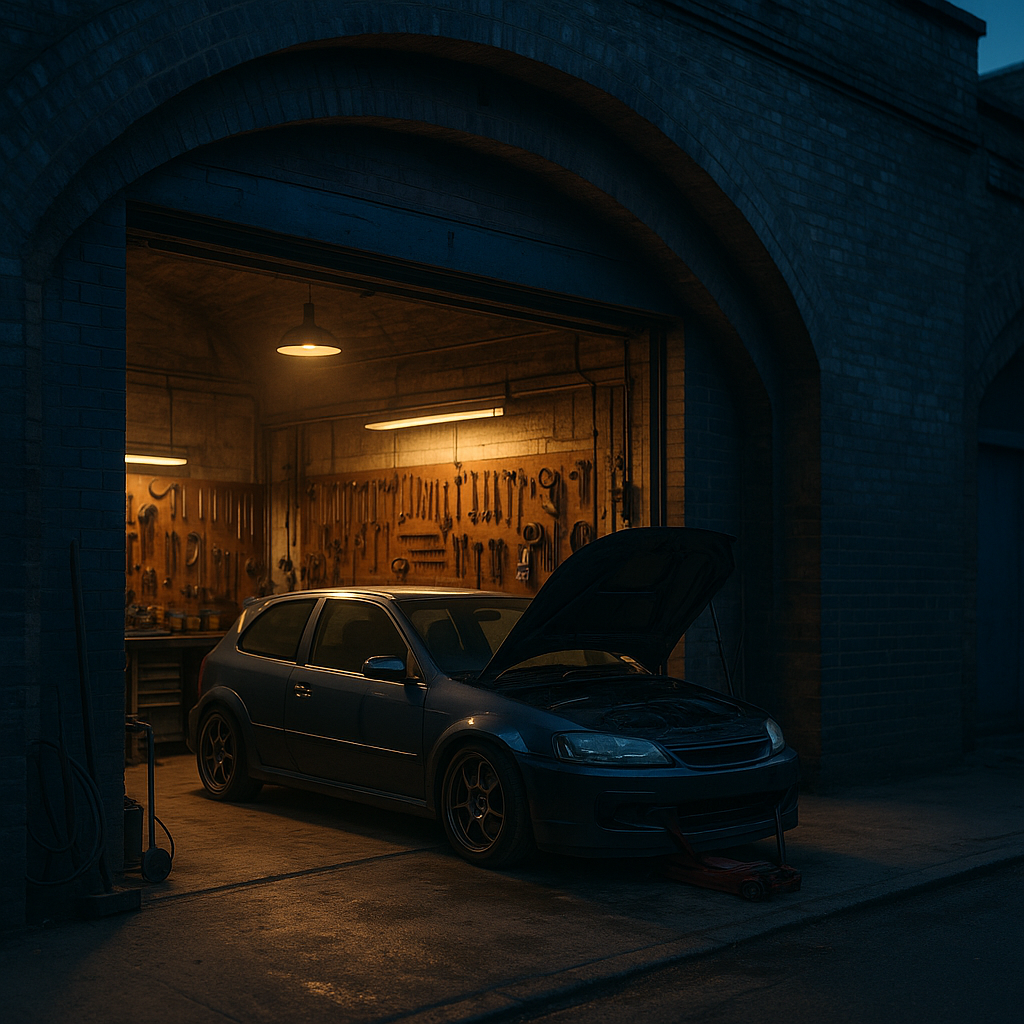
There’s a quiet revolution happening underneath railway arches and behind corrugated iron doors all across Britain. Car enthusiasts who’ve spent years making do with a single-car driveway and a folding workbench are finally snapping up commercial lock-ups and turning them into proper, no-compromise workshop spaces. It’s not just about having somewhere to wrench. It’s about having a place that’s genuinely yours, away from the neighbours’ curtain-twitching and the constant threat of rain. Renting garage workshop space as a UK car enthusiast has gone from a niche flex to something that’s starting to feel almost mainstream.
And honestly? It makes total sense. Between flats with no off-street parking, HOA-adjacent management companies banning any kind of work on communal forecourts, and the sheer embarrassment of doing an oil change on your knees in a supermarket car park, people are fed up. A dedicated unit changes everything.
What Does Renting a Lock-Up or Arch Actually Cost in 2026?
Prices vary enormously depending on where you are in the country, the size of the unit, and whether it’s a basic concrete box or a railway arch with decent ceiling height. Here’s a rough picture based on what’s currently listed across Gumtree, SpareRoom commercial, and local estate agents:
- London (zones 3-6): £250-£600 per month for a single-car lock-up. Railway arches in areas like Peckham, Hackney, and Bermondsey regularly fetch £500-£900 per month for anything spacious enough to actually work in. They go fast.
- Manchester and Birmingham: Expect £120-£280 per month for a standard lock-up. Industrial estate units large enough for a two-post ramp start around £350-£500 monthly.
- Leeds, Sheffield, Nottingham: More affordable. A solid lock-up runs £80-£180 per month, and you can sometimes find double units on older trading estates for under £250.
- Rural areas and smaller towns: Under £100 per month isn’t uncommon for something basic, though you’re often looking at agricultural-adjacent buildings that need work before they’re genuinely useful.
Most landlords for this kind of space want a short lease, typically a rolling monthly contract or a six-month minimum. Always get the agreement in writing. A handshake deal might feel fine until the landlord decides to sell the site.
Planning Permission and Commercial Use: What You Actually Need to Know
This is where a lot of enthusiasts trip up. Using a rented lock-up to work on your own personal vehicles is generally considered a permitted use, especially if the unit already holds a commercial or storage classification. But the moment you start charging friends to use it, doing work for cash on other people’s cars, or running anything that looks like a business, you’re crossing into territory that may require a change of use or specific planning consent from your local council.
The distinction matters. Under gov.uk planning guidance, operating a vehicle repair business from premises not authorised for that use is a planning enforcement matter. Councils don’t typically go hunting for hobbyists, but noise complaints from neighbouring units will bring attention you don’t want. Check the use class of any unit before signing. Most lock-ups fall under Class B8 (storage) or sui generis. A legitimate auto workshop needs Class E or specific sui generis designation depending on the work carried out.
Insurance for Your Workshop Space: Don’t Skip This Bit
Your standard home contents insurance won’t cover tools stored off-site. Full stop. And your motor insurance policy almost certainly won’t cover the car while it’s up on stands with the engine pulled. You need a few layers of cover:
- Contents and tools insurance: Specialist tool and equipment policies from providers like Ripe Insurance or Admiral Business cover theft from a rented commercial unit. Expect to pay £150-£400 per year depending on the declared value of your kit. Always photograph and itemise everything.
- Public liability: Even if you’re only working on your own cars, it’s worth having if anyone ever visits the space. From around £60-£120 per year for a basic policy.
- Motor trade insurance (laid-up cover): If a car is off the road, SORN’d, and undergoing a build, a specialist laid-up policy keeps it covered while stationary. Classic and specialist insurers like Footman James and Adrian Flux offer these at reasonable rates.
Some landlords also require you to hold third-party liability as a condition of the lease, so check the small print before you sign.
Which Tools Should You Prioritise First?
Start with the things that actually unlock the space’s potential. A bare lock-up is fine for storage. What turns it into a real workshop is the infrastructure. Here’s the priority order I’d suggest:
1. Lighting
LED strip lighting or LED shop lights are cheap, bright, and transform the feel of the space completely. Budget around £80-£150 for a full unit. Working under a dim single bulb is miserable and you’ll miss things.
2. A Proper Trolley Jack and Axle Stands
A decent 3-tonne trolley jack from a brand like Draper or Sealey runs £80-£150. Axle stands come in pairs for under £40. Never rely on a jack alone under a car. Ever.
3. Air Compressor and Impact Wrench
A 50-litre belt-drive compressor (around £200-£350) paired with a 1/2 inch impact wrench changes the speed and ease of almost every job. Stubborn wheel nuts, rusty bolts, suspension components, all of it becomes less of an ordeal.
4. Workbench and Vice
A solid steel workbench with a 100mm vice is non-negotiable. You can pick up second-hand industrial benches at auction for under £100 if you’re patient.
5. Storage
Rolling tool chests keep things organised and protect your investment. Sealey and Halfords Professional both offer decent entry-level options in the £150-£300 range.
Leave the two-post ramp for later unless you’re already doing a lot of under-car work. Installation requires a certified concrete floor of sufficient depth, typically a minimum of 150mm reinforced slab, and some ramps need electrical sign-off. It’s worth doing eventually but it’s not a day-one purchase.
Finding the Right Space Without Getting Burned
Beyond Gumtree and Rightmove Commercial, local Facebook groups for car clubs and enthusiast communities are genuinely one of the best ways to find spaces. People advertise spare bays, shared units, and outright subletting (check your landlord allows this) all the time. Groups dedicated to your marque or local meets often have members who know the area’s industrial landscape better than any listing site.
If you’re thinking about sharing costs with a mate, make sure you agree in writing whose tools are whose, who pays what, and what happens if one of you wants to leave. It doesn’t need to be a solicitor-drafted document, but it needs to exist. Friendships have ended over whose fault it was that the compressor blew a gasket.
Once you’ve got the space sorted, the rest falls into place pretty naturally. Whether you’re in the middle of a full engine rebuild, chasing down an electrical gremlin, or just finally doing that brake service you’ve been putting off since last winter, there’s something properly satisfying about having four walls and a roof that are entirely dedicated to the car. For UK enthusiasts who’ve ever looked longingly at American garage builds on YouTube, renting garage workshop space here in the UK is the real version. No McMansion required.
If you’re deep in the modification rabbit hole already, check out our piece on which car mods are still road legal in 2026 to make sure whatever you’re building in that lock-up will actually pass an MOT when you’re done.
Frequently Asked Questions
How much does it cost to rent a garage workshop space in the UK?
Costs vary widely by region. In London you’re typically looking at £250-£600 per month for a basic lock-up, while in cities like Leeds or Sheffield you can find spaces for £80-£180 monthly. Rural and smaller town locations can be even cheaper, sometimes under £100 per month for a modest unit.
Do I need planning permission to use a rented lock-up as a car workshop?
Working on your own personal vehicles in a storage-classified unit is generally fine without additional planning permission. However, carrying out work for others for payment, or running anything resembling a business, may require a change of use consent from your local council. Always check the unit’s use class before signing a lease.
What insurance do I need for a rented car workshop space?
You’ll want specialist tools and contents insurance to cover equipment stored off-site, since standard home insurance won’t apply. Public liability cover is also advisable, and if you’re working on a SORN’d project car, a laid-up motor insurance policy from a specialist like Footman James or Adrian Flux will keep it covered while stationary.
Leave a Reply